What Happens When Boiler Pump Fails: A Troubleshooting Guide
Discover what happens when a boiler pump fails, its common causes, quick safety checks, and a practical diagnostic flow to restore warmth. Expert guidance from Boiler Hub helps homeowners and facility managers diagnose, fix, and prevent future pump failures.


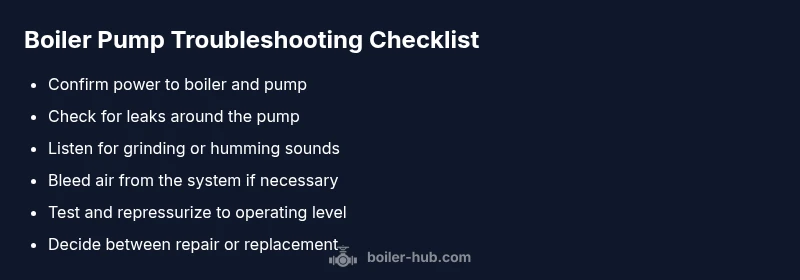
Most boiler pump failures start with a loss of circulation due to a seized impeller, motor burnout, airlock, or electrical fault. Quick checks: confirm the boiler is powered and the breaker is on, listen for grinding or humming, feel for a warm motor, and inspect for coolant or water leaks around the pump. If in doubt, shut off power and call a pro.
What happens when boiler pump fails: why it matters
When the boiler pump stops circulating water, radiators stay cold or heat becomes uneven. The lack of flow can trigger overheating, reduced efficiency, and stress on other components like the heat exchanger. For many homes, the boiler is the single source of warmth, so a pump failure means disrupted comfort and potential higher energy costs. The phrase "what happens when boiler pump fails" isn’t just theoretical—hot water and space heating depend on a healthy pump to move boiler water through the system. Boiler Hub guidance emphasizes swift, safe assessment to prevent collateral damage and costly repairs.
Common causes of boiler pump failure
Pumps fail for a few predictable reasons. A seized impeller or worn bearings can lock the rotor, causing audible grinding or a stalled pump. Electrical faults—such as a burned winding, faulty capacitor, or wiring issues—can stop the motor from starting or cause intermittent operation. Airlocks in the system are another frequent culprit, especially after filling or bleeding, and improper pressure can starve the pump of the head it needs to push water through the loop. In some cases, leaks around the pump indicate seals or gaskets have degraded. Identifying the root cause requires a structured check that starts with power and safety, then moves into mechanical and hydraulic checks.
Safety first: before you troubleshoot
Before touching anything, shut off power to the boiler and close any isolation valves if advised by your manual. Wear eye protection and gloves, especially if you must handle wiring or hot surfaces. If you detect gas odors, sustained water leaks, or any sign of gas leak risk, evacuate and contact emergency services. Electrical work is hazardous; if you’re not confident in testing voltages or wiring, it’s safer to call a licensed technician. Keeping a journal of symptoms—sound, heat output, leaks—helps the professional diagnose faster and reduces repeat visits.
Diagnostic flow: symptom to solution in minutes
Start with the symptom: no heat or poor circulation. Move to quick checks: verify power, reset breakers, and ensure the pump is receiving voltage. If the pump hums but does not rotate, the impeller may be seized or bearings worn. If there’s no electrical response or visible smells, wiring or capacitor failure is likely. With a confirmed issue, solutions range from simple power repairs and air bleeding to pump replacement. Document findings and note any safety hazards before proceeding.
When to repair vs replace: a practical decision
If the motor spins with a stall or makes grinding noises despite power restoration, the impeller or bearings may be damaged, suggesting replacement. Leaks around the pump often mean compromised seals that warrant replacement rather than repair. For older systems, a modern low-energy pump can dramatically improve efficiency, but compatibility with your boiler and zone valves matters. A professional assessment is advised when welds, gas connections, or electrical components are involved.
Prevention and maintenance to avoid future pump failures
Regular maintenance reduces the risk of sudden pump failure. Schedule seasonal checks to verify electrical connections, test the pump motor for resistance, and inspect the expansion tank and system pressure. Flushing the system and removing mineral buildup can prevent impeller wear. Keep an eye on noise and vibration; unusual sounds are early warning signs. By tracking symptoms and performing timely maintenance, you can preserve system efficiency and prolong pump life. Boiler Hub’s guidance underlines proactive care as the best defense against unexpected downtime.
Steps
Estimated time: 60-90 minutes
- 1
Power off and verify supply
Turn off the boiler and switch off the circuit breaker feeding the boiler. Confirm no power is reaching the pump before touching any wiring. This step protects you from electrical shock and prevents accidental restart during inspection.
Tip: If you’re unsure about wiring, skip to step 4 and call a professional. - 2
Check for visible leaks and burning smells
Inspect the pump and surrounding pipes for oil or water leaks. A burnt smell or obvious scorch marks indicate motor damage or wiring faults that typically require replacement by a technician.
Tip: Document any signs with photos to share with the technician. - 3
Test the pump operation
Reconnect power briefly to see if the pump engages. Listen for humming or grinding. If it hums but doesn’t spin, the impeller is likely seized or the bearings are worn, pointing to a replacement.
Tip: Do not run a seized pump for long; overheating can damage the motor. - 4
Bleed the system to remove air
Use the bleed valves on radiators or the bleed port on the pump to release trapped air. Refill and pressurize the system to manufacturer-recommended levels, then restart the boiler slowly.
Tip: Bleed gradually to avoid spurting water and burns. - 5
Test heat delivery and pressure
After re-pressurizing, run the heating cycle and check for improved circulation and heat. Monitor pressure gauge; it should stay within normal operating range as per your boiler manual.
Tip: If pressure climbs rapidly, there may be a leak or a faulty expansion valve. - 6
Decide on repair vs replacement
If the pump shows signs of motor burnout or irreparable impeller wear, replacement is usually the best option for reliability and efficiency. Ensure the replacement is compatible with your boiler model and zones.
Tip: For complex setups, prioritize professional installation for safe, code-compliant results.
Diagnosis: No heat or lukewarm radiators with boiler running
Possible Causes
- highPower supply issue or tripped breaker
- mediumSeized impeller or burnt motor in the pump
- lowAirlock or trapped air in the heating loop
Fixes
- easyReset the boiler and check the circuit breaker; ensure the boiler is receiving power
- mediumInspect the pump for signs of seizure or motor burnout; test electrical continuity and replace if needed
- easyBleed air from the system and repressurize to recommended levels
- hardInspect and, if necessary, replace seals or the entire pump assembly with a compatible unit
Questions & Answers
What are the signs of a failing boiler pump?
Common signs include no heat or cold spots on radiators, unusual grinding or humming sounds, leaks around the pump, and inadequate flow. Early indicators are heat delay and boiler cycling more often.
Look for no heat, cold spots, unusual sounds, and leaks around the pump. These often indicate a failing pump.
Can I repair a boiler pump myself?
Basic checks like power verification or air bleeding are doable for a confident DIYer. Replacing bearings or the entire pump should be done by a qualified technician.
Some simple checks are okay to do yourself, but pump replacement should be handled by a professional.
Is electrical work dangerous when troubleshooting?
Yes. Water and electricity together pose serious risk. Always disconnect power and, if in doubt, hire a licensed electrician or boiler technician.
Electrical work can be dangerous; if unsure, hire a professional.
What maintenance helps prevent pump failures?
Regular system bleed, pressure checks, and periodic pump inspections prevent airlocks and bearing wear. Refurbish or replace seals as needed per the boiler manual.
Regular bleeding and maintenance prevent most pump failures.
When should I replace rather than repair?
If the motor is burnt or impeller bearings are worn, replacement is often more reliable and economical in the long run than repeated repairs.
Replacement is usually best when motor or impeller is damaged.
How long does pump replacement typically take?
Professional replacement timelines vary by system but generally fit within a few hours, depending on accessibility and piping configuration.
It usually takes a few hours with a qualified technician.
Watch Video
Key Points
- Power checks come first: verify power to boiler and pump.
- Airlock can mimic pump failure and should be ruled out.
- Replace a burnt or seized pump for reliable operation.
- Bleed and repressurize to restore proper flow.
- Call a licensed professional for electrical or gas-safety concerns.