How to Tell If Your Boiler Circulator Pump Is Working
A clear, urgent guide to diagnose and fix your boiler circulator pump. Learn common symptoms, quick safety checks, a practical diagnostic flow, and step-by-step fixes from Boiler Hub for homeowners and facility managers.


Most likely, the boiler circulator pump isn’t circulating water due to a power issue or a seized impeller. Start by checking the power switch, the outlet, and the fuse or breaker, then listen for the pump hum or feel for vibration after a reset. If there’s no movement, follow the diagnostic flow below.
How a boiler circulator pump works and why it matters
The circulator pump is the heartbeat of a hydronic heating system. It uses an electric motor to drive an impeller, pushing heated water from the boiler through loops of tubing to radiators, baseboards, or radiant panels, and back to the boiler to be reheated. When it operates correctly, you may feel a subtle vibration at the pump and hear a quiet, steady hum. If the pump fails, hot water stops circulating, radiators stay cool, and the boiler may run longer than normal without delivering warmth. According to Boiler Hub, understanding the pump’s role helps homeowners tell if boiler circulator pump is working and why it matters for overall system efficiency and comfort. Common failure modes include power supply issues, worn bearings, airlocks, or a seized impeller. Recognizing these early can prevent higher energy use and potential boiler stress. Keeping a maintenance log and inspecting the pump connections at least once per heating season is a prudent practice.
In modern systems, several controls can influence pump operation: a timer or thermostat that calls for heat, a relay that signs the motor to run, and a pressure differential switch that ensures proper flow. If any of these control components fail, the pump may run without circulating water effectively or may not start at all. While some symptoms are straightforward, others require systematic checks to distinguish between a failing pump and ancillary issues in the piping or boiler. This guide emphasizes practical, safe approaches homeowners and facility managers can take to assess whether boiler circulator pump is working and when to call a professional.
Common symptoms that signal a problem with circulation
Slow heating or uneven warmth throughout the building is a classic sign the circulator pump isn’t moving water effectively. Radiators or underfloor heating panels may stay cool while the boiler runs, or you might notice hot spots near the boiler with cool zones farther away. You may also hear unusual noises near the pump area—grinding, squealing, or rattling can indicate bearings wear or air in the loop. Another indicator is excessive boiler cycling or a rise in system pressure that seems to occur without obvious cause. If you observe a leaky pump flange or dampness around the motor, that’s a red flag for a worn seal or loose connections. According to Boiler Hub Analysis, 2026, power-related issues are among the most frequent causes of circulation problems, underscoring the importance of starting with a power check before assuming a mechanical fault. Always document symptoms with dates and temperatures to help a technician diagnose the root cause quickly.
Other clues include no response when the boiler calls for heat, a pump that only runs intermittently, or a loud banging or cavitation sound in the pipes. Cavitation can indicate air in the system or flow restriction, both of which reduce pumping efficiency and can stress the boiler. If your system includes zone valves, ensure they are open and not stuck, as a closed zone valve can mimic pump failure by restricting flow. Keeping an eye on the boiler pressure gauge can also help; a pressure spike or drop during a pump cycle may indicate an imbalance in the loop that requires investigation.
Safe, basic checks you can perform today
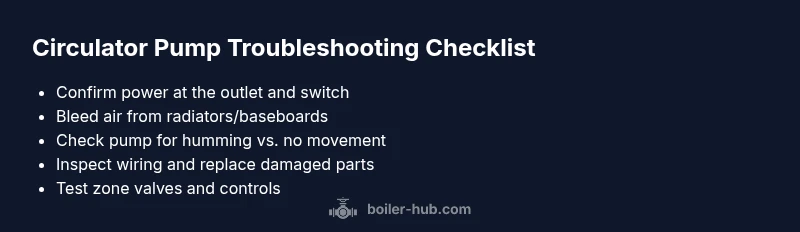
Before touching electrical components, shut off the power at the main breaker to avoid shock. Then, start with simple, non-invasive checks: verify the boiler is on and that a room thermostat is calling for heat. Check the pump power supply—confirm the switch near the pump is ON, and inspect the outlet or fused plug for signs of tripped breakers or blown fuses. Listen at the pump for a faint hum when the boiler calls for heat; if none is audible, there may be a power or relay issue. For air-related problems, gently bleed any air from radiators or baseboards to improve circulation. If you recently added zones or bled the system, air pockets can form and temporarily hamper flow. If the pump should be running but isn’t, do not force it to operate; instead, proceed with the diagnostic flow or contact a professional if you’re unsure about wiring or electrical safety. Documentation of your checks helps you or a technician track how the situation evolves.
Diagnostic flow overview
This section provides a high-level workflow to diagnose circulator pump issues, bridging quick checks and the formal diagnostic flow. Start with symptom recognition, then verify power and wiring, followed by testing for actual water flow and air in the system. If the pump runs but water isn’t circulating, inspect the impeller and housing for wear, contamination, or blockages. When all electrical checks pass but the pump still shows signs of failure, the issue may be mechanical (impeller, bearings) or system-related (airlock, closed zones, valve misalignment). The diagnostic flow emphasizes safety first and progressive escalation: simple checks, measured testing, system bleed, and finally professional service if unresolved.
Preventive maintenance and safe shutdown practices
Regular maintenance helps prevent circulator pump problems. Schedule a seasonal inspection to verify electrical connections, check for leaks around the pump flange, listen for abnormal sounds, and ensure the pump is properly secured. Keep area around the pump clean and free of clutter, because physical obstructions can hinder maintenance work or obscure warning signs. When performing any inspection, wear protective gloves and eye protection, and never bypass safety controls. If the pump is hot to the touch, let it cool before handling to avoid burns. For homeowners and facility managers, maintaining a log of maintenance steps, any noise changes, and temperature variations can greatly aid future troubleshooting.
When to call a professional
If you’ve completed the above checks and notes but still can’t confirm safe operation, or if you observe signs of electrical faults, fluid leaks, or persistent abnormal noises, it’s time to bring in a licensed HVAC technician. A professional can verify voltage with a meter, test motor windings for insulation resistance, and inspect control circuits without risking personal injury or boiler damage. Timely professional intervention is especially important if your system uses oxygenated water, has a pressed copper manifold, or includes high-pressure zone controls. The Boiler Hub team emphasizes that for complex issues beyond basic checks, professional service is the safest and most reliable route to restore reliable heating.
Key maintenance tips to extend pump life
- Keep the pump area clean and dry to avoid moisture-related corrosion.
- Bleed air from the system after any pressure changes or repairs to prevent air locks.
- Inspect electrical connections for signs of wear or discoloration; replace damaged wires promptly.
- Schedule professional inspections at least once per heating season to catch wear and seal leaks early.
- Track noise and vibration changes; early signals often indicate the need for service or part replacement.
Steps
Estimated time: 1-2 hours
- 1
Power down and safety check
Switch off the boiler and shut off the main power to the circuit that feeds the circulator. Wear protective gloves and eye protection. Confirm there is no water leakage around the pump before touching any components.
Tip: Use a non-contact tester to verify the absence of live voltage before handling wires. - 2
Inspect the pump and connections
Remove the pump housing access panel and visually inspect for discoloration, corrosion, or loose wires. Ensure strain reliefs and conduit fittings are secure. If you see obvious damage, do not continue—call a professional.
Tip: Take a photo of wiring before disconnecting anything to aid reassembly. - 3
Test power at the motor terminals
With the power off, carefully disconnect the control wires and use a multimeter to verify whether 120V is present at the pump terminals when the thermostat requests heat. If there is no voltage, the fault lies upstream in wiring or the control circuit.
Tip: If you’re not confident using a meter, stop and contact a pro. - 4
Check for air in the system
Bleed air from the most distant radiators first, then work your way toward the boiler. Listen for a hiss of escaping air and watch for water coming out cleanly. Recheck the system pressure after bleeding.
Tip: Bleeding may cause a temporary pressure drop; top off with the system’s recommended pressure if needed. - 5
Assess the impeller and pump operation
If the pump is powered but there’s no circulation, the impeller could be jammed or worn. A professional can dismantle the pump, check the impeller, and replace worn bearings if needed.
Tip: Do not force the impeller or apply lubricants not specified by the manufacturer. - 6
Inspect zone valves and controls
Verify zone valves are open and that any thermostatic controls or aquastat are functioning. A closed valve can mimic pump failure by stopping flow, even if the pump runs.
Tip: Test each zone independently to confirm flow paths are clear. - 7
Reassemble and test the system
Reconnect all wires, reassemble the pump housing, restore power, and call for heat to observe circulation. Listen for a consistent pump hum and verify all zones warm up evenly.
Tip: If there’s any sign of overheating or leak, shut down and seek professional help immediately. - 8
Decide on replacement or professional service
If the pump fails to circulate after checks, the issue is likely mechanical or electrical beyond basic maintenance. Replacement or professional servicing is often the most reliable option.
Tip: Keep a maintenance log and note any noise, vibration, or temperature changes for the technician.
Diagnosis: Radiators stay cold or heat is inconsistent despite the boiler running
Possible Causes
- highPower issue (tripped breaker, blown fuse, or faulty relay)
- mediumAirlock or trapped air in the system
- mediumImpeded impeller or seized pump rotor
- lowWiring or control board fault
Fixes
- easyVerify 120V power at the pump terminals and ensure the boiler feed is energized; reset breakers if needed
- easyBleed air from all radiators/baseboards and recheck system pressure
- hardInspect pump wiring and replace damaged connectors or faulty control board with professional help
Questions & Answers
What is the function of a boiler circulator pump?
The circulator pump moves heated water through the heating loops and back to the boiler. It ensures even heat distribution. If it fails, heat delivery becomes inconsistent or stops altogether.
The circulator pump pushes hot water through your heating loops to keep every radiator warm. If it stops working, heat may not reach all areas.
Why is my boiler running but radiators stay cold?
This usually means the pump isn’t circulating water. Start by checking power, then bleed air, and inspect zone valves. If nothing changes, the pump or motor may be failing and require service.
If the boiler runs but radiators stay cold, it often means the pump isn’t circulating water. Check power, bleed air, and zone valves, and consider professional help if needed.
How do I test if the pump is getting power?
Shut the system, then use a multimeter to verify voltage at the pump terminals when heat is called. If voltage is present but the pump doesn’t run, the motor or control circuit may be faulty.
Shut it down, then test for voltage at the pump terminals when heat is requested. If there’s voltage but no movement, the motor or control may be the issue.
Can airlocks stop circulation?
Yes. Air can block water flow, especially in high sections of the system. Bleeding radiators and opening bleed valves usually resolves the problem.
Airlocks can stop water flow. Bleed the radiators to release trapped air and restore circulation.
When should I call a professional?
If basic checks don’t restore circulation, or you encounter electrical issues, leaks, or persistent noises, a licensed HVAC technician should assess the system.
Call a professional if basic checks fail or you notice electrical problems, leaks, or unusual noises.
Watch Video
Key Points
- Check power and wiring before assuming a pump fault
- Air in the system commonly blocks circulation—bleed radiators first
- Listen for a steady pump hum to confirm operation
- Call a pro for electrical faults, leaks, or stubborn issues