Why Would a Boiler Stop Working? The Essential Troubleshooting Guide
Urgent boiler troubleshooting guide to diagnose and fix common failures. Learn step-by-step checks, safety tips, and when to call a pro to restore heat quickly.


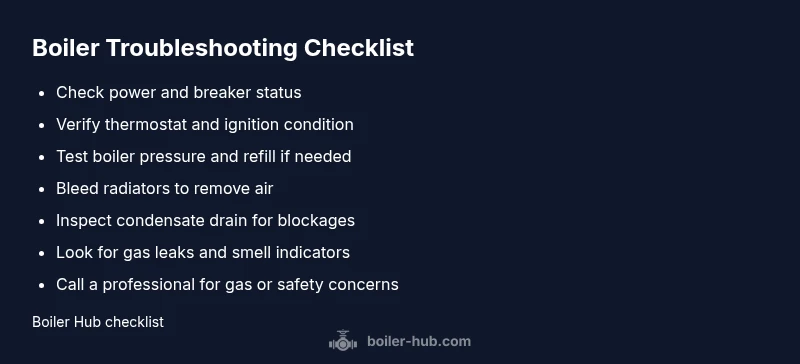
Most boiler outages stem from power, ignition, or pressure issues. A quick fix is to ensure the boiler is receiving power, reset the breaker if needed, verify the thermostat and pressure gauge, then bleed air from radiators if you hear banging. If these steps don’t restore heat, proceed with the diagnostic flow below.
Why would a boiler stop working? Key culprits and quick checks
If your boiler suddenly stops delivering heat, you’re not alone. Understanding the likely causes helps you act fast and safely. According to Boiler Hub, the most common outages come from power loss, ignition faults, or low water pressure. Age matters: older models are more prone to sensor glitches and valve failures. Start with simple checks you can do safely: verify the display or status lights, confirm the boiler is plugged in, and inspect the area for obvious leaks or a tripped circuit breaker. This quick survey sets the stage for more thorough checks and avoids unnecessary disassembly. By knowing what typically fails, you can target the next steps without delay.
Brand context: According to Boiler Hub, staying focused on the most common failures helps homeowners triage effectively while reducing risk.
Immediate safety steps you must take
Safety comes first. Before you poke around inside the boiler, turn off power at the breaker if you can do so safely, and never work on gas lines if you smell gas or hear hissing. If you’re uncomfortable, call a pro. Then, check these basics: ensure the thermostat is on a sensible setting, inspect the outside power supply, and confirm the boiler's pilot light or electronic ignition is functioning. Keep children and pets away from the area, ventilate the space if possible, and document any unusual smells or noises for when you contact support. If you notice water on the floor or a strong gas odor, evacuate and call emergency services immediately. A calm, stepwise approach reduces risk and speeds recovery.
Diagnostic flow: symptom → diagnosis → solutions
A structured approach speeds up repair and reduces risk. Start with the symptom: no heat, no hot water, odd noises, frequent cycling, or error codes. Then map to likely causes: power issues, ignition faults, pressure problems, air in the system, or fuel supply concerns. For each potential cause, list the diagnostic check and the fix. This flow emphasizes simple checks first, then targeted interventions, and finally professional help if safety or gas components are involved. Maintain a logical sequence so you don’t miss a root cause.
No-power and ignition: the two most common culprits (and how to verify)
Electric power is the backbone of modern boilers. First, check the outlet, switch, and breaker; reset if needed. If the boiler has a diagnostic code, refer to the manual. For ignition faults, verify the pilot light (if applicable) or the electronic igniter status, and inspect the ignition leads for corrosion or loose connections. If you see error codes (e.g., F1, E1) that persist after resets, note them for service. When in doubt, stop and call a pro—ignition or gas issues carry real safety risks.
Pressure, air, and the water-side basics you can address
Low pressure is a frequent root cause. Refill the system following the manufacturer’s instructions, watch the pressure gauge, and avoid over-pressurizing. Bleed air from radiators and zones as needed, then re-check the pressure. If you hear banging or see cloudy water, you may have air or sludge. Check for blocked condensate pipes and ensure the condensate trap isn’t frozen. Proper purge and refill can restore performance and prevent future fluctuations.
Maintenance habits to prevent future outages
Prevention beats emergency fixes. Schedule annual professional service; keep a log of codes and service dates; replace worn components like valves and seals; bleed radiators annually; check expansion tank and pressure relief valve; test carbon monoxide detectors; flush the system as recommended by the manufacturer. A proactive approach minimizes sudden outages and prolongs boiler life. Record-keeping makes it easier to spot trends over time and plan maintenance windows with technicians.
When to call a professional and safety reminders
Gas boilers carry risk. If you smell gas, hear a hissing sound, or the boiler shows persistent error codes after basic checks, shut off power and call a licensed technician. Do not attempt to dismantle gas components beyond basic safety checks. In addition, follow local regulations about servicing, ventilation, and CO detectors. If there is any risk to life or property, evacuate immediately and contact emergency services.
Documenting issues and planning next steps
Record what happened, dates, codes, noises, and what you tried. A clear history helps a technician diagnose faster. Maintain a simple log and save manuals or digital guides. After a fix, schedule preventive maintenance and keep spare parts list handy. Documenting details today prevents repetition tomorrow and speeds future service calls.
Steps
Estimated time: 60-90 minutes
- 1
Check power supply
Locate the boiler’s power switch and the wall outlet. If the outlet is controlled by a GFCI, reset it. Look for a tripped breaker in the home’s main panel and reset if safe to do so. Confirm the boiler display lights up after power restoration.
Tip: Always test a known working outlet to rule out wiring issues. - 2
Verify thermostat settings
Set the thermostat to a few degrees higher than your current room temperature and listen for the boiler to respond. Inspect the control panel for error codes and note them down. If you suspect a faulty sensor, plan for replacement by a pro.
Tip: A miswired thermostat is a common but reversible fault. - 3
Inspect ignition or pilot
For gas boilers, check whether the pilot light is on or the electronic igniter is sparking. If the pilot is out, follow manufacturer instructions to relight safely. If ignition components show corrosion or loose wires, stop and call a pro.
Tip: Never force ignition or loosening gas lines beyond basic safety checks. - 4
Check boiler pressure
Read the pressure gauge—most boilers operate around a specific range (consult manual). If pressure is low, use the filling loop to repressurize gradually, watching the gauge closely. Do not overfill.
Tip: Small, incremental fills prevent over-pressurization. - 5
Bleed radiators
With the system cool, use a radiator key to release trapped air from each radiator until water appears. Wipe away any drips and recheck overall system pressure after bleeding.
Tip: Bleed from the highest radiator first for faster air removal. - 6
Inspect condensate drain
Check if the condensate pipe is blocked or frozen; clear the trap if accessible and ensure it drains properly. A blocked drain can trigger boiler fault codes and cycling.
Tip: Never pour hot water into frozen condensate traps. - 7
Assess gas safety concerns
If gas smell, hissing, or persistent ignition faults persist after checks, shut off gas and call a licensed technician. Do not bypass safety devices.
Tip: Gas-related issues require professional confirmation. - 8
Plan for professional service
If the boiler still fails to operate or if you encounter code errors you cannot resolve safely, schedule a service call with a licensed technician. Have your notes and codes ready.
Tip: Regular maintenance reduces future outages.
Diagnosis: Boiler won't start or provide heat
Possible Causes
- highPower issue or tripped circuit breaker
- mediumFaulty thermostat or control board
- highLow boiler water pressure
- mediumAir trapped in the system
- lowGas supply or ignition problems
Fixes
- easyCheck outlet and breaker; reset if tripped
- mediumReset thermostat and verify wiring; replace faulty thermostat if needed
- easyRepressurize the system to the recommended level and verify
- easyBleed radiators and recheck pressure; purge air from the loop
- hardIf gas supply or ignition seems faulty, shut off gas and contact a licensed technician immediately
Questions & Answers
What is the first thing to check when a boiler stops working?
Start with power and gas supply checks, then review any error codes on the boiler display. If power is present but heat is not, move to the diagnostic flow for further checks.
First, check that the boiler has power and the gas supply is on. If heat still won’t come on, follow the diagnostic steps.
Why does pressure drop in a boiler and what should I do?
A drop in pressure usually means there’s a leak or air in the system. Refill to the recommended level and bleed air from radiators, then recheck the gauge.
Low pressure often means air or a leak. Refill and bleed radiators, then check the gauge again.
Can I fix a faulty thermocouple myself?
Thermocouple or sensor faults can be hazardous. If you’re not trained, contact a qualified technician rather than attempting a DIY repair.
Sensors can be dangerous to handle. It’s best to call a pro for thermocouple or sensor faults.
What does an error code like F1 or E1 mean?
Error codes indicate specific faults. Refer to the boiler manual or manufacturer website for exact definitions and recommended actions, and document them for the technician.
Error codes point to defined faults; check the manual and note the code when you call for help.
Is it safe to bleed air from radiators myself?
Bleeding radiators is generally safe if you follow proper instructions and shut off the system when needed. Wear protection and use a container for drips.
Bleeding radiators is usually safe if you follow the steps and protect yourself from drips.
When should I consider replacing the boiler instead of repair?
If your boiler is old, frequently failing, or requires costly repairs, replacement with a newer, efficient model may be more cost-effective in the long run. Consult a professional for a cost-benefit assessment.
If repairs pile up and the boiler is aging, replacement may be wiser—ask a pro for a cost estimate.
Watch Video
Key Points
- Identify the root cause first
- Prioritize safety and call a pro for gas issues
- Maintain a repair log for future outages
- Regular maintenance prevents future outages