Why Does My Boiler Stop Working? A Troubleshooting Guide
Learn practical, safe steps to diagnose why your boiler stops working, identify common causes, and apply fixes. Ideal for homeowners and facility managers seeking urgent, reliable guidance.


Boiler stoppages are most often caused by power, pressure, ignition, or gas-supply issues. Start with basic safety checks, verify power, check the pressure gauge, and inspect the thermostat. If the flame won’t light or the error codes persist, stop and call a pro. This steps-based approach helps you identify the culprit quickly.
Understanding why boilers stop working
If you’ve ever asked yourself why does ́my boiler stop working, you’re not alone. Boilers are complex systems that rely on power, water flow, fuel supply, and control signals to fire up safely. When one component falters, the safety systems may shut the boiler down to prevent damage. According to Boiler Hub, most stoppages aren’t dramatic repairs but identifiable, addressable faults such as a tripped breaker, low pressure, or a faulty thermostat. The good news is that with a calm, methodical approach you can diagnose many issues without a costly service call. This guide walks homeowners and facility managers through a safe, step-by-step troubleshooting process—from first checks to escalation when needed—so you can restore heat and hot water promptly.
Quick safety reminders before you start
Safety is non-negotiable. Always switch off the boiler at the power switch or breaker before probing any components. If you smell gas, hear hissing, or see scorch marks, leave the area and contact your gas supplier or a licensed technician immediately. Keep children and pets away from the boiler cabinet, and work in a well-ventilated space. Boiler Hub emphasizes documenting symptoms and the exact sequence of events to help a technician diagnose faster in the future.
Common root causes, explained simply
Boilers fail for a handful of recurring reasons. A tripped electrical supply or blown fuse can interrupt ignition or the control board. Low boiler pressure, often caused by a small leak or recent radiator bleed, prevents the system from circulating water. Thermostat or timer faults can keep the unit from calling for heat at the right times. Ignition problems—such as a faulty flame sensor or failed pilot—stop the flame from lighting. A blocked condensate trap or gas-supply interruption can also trigger shutdowns. Understanding these patterns helps you prioritize checks in the right order.
Diagnostic flow: a practical path to answers
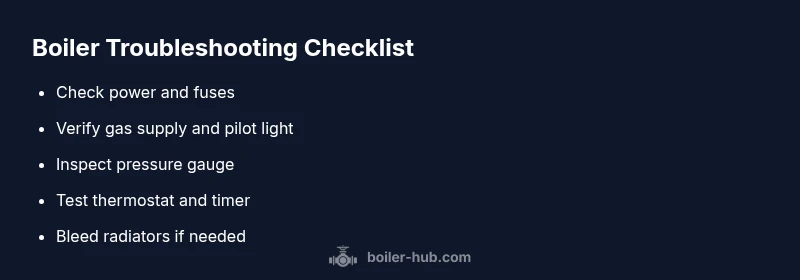
A structured diagnostic flow reduces guesswork. Start with safety checks (power, gas smell, and venting). Then verify power to the boiler, check for error codes on the display, assess pressure readings, and confirm thermostat settings. If you encounter unfamiliar codes, note them and consult the manual or Boiler Hub’s troubleshooting resources. Remember, some issues require professional testing equipment and certifications, especially gas-related work.
Step-by-step fixes for the most likely issues (overview)
When the problem seems likely to be low pressure or a simple ignition hiccup, you’ll follow a focused set of fixes. If the boiler has a pressure gauge well below the recommended range, repressurizing the system and addressing any leaks is essential. If ignition fails, relighting after ensuring safe conditions and cleaning flame sensors may resolve it. For power or control issues, reseating fuses or replacing a faulty thermostat can help. Each fix includes safety checks and clear test steps to confirm operation before restoring heat.
Safety precautions and common mistakes to avoid
Never bypass safety devices or run a boiler with visible damage. Always turn off power before opening panels, and never attempt gas work without qualifications. Common mistakes include ignoring unusual noises, neglecting regular maintenance, and not bleeding radiators, which can mask underlying pressure problems. Keeping a log of incidents, temperatures, and error codes helps you spot trends and plan maintenance windows.
Maintenance tips to prevent future stoppages
Regular maintenance is the best defense against sudden shutdowns. Schedule annual servicing, test pressure, inspect the expansion tank, bleed radiators, and replace worn seals. Purge air from the system after any repairs and keep an eye on pressure stability across seasons. Boiler Hub recommends a simple quarterly check: listen for unusual sounds, verify flame color, and watch for leaks or damp areas around the boiler.
What to do next after you fix or decide to call a pro
If you’ve confirmed a simple fix (like topping up pressure or reseating a fuse) and the boiler runs smoothly, monitor the unit for a few days. If problems persist, or you’re uncomfortable with any step, contact a licensed heating engineer. Boiler Hub’s guidance is to escalate when gas safety, venting, or major electrical work is involved. A professional assessment can prevent repeated malfunctions and ensure safe operation.
Steps
Estimated time: 30-60 minutes
- 1
Power check
Ensure the boiler is receiving power. Check the wall outlet or switch and the building’s main breaker. If the boiler isn’t receiving power, reset the breaker and test again. If it trips repeatedly, there may be a deeper electrical fault that requires a pro.
Tip: If you’re unsure about electrical safety, stop and call a professional. - 2
Pressure validation
Look at the pressure gauge. If it’s below the recommended range, prepare to repressurize the system using the filling loop. Do not force fittings or bypass safety valves. If you see leaks, repair them before continuing.
Tip: Only repressurize following the manufacturer’s instructions for your model. - 3
Thermostat and programmer check
Verify the thermostat is set correctly for heating and that there isn’t a misconfigured programmer causing heat to be blocked. If the display shows error codes, consult the manual for exact meanings and recommended resets.
Tip: Record current settings before changing any configuration. - 4
Ignition and flame sensor
If the boiler lights briefly but goes out, inspect for dirty flame sensors or weak ignition. Clean the sensor with a soft cloth and reattempt ignition after a safety check. If the flame won’t light at all, discontinue attempts and call a pro.
Tip: Never touch live ignition components with wet hands. - 5
Gas supply and vent check
Ensure gas supply valves are open and there are no gas smells. Do not attempt to troubleshoot gas lines beyond basic valve checks. If you suspect gas issues, evacuate and contact the gas emergency line or a licensed tech.
Tip: Gas safety first: when in doubt, stop and call a pro. - 6
System test and leak survey
With the system repressurized and ignition tested, restart the boiler and listen for normal operation. Check for damp spots or leaks around radiators, joints, and seals. If you detect leaks, address them or call a professional.
Tip: Keep a written log of results and any abnormal sounds.
Diagnosis: Boiler won't ignite or runs for a short period then stops
Possible Causes
- highPower issue (tripped breaker or failed supply)
- highLow boiler pressure
- mediumThermostat/timer fault
- mediumIgnition issues or flame sensor fault
- lowGas supply interruption or valve off
Fixes
- easyCheck the boiler is powered and the breaker is on; reset if tripped
- easyInspect boiler pressure gauge and repressurize if pressure is low
- easyTest thermostat settings and reset timer/programmer
- mediumInspect flame sensor, clean if necessary, and relight if safe
- mediumVerify gas supply valve is open and venting is clear
Questions & Answers
Why did my boiler lose pressure and stop?
Low pressure is a common reason boilers stop. Check for leaks, bleed radiators, and repressurize as instructed by your boiler’s manual. If pressure drops again quickly, there may be a hidden leak or expansion-tank issue.
Low pressure is common. Check for leaks, bleed radiators, and re-pressurize. If pressure drops again, call a pro.
What should I check if the boiler won’t ignite?
Ensure the gas valve is open, the thermostat is calling for heat, and there’s no error code blocking ignition. If cleaning the flame sensor doesn’t help, contact a technician.
Check gas valve, thermostat, and error codes. If it won’t light after cleaning the flame sensor, call a tech.
Is a burning smell or gas leak dangerous?
Yes. A gas odor means immediate risk. Leave the area, avoid using electrical switches, and contact the gas emergency line or a licensed professional right away.
Gas smells are dangerous. Leave, avoid switches, and call a pro immediately.
When should I call a pro for boiler problems?
If you cannot safely diagnose or resolve ignition, gas, or electrical issues, or if leaks are present, stop and call a licensed heating engineer. Regular maintenance can prevent many breakdowns.
Call a pro if you’re unsure or if leaks or gas work are involved.
Watch Video
Key Points
- Start with safety before troubleshooting.
- Most stoppages are fixable by addressing power, pressure, or thermostat faults.
- If symptoms persist, call a licensed professional promptly.
- Maintain a simple service log to catch recurring issues.
- Regular maintenance reduces future failures.