Common Problems with Boilers: Urgent Troubleshooting Guide
Urgent guide to diagnosing and fixing common boiler problems. Quick checks, diagnostic flow, and step-by-step fixes to restore heat and hot water safely for homeowners and facility managers.


Boiler problems often stem from easy, fixable causes: a pilot light out, low water pressure, or a thermostat fault. The most common problems with boilers include heat loss, strange banging sounds, and leaks. For a quick fix, check simple items first—power, gas supply, pressure, and controls. According to Boiler Hub, regular maintenance reduces the frequency of these failures and keeps systems safe.
Why Boilers Fail Without Regular Maintenance
Boilers are intricate systems composed of safety valves, pumps, heat exchangers, and control circuitry. When maintenance falls behind, common problems with boilers become more likely and can escalate quickly from minor nuisances to costly failures. According to Boiler Hub, neglect shows up as mineral buildup, clogged filters, worn seals, and corroded connections. Regular inspections catch these issues before they affect comfort or safety. In practice, a simple routine includes checking pressure, testing the burner flame, inspecting venting, and listening for unusual noises during operation. The payoff is reliable heat, consistent hot water, and lower energy waste. Homeowners and facility managers who schedule annual service reduce the odds of unexpected shutdowns and extend the lifespan of critical components.
Quick Checks You Can Do Before Calling a Technician
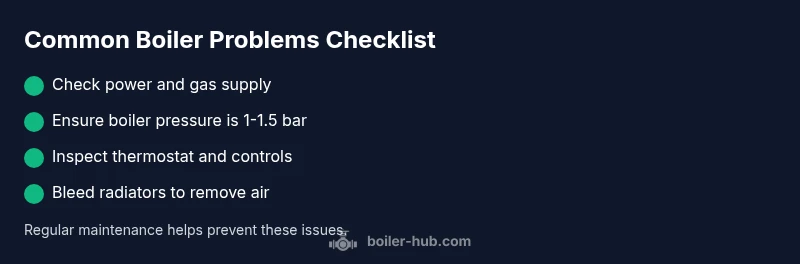
Before you summon a technician, perform a few safe, basic checks. First, ensure the power switch is on and the circuit breaker hasn’t tripped. Verify the gas supply valve is open if you have a gas boiler. Check the pressure gauge; most boilers operate around 1-1.5 bar when cold, and you may need to repressurize if it’s too low. Examine the thermostat and wiring for obvious faults, and listen for muted or loud furnace noises that hint at a pump or air issue. If you notice a smell of gas or suspect carbon monoxide, evacuate and call emergency services. These steps won’t replace professional service, but they can buy time and help diagnose symptoms with greater clarity.
Diagnosing Pressure-Related Issues
Pressure-related problems are among the most common. A pressure gauge reading outside the 1-1.5 bar range typically signals a leak, a lost charge, or an automation fault. If pressure is low, consult the boiler’s manual to learn how to repressurize safely, using the filling loop with the correct sequence. If pressure remains erratic after repressurizing, there may be a faulty pressure relief valve or a leak in the system. Conversely, excessive pressure can stress seals and pipes. Regular rechecks after maintenance help prevent sudden failures and protect the warmth of the home or building.
Handling No Heat or No Hot Water Symptoms
If your boiler runs but produces little or no heat, the issue could be a faulty diverter valve, a blocked heat exchanger, or a thermostat that isn’t signaling the boiler correctly. Check for cold spots on radiators, which hints at air pockets. Bleeding radiators releases air and often restores heat distribution. If the boiler fires inconsistently, there may be an ignition problem or flame sensor fault. In all cases, rule out low pressure and faulty zone valves first, then pursue professional service if the fault persists.
Unusual Noises, Leaks, and Safety Alerts
Unusual banging, rumbling, or kettling noises often point to mineral buildup or trapped air. Leaks around joints or from the pressure relief valve require immediate attention to avoid water damage and hazardous conditions. If you hear hissing near gas lines or detect a gas smell, evacuate immediately and call emergency services. For cracks in the heat exchanger or signs of corrosion, do not attempt DIY repairs. These issues typically require a licensed technician with boiler-specific tools and replacement parts.
The Right Time to Call a Professional
Some issues resolve with basic checks, while others demand professional calibration and safety testing. You should call a professional if the boiler fails to ignite after safety checks, if there is persistent water leakage, if there is CO or gas smell, or if repairs require re-pressurization beyond your comfort level. Local regulations require licensed technicians for gas and oil boilers. Regular maintenance with a pro helps prevent emergencies and ensures venting and combustion are safe and efficient.
Preventive Maintenance to Avoid Future Breakdowns
Preventive care is cheaper and safer than emergency repairs. Schedule annual servicing, replace worn seals, test safety devices, and clean nozzles and filters. Use a compatible water treatment plan if your system is prone to mineral buildup. Keeping a maintenance log helps you notice trends and plan replacements before critical components fail. Boiler Hub’s guidance emphasizes proactive care to extend boiler life, improve efficiency, and reduce energy costs.
Quick Troubleshooting Summary
Summary: Start with the basics—power, gas, pressure, and controls. If heat is restored, monitor system performance and schedule a professional inspection. If symptoms persist, escalate to a licensed technician promptly. Regular preventive maintenance remains the best defense against recurring boiler problems.
Steps
Estimated time: 60-90 minutes
- 1
Power down safely
Shut off the boiler and switch off the electrical supply. If you smell gas at any point, evacuate and call the local emergency line. Confirm the CO detector is functioning before resuming work.
Tip: Safety first: never work on a live gas line. - 2
Check fuel and power
Verify that gas or oil supply is active and that the boiler's power switch or breaker is not tripped. A simple reset can clear minor control faults.
Tip: If the gas smells like rotten eggs, leave immediately. - 3
Inspect controls
Inspect the thermostat settings and the ignition system. Look for scorch marks or loose wires. If you see obvious damage, stop and call a pro.
Tip: Keep a photo of wiring before you disconnect anything. - 4
Check boiler pressure
Read the pressure gauge; most systems should be 1-1.5 bar when cold. If low, use the filling loop per your manual to repressurize, then recheck.
Tip: Never force-fill beyond the recommended range. - 5
Bleed air / purge
Bleed radiators to release trapped air and restore even heating. If you hear air hissing, have a cloth ready to catch any drips.
Tip: Bleed from the top radiator valve for best results. - 6
Test cold start and cycle
Turn the boiler back on and observe ignition, flame color, and cycling. If misbehaving, power down and call a professional; don’t push the unit.
Tip: Document your observations for the technician.
Diagnosis: Boiler won't heat or produce hot water
Possible Causes
- highPower or gas supply issue
- mediumThermostat or control wiring fault
- mediumLow boiler pressure
- lowAir trapped in the system or venting problem
Fixes
- easyCheck outlet and gas shut-off valves; ensure breaker is on
- easyReset thermostat or control board; inspect wiring for obvious faults
- easyRepressurize boiler following the manual's steps; inspect for leaks
- easyBleed radiators or use purge method to remove trapped air
Questions & Answers
What are the most common problems with boilers?
Most boiler problems fall into issues with power, pressure, thermostat controls, and gas supply. Regular maintenance and quick checks can prevent major failures.
Most boilers fail due to power, pressure, or control problems. Regular checks help prevent outages.
Why won't my boiler turn on?
Possible causes include power supply disruption, a tripped switch, faulty thermostat, or a boiler shut-off due to safety. Start by verifying power and gas supply, then consult a pro if it remains off.
If your boiler won't turn on, check the power and gas supply first, then thermostat settings. If it still won't start, call a professional.
Why is there no hot water even though the boiler is on?
No hot water typically indicates boiler pressure issues, diverter valve failure, or thermostat problems. Check pressure gauge and bleed radiators; if unresolved, a pro is needed.
If you have heat but no hot water, check pressure and valve settings; otherwise contact a tech.
What pressure should a boiler gauge read?
Most boilers operate best around 1-1.5 bar when cold. If pressure is consistently low or high, repressurize per manual or call a pro.
Aim for about 1 to 1.5 bar when cold. If it drifts, consult the manual or a technician.
Should I bleed radiators?
Bleeding removes air pockets that reduce efficiency. Do it if you hear banging or cold spots. If you see dampness or leaks, stop and call a pro.
Yes, bleeding can improve heat distribution. If unsure, read the manual or ask a pro.
When should I call a professional?
If basic checks don't restore heat, if you smell gas or CO, if you suspect leaks, or if boiler is repeatedly shutting off, contact a licensed technician.
Call a pro if the problem persists, you smell gas or CO, or there are leaks.
Watch Video
Key Points
- Check basics first: power, gas, pressure, controls.
- CO detection is non-negotiable—test detectors regularly.
- Bleed radiators to fix air-related warmth issues.
- Call a professional for persistent or dangerous symptoms.
- Regular maintenance prevents future breakdowns.