What's Wrong with the Boiler Room? A Troubleshooting Guide
Facing boiler room problems? This urgent guide from Boiler Hub explains how to diagnose common issues, safety precautions, and practical, step-by-step fixes to restore heat quickly and safely.


The most likely causes when what's wrong with boiler room are power supply issues, thermostat faults, and air trapped in the system. Start by checking the main breaker and boiler switch, then verify the thermostat settings and bleed air from radiators. If heat still doesn’t return, consult a licensed technician.
Why boiler-room problems happen
In many homes, when someone asks what's wrong with boiler room, the root causes are straightforward and fixable. Most boiler-room problems fall into power, control, water, or fuel categories. Power issues can be as simple as a tripped breaker or a blown fuse. Control problems include a faulty thermostat, a stuck relay, or a miscalibrated aquastat. Water-side issues involve air in the system or incorrect pressure, which cause hammering, cold spots, or uneven heat. Fuel supply problems, including gas valve shutoffs or low gas pressure, can prevent ignition or steady operation. Age also matters: older boilers are more prone to efficiency losses and failed seals. In this guide, we focus on practical checks you can perform safely, with clear steps to take before calling a professional. According to Boiler Hub, many boiler-room problems stem from simple safety checks and routine maintenance, not dramatic failures. By systematically ruling out the common causes, you can restore warmth more quickly and avoid unnecessary service costs. Keep safety gear on, keep kids and pets away, and work in a well-ventilated area.
Recognizing symptoms: what to look for
Common signs that something is wrong with the boiler room include a lack of heat, frequent cycling, strange banging noises, unusual odors, water leaks, or pilot light failures. If you notice low system pressure or cold spots on radiators, that’s a red flag. Pay attention to the boiler status display and any fault codes. In many cases, the root cause traces back to power, thermostat, air, or pressure issues. As Boiler Hub notes in their 2026 analysis, these indicators are often the first clues that what's wrong with boiler room is easier to fix than you fear. Acting quickly can minimize heat loss and prevent further damage. Always power down before touching electrical components, and ventilate the room when inspecting gas appliances.
Quick checks you can perform safely
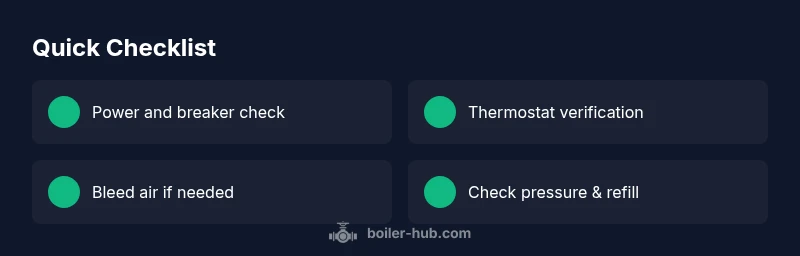
Before calling a technician, run through these safe, straightforward checks:
- Check that the boiler switch is ON and the circuit breaker hasn’t tripped.
- Verify the thermostat is set correctly and communicating with the boiler.
- Look for the pilot light or electronic ignition status; relight only if safe and instructed by the manual.
- Inspect visible pipes for leaks and ensure radiators are bled of air if they’re cold at the top.
- Confirm there’s adequate water pressure within the recommended range.
If any of these steps resolve the issue, you’ve likely cured the problem without a service call. If not, continue with the diagnostic flow.
Diagnostic flow: symptom → diagnosis → solutions
Start with the most common, low-effort causes. If there’s no heat, test power first, then thermostat, then air and pressure. If banging sounds occur, air or water hammer is probable. If you smell gas or hear gas escaping, evacuate immediately and call emergency services. Use this flow to narrow down causes and save time and money. Boiler Hub's guidance emphasizes safety at every turn.
Fixes for the most common issue: power and thermostat
The most frequent what's wrong with boiler room scenario is power and control. Begin by resetting the breaker, then switching the boiler’s power button off for 30 seconds before turning it back on. Check the thermostat’s settings, ensure it’s in correct mode (heating), and confirm it’s not a dead battery issue if it’s wireless. If the boiler still won’t respond, verify that the gas valve is open and the supply is steady (for gas boilers). If no fix, move to step 6 in the step-by-step guide.
Air, water pressure, and valve checks
Air in the system can cause inconsistent heat and banging sounds. Bleed radiators starting from the highest point, and watch for air release until steady water flow is achieved with a few burps of air. Check the system pressure with the pressure gauge; it should be within the manufacturer’s recommended range—usually around 1–2 bar when cold. If pressure is too low, re-fill slowly using the filling loop and re-check. Valve faults or pressure relief issues require caution and may necessitate professional service.
When to call a professional and what to expect
If basic checks fail to restore heat, or if you notice gas smells, carbon monoxide risks, or pressure relief valve leaks, contact a licensed boiler technician immediately. A pro will verify gas pressure, ignition safety, and venting, then test for leaks and ensure the system operates within safe limits. Have recent maintenance records and any fault codes ready to speed up the diagnosis. Boiler Hub recommends scheduling annual professional checkups to prevent issues from escalating.
Preventive maintenance to avoid future boiler-room problems
Regular maintenance is the best defense against what's wrong with boiler room situations. Schedule annual servicing, replace worn seals, and clean the burner and heat exchanger as recommended. Check expansion tank, pump operation, and automatic air vents. Keep clear space around the boiler and ensure proper ventilation. A simple log of temperatures, pressures, and fault codes helps identify trends that precede failures. Following these practices reduces unexpected breakdowns and prolongs boiler life. Boiler Hub Analysis, 2026 shows that proactive maintenance reduces call-outs and improves efficiency.
Steps
Estimated time: 60-90 minutes
- 1
Check power and breakers
Locate the boiler and main service panel, verify the boiler switch is ON, and reset the breaker if it has tripped. Wait 30 seconds before restoring power. This simple step rules out power as a root cause.
Tip: Always start with power to avoid dangerous electrical work. - 2
Verify thermostat operation
Ensure the thermostat is set to heating, not off, and that it’s communicating with the boiler. Replace batteries if wireless and check wiring connections if it’s a wired model.
Tip: A misreading thermostat is a very common fault. - 3
Inspect ignition and gas supply
For gas boilers, confirm the gas valve is open and there is a steady supply. If ignition fails, do not force ignition— wait for a pro to check for gas pressure and safe venting.
Tip: Gas safety is paramount; never bypass safety devices. - 4
Bleed air from the system
Shut down the boiler, locate bleed valves on radiators, and release air until water flows in steadily. Recheck system pressure after bleeding.
Tip: Always have a cloth ready to catch water and watch for scalding hazards. - 5
Check and adjust boiler pressure
Read the pressure gauge when the system is cold. If pressure is below range, use the filling loop to top up slowly; if it’s too high, drain a small amount of water following the manual.
Tip: Don’t overfill; small increments reduce risk of over-pressurizing. - 6
Test run and observe
Restart the boiler and let it run through a cycle. Listen for abnormal noises, verify heat distribution, and check for new fault codes.
Tip: Document any codes for your technician.
Diagnosis: Boiler not producing heat or cycling on/off erratically
Possible Causes
- highPower supply issue (tripped breaker or blown fuse)
- mediumThermostat fault or miscalibration
- mediumAir in the system causing pressure drops
- lowLow fuel supply or closed gas valve
- lowPressure/valve fault (pressure relief valve or fill valve)
Fixes
- easyReset the boiler and check the main breaker; correct any trip
- easyTest and recalibrate or replace the thermostat; ensure power to thermostat is live
- easyBleed air from the system and re-check pressure; top up if needed within recommended range
- mediumInspect gas supply and ignition safety; do not force ignition; call pro if gas issue suspected
- hardCheck and replace faulty valves or pressure components; if unsure, involve a professional
Questions & Answers
Why is my boiler room making banging noises?
Banging noises usually indicate air in the system or water hammer. Bleed air from radiators and check for high water velocity. If noises persist, have a pro inspect the pipe layout and expansion tank.
Banging usually means air in the system or water hammer. Bleed air and check the pipes; if it continues, a pro should inspect the setup.
What should I do if the boiler won’t ignite?
First verify power and thermostat settings, then check the gas supply and ignition. If ignition fails after these checks, don’t force ignition and contact a licensed technician.
If the boiler won’t ignite, check power, thermostat, and gas supply. If it still won’t light, call a professional.
How can I tell if there’s a gas leak near the boiler room?
If you smell gas, evacuate immediately and call emergency services. Do not operate switches or lighting in the area. Have the gas company or a licensed technician check the system before re-energizing.
Smell gas? Leave the area and call for help right away.
Is it safe to bleed air from the boiler myself?
Bleeding air is a common maintenance step if you follow the manufacturer’s instructions. Use proper tools and avoid scalding; if you’re unsure, call a pro.
Bleeding air can be safe if you follow the steps and take precautions.
When should I call a professional?
If you’re uncomfortable diagnosing power, gas, or pressure issues, or if you smell gas, call a licensed technician immediately. They can safely verify ignition, venting, and leak checks.
If you’re unsure or gas is involved, it’s time to call a professional.
Watch Video
Key Points
- Start with power, thermostat, and air checks.
- Bleed air and adjust pressure to the recommended range.
- Gas safety must come first; call a pro for leaks.
- Regular maintenance reduces boiler-room problems.
- Use a systematic troubleshooting flow to narrow causes.