What Can Go Wrong with Boiler: An Urgent Troubleshooting Guide
A practical boiler troubleshooting guide for homeowners and facility managers. Learn quick, safe checks, common boiler failures, and when to call a licensed professional to keep heat on and prevent damage.


What can go wrong with boiler is often caused by power or ignition failures, pressure problems, thermostat errors, or dirty burners. This quick guide highlights the top suspects and gives a safe, two-minute check you can perform before you call a professional. Acting quickly can prevent further damage and keep your home warm.
What can go wrong with boiler: common failure modes
What can go wrong with boiler? Homeowners often notice heat loss, no ignition, odd noises, or leaks. The answer lies in a few common failure modes: power supply issues, faulty controls, improper pressure, and dirty components. By understanding these failure modes, you can act quickly and safely. As you assess your system, consider whether power, controls, or pressure are the likely culprits and prepare for safe testing. This awareness helps you decide when to seek professional assistance and reduces the risk of accidental damage.
Safety and immediate steps
Safety comes first with boilers. If you smell gas, evacuate immediately and call emergency services. Do not operate switches or attempt to relight the boiler in that situation. If you can do so safely, shut off the electrical supply and the gas supply at the service valve before inspecting accessible components. Keep children and pets away and ensure you work in a well-ventilated area. Always use proper personal protective equipment (PPE) and never bypass safety devices.
Diagnostic mindset: start with simple checks
Most boiler problems start with simple checks you can perform safely. Begin with the power source, thermostat, and pressure gauge. Confirm the boiler is receiving power, the thermostat signals heat demand, and the system pressure sits in the normal range (usually around 1-1.5 bar on most systems when cold). If basic checks fail to restore operation, document readings and prepare for deeper diagnostics or professional help. This approach keeps you from chasing phantom faults and frames the troubleshooting path clearly.
Practical fixes for common causes (safe, basic steps)
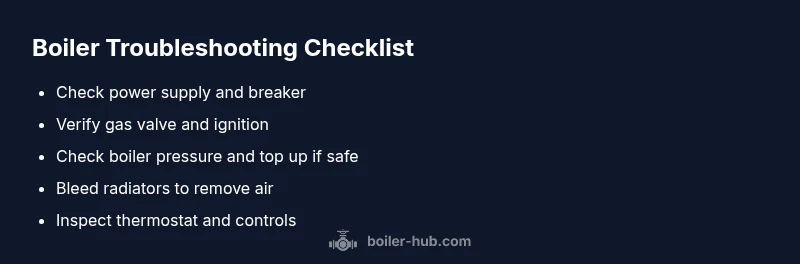
This section outlines approachable fixes you can attempt without specialized tools. First, reset the boiler and verify the circuit breaker hasn’t tripped. Next, inspect the gas supply valve for open position and ensure the gas meter indicator is functioning. Check the pressure gauge; if the pressure is low, do not overfill. Finally, examine the thermostat and wiring connections for loose or corroded contacts. If heat still doesn’t return, proceed to professional assistance rather than forcing repairs.
Prevention and long-term maintenance
Preventing boiler problems starts with regular maintenance and careful operation. Schedule annual service, tighten and reseal connections as needed, and keep the area around the boiler clear of dust and debris. Regularly check for leaks, corrosion, or rust around the boiler and boiler fittings. Use an energy-efficient thermostat schedule to reduce strain on the system and extend its life. Keeping a maintenance log helps you track service dates and observed symptoms over time.
When to call a licensed professional
If you notice gas smells, unusual flames, or persistent no-heat conditions after basic checks, contact a licensed professional immediately. Gas safety is non-negotiable; do not attempt complex gas work yourself. For electrical concerns, turn off power at the breaker and call a qualified technician. If you’re unsure about the fault, a pro can perform pressure tests, combustion analysis, and system checks that require specialized tools.
Steps
Estimated time: 60-90 minutes
- 1
Ensure safety and power off
Before touching anything, switch off the boiler and disconnect power at the breaker if safe. If you smell gas, evacuate and call emergency services. This step reduces risk and prepares you for safer checks.
Tip: Wear gloves and eye protection when handling metal components. - 2
Check power and breakers
Inspect the outlet, power cord, and breaker panel for signs of tripping or damage. Reset the breaker if needed, and verify the boiler receives power after the reset.
Tip: Reset once; if the breaker trips again, stop and call a professional. - 3
Verify thermostat and controls
Ensure the thermostat is set to heat and communicates with the boiler. Check wiring for loose or corroded connections and confirm there are no error codes on the boiler display.
Tip: Replace non-responsive batteries in the thermostat if applicable. - 4
Check boiler pressure
Look at the pressure gauge. If the pressure is too low (below 1 bar) or too high, follow manufacturer guidance to adjust or drain safely. Do not exceed recommended ranges.
Tip: Only adjust pressure if you’re confident; otherwise skip to professional help. - 5
Inspect gas supply and ignition
If you have a gas boiler, ensure the gas valve is open and there are no obstructions. Listen for ignition and assess burner cleanliness. Never attempt to relight if gas odors persist.
Tip: If ignition fails after a safe reset, stop and call a pro. - 6
Bleed radiators and test
With the system powered and safe, bleed radiators to remove trapped air. Recheck pressure and confirm heat output improves after bleeding.
Tip: Use a cloth to catch water from the bleed valve to prevent spills. - 7
Test operation and observe
Turn the boiler back on and monitor for heat, noise, or leaks. If issues persist, document readings and schedule a professional inspection.
Tip: Keep notes of symptoms and conditions for the technician.
Diagnosis: No heat or hot water when demand occurs
Possible Causes
- highPower issue (tripped breaker, blown fuse, or faulty switch)
- mediumThermostat or control failure
- mediumLow boiler pressure
- lowGas supply problem or ignition issue
Fixes
- easyReset circuit breaker and verify power to the boiler
- easyCheck thermostat settings and wiring for loose connections
- easyCheck boiler pressure gauge and top up to normal range if safe to do so
- hardIf gas smell or ignition trouble, evacuate and call a professional
Questions & Answers
Why won't my boiler turn on?
Most often this is caused by a power issue, a tripped breaker, or a thermostat/control fault. Check power, reset, and verify thermostat settings before calling a professional if the issue persists.
Most boiler non-starts come from power, thermostat, or control problems. Start with power and thermostat checks before seeking help.
Why is there no hot water from the boiler?
No hot water can result from low pressure, a faulty diverter valve, or a boiler not firing properly. Check pressure and listen for ignition, then inspect for leaks and service codes.
No hot water usually means pressure or firing issues. Check pressure, ignition, and any fault codes.
What does a banging or kettling noise mean?
A banging noise often indicates trapped air, mineral buildup, or circulation problems. Bleed radiators, flush the system if advised, and call a pro if the noise continues.
Kettling usually means air or scale buildup; bleed and check pressure, then seek professional help if persistent.
Is it safe to inspect a boiler myself?
Only perform simple visual checks if you know how to shut off power safely. Do not touch gas valves or internal components if you’re unsure. When in doubt, call a licensed professional.
You can do basic safety checks, but avoid gas work or opening equipment. Call a pro if unsure.
When should I replace a boiler rather than repair it?
If the boiler is old, inefficient, or requires frequent repairs, replacement with a modern, efficient model may be more economical in the long run. Consult a professional for a cost-and-benefit assessment.
If repairs pile up or efficiency drops, replacement may be the smarter choice. Get an expert cost estimate.
Watch Video
Key Points
- Check basic power and controls first
- Monitor boiler pressure and bleed air if needed
- Shut off power/gas if you smell gas or detect danger
- Document symptoms to guide professional help
- Schedule annual maintenance to prevent future failures