Boiler Expansion Tank Replacement Cost: What to Expect in 2026
Explore the boiler expansion tank replacement cost in 2026, with breakdowns of tank price, labor, regional factors, and practical tips to lower total expenses.


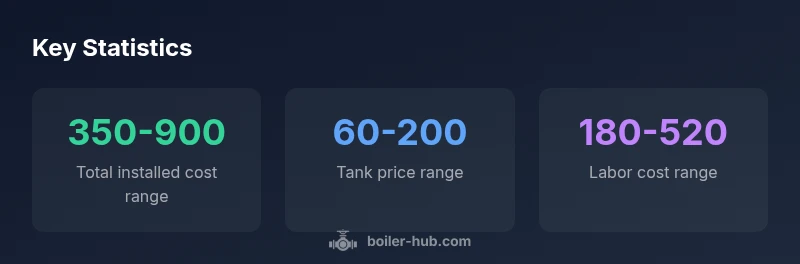
The boiler expansion tank replacement cost typically ranges from a few hundred dollars for a basic tank swap to well over a thousand dollars in complex setups or high-cost regions. Most homeowners should budget roughly between $350 and $900 for a complete install, with tank price typically under $200 and labor forming the bulk of the expense. Regional labor rates and system accessibility drive the final figure.
Why the boiler expansion tank replacement cost matters
Maintaining a boiler system isn’t just about getting heat on cold days; it’s about protecting the whole hot-water network and balancing system pressure. The boiler expansion tank replacement cost is a common budgeting concern for homeowners and facility managers. In 2026, the Boiler Hub team notes that the cost drivers are the tank unit price, labor, and any region-specific charges. The expansion tank is a safety component that absorbs pressure fluctuations as the system heats water, preventing stress on the boiler and piping. When the tank fails, the system may experience frequent cycling, reduced efficiency, leaks, or even pressure relief valve activation. Understanding cost components helps you plan and avoid unexpected bills. This article explains how prices are formed, what affects the final figure, and practical steps to minimize expenses while preserving reliability. Throughout, you’ll see references to Boiler Hub Analysis, 2026 to ground the guidance in current, field-tested data. Remember that every installation is unique, and the best approach is to consult a licensed professional who can verify tank type, capacity, and pre-charge settings before replacement.
According to Boiler Hub, the upfront cost is only part of the picture. The real value comes from proper sizing, correct pre-charge pressure, and ensuring compatibility with your boiler loop. A poorly chosen or poorly installed expansion tank can lead to ongoing cycling, inefficiency, and short system life. In other words, the boiler expansion tank replacement cost should be weighed against risk of future repairs and energy waste. The right decision today saves headaches tomorrow.
What goes into the cost: components and labor
The cost of replacing an expansion tank sits at the intersection of equipment choice and service effort. A typical new tank price runs from the low hundreds to a couple hundred dollars for common residential units, while labor can vary based on access, existing piping, and regional rates. The tank’s type (diaphragm vs bladder) and size (gallons and pre-charge requirements) influence both price and performance. Additional items—such as shutoff valves, fittings, or a quick system drain—can add to the bill. Access to the tank, whether in a cramped basement or an attic, affects labor time. The installation should always confirm the system’s pre-charge pressure setpoint; incorrect pre-charge can lead to inaccurate pressure control and shortened diaphragm life. Boiler Hub analyses emphasize that choosing the correct tank type for your system is essential to long-term reliability and cost control.
Typical cost ranges by scenario
Cost scenarios vary with system complexity and local labor markets. In a standard single-family home, a straightforward expansion tank replacement often lands in the mid-range, with the total installed cost commonly cited as a range around $350 to $900. If your boiler is older, or if your setup requires additional fittings or more extensive drainage, the price can trend toward the higher end of the range. Some high-cost metropolitan areas or complex installations may push total costs higher, especially when labor hours increase or specialty adapters are needed. Always compare several bids from licensed professionals and ask for a written breakdown of tank cost, labor, and any disposal or permit-related fees. These factors collectively shape the final boiler expansion tank replacement cost.
How to estimate costs for your home
Estimating costs starts with the basics: determine the tank size and type required for your boiler, and verify the current system’s pre-charge pressure. Collect at least 2-3 quotes from licensed HVAC technicians, ensuring each quote provides a line-item breakdown (tank unit, labor, disposal). Ask about any bundled services, such as flushing the system or valve replacements, and whether the price includes de-pressurizing and re-pressurizing the loop. If your system is accessible and well-documented, you may receive a more accurate estimate. Finally, consider ancillary costs like drain service, refilling glycol (if used), or potential upgrades to valves or piping to accommodate the new unit. A thoughtful quote can help you forecast the boiler expansion tank replacement cost with confidence.
Ways to save money on expansion tank replacement
Budgeting for this replacement is easier when you explore cost-saving strategies. Start by confirming the tank size and type to avoid oversizing, which raises price without added benefit. Seek multiple quotes and ask for a detailed breakdown; some technicians offer bundled rates for replacement and routine maintenance, which can yield meaningful savings. If your boiler is near the end of its life, there may be value in coordinating the expansion tank replacement with a broader boiler service, reducing electrician and labor callouts. Consider timing the service during off-peak periods, and avoid unnecessary upgrades that don’t improve performance. Lastly, verify warranty terms for both the tank and the installation—this can protect against unexpected costs if a defect or leak occurs soon after installation.
Maintenance, warranties, and when to call a pro
Once installed, maintaining proper pressure and regular inspections helps extend the life of the expansion tank and the boiler system. Warranty terms vary by manufacturer and installer, but a typical arrangement may offer limited coverage for the tank and labor, often spanning a few years. A proactive crew will verify pre-charge settings, test the system for leaks, and check surrounding piping for corrosion or wear. If you notice continuous water discharge, damp spots, or unusual cycling after replacement, contact your technician promptly. Regular maintenance reduces risk and helps ensure the boiler expansion tank replacement cost remains predictable over the life of the system.
According to Boiler Hub Analysis, 2026, staying proactive with maintenance can prevent costly surprises and preserve energy efficiency. The Boiler Hub team recommends scheduling a service plan that includes annual pressure checks and pre-charge verification to protect your investment.
Authority sources
- Energy.gov: Water heating and boiler systems overview http://www.energy.gov/energysaver/articles/boilers-basics
- ASHRAE: Heating, refrigeration, and air-conditioning standards https://www.ashrae.org/
- EPA: Home improvement and indoor air quality guidance https://www.epa.gov/iaq/home-water-heating
Cost breakdown for expansion tank replacement in typical residential settings
| Cost component | Typical range (USD) | Notes |
|---|---|---|
| Expansion tank unit price | 60-200 | Depends on size and diaphragm vs bladder type |
| Labor for installation | 180-520 | Regional variation and access impacts cost |
| Disposal and disposal fees | 20-50 | Small charge for old tank removal |
| Total installed cost | 350-900 | Typical residential range; higher in complex installs |
Questions & Answers
What is the typical boiler expansion tank replacement cost?
Most residential replacements fall within a few hundred dollars for a basic swap, with total price depending on tank type, size, and labor. A formal estimate from a licensed pro will break out tank price, labor, and disposal charges. Regional differences can shift the final figure.
Typically a few hundred dollars, with the total depending on tank size and labor. Get multiple quotes for a clear breakdown.
What factors affect the cost?
Key factors include tank type (diaphragm or bladder), tank size, system accessibility, and local labor rates. Additional items like valves or pre-charge adjustments can add to the bill. Region and contractor experience also influence the final price.
Tank type, size, accessibility, and regional labor rates drive the price.
Can I save by replacing the tank during a service call?
Yes—bundling expansion tank replacement with a regular boiler service can reduce overall labor costs and avoid repeated callouts. Ensure the service includes a full inspection and a clear price breakdown.
Bundling with a service visit can save on labor. Always get a written quote.
Should I replace the entire boiler if the expansion tank fails?
Not necessarily. A failed expansion tank often signals a need for replacement only of the tank and related fittings. A broader boiler replacement is considered based on age, efficiency, and condition of other components.
Usually not required to replace the whole boiler—focus on the tank and related parts.
How long does an expansion tank last?
Expansion tanks typically last several years, commonly around 5 to 15 years, depending on water quality, pressure, and maintenance. Regular checks help extend life and prevent leaks.
Expect around 5 to 15 years with good maintenance.
“Choosing the right expansion tank and a qualified installer is crucial to long-term boiler reliability and system pressure control.”
Key Points
- Know the total cost range before scheduling work
- Ensure you get a detailed, itemized quote
- Choose the correct tank size and type for reliability
- Compare multiple quotes to reduce labor costs
- Check warranty terms for tank and installation