What to Do When Your Furnace Goes Out
Boiler Hub's urgent furnace troubleshooting guide helps homeowners quickly assess outages. Learn immediate safety steps, common causes, and a clear, step-by-step plan to restore heat and protect your family.


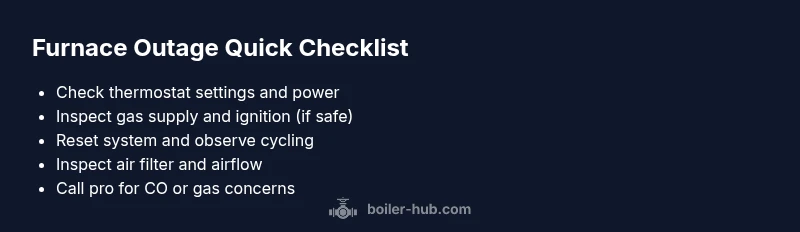
Most furnace outages stem from simple issues you can inspect safely. Start by confirming the thermostat is set to heat and above room temperature, then check the power supply, including the circuit breaker and the furnace switch. If the unit still won’t start, reset the system and call a pro if you smell gas or CO.
Immediate Safety Steps to Take
According to Boiler Hub, when a furnace goes out the first priority is safety. If you smell gas, hear a hissing sound, or notice a white fog near registers, evacuate immediately and call the gas company or 911 from a safe location. Do not switch on lights, use electrical appliances, or light matches near the furnace area. Install and test carbon monoxide detectors on every floor, ensuring they are functioning. Once you are in a safe area, inform household members and keep doors open to ventilate if advised by authorities. If the space is safe and there is no gas smell, you can proceed with simple checks, but never bypass safety systems or ignore CO warnings. After confirming safety, locate the furnace shutoff switch and circuit breaker. If it's a power issue, resetting the switch after a minute may restore operation, but if the breaker trips again, stop and call a professional. Callouts: record any error codes on the furnace panel; keep your service provider informed. Protect sensitive equipment with a dry surface and wear protective gloves if you touch burner components. This initial step reduces risk and buys time while you assess the problem.
Common Causes of Furnace Outages
Outages happen for a few predictable reasons. A misbehaving thermostat or a dead battery can prevent the furnace from receiving a heat request. Power issues, including a tripped circuit breaker or a switch turned off, are another frequent cause. Gas supply problems, such as a closed valve or an out-of-date pilot light, can stop ignition. Dirty air filters, restricted venting, or a blocked condensate line can cause the furnace to shut down as a safety measure. Finally, ignition or control board failures are more common in older units. Understanding these categories helps you triage quickly and safely. Before assuming the worst, confirm basic power and thermostat status, then move to more involved checks if needed.
Basic Checks You Can Do Right Now
Begin with the simplest checks that don’t require tools. Ensure the thermostat is set to heat and the temperature is higher than the room. Verify the furnace power switch is ON and the breaker for the furnace panel is not tripped. Check that the gas valve is OPEN if you have a gas furnace. Inspect the air filter; a clogged filter can cause the furnace to overheat and shut down. Look for any obvious signs of wear, frayed wires, or loose connections at the furnace access panel (only if you feel confident and it is safe to do so). Finally, confirm the condensate drain isn’t blocked and that vents are clear of obstructions. If you find a safety issue, stop and seek professional help.
Testing the Thermostat and Power Supply
If basic checks pass, test the thermostat by turning it off and back to heat, or remove and reinsert batteries. Check for 24V signals when the thermostat calls for heat; weak or absent signals indicate a thermostat or control board problem. For power, flip the circuit breaker OFF, wait 30 seconds, then ON again to reset. If the furnace still does not respond, listen for any hum or click from the blower or igniter—these sounds can indicate ignition problems or a faulty control board that typically requires professional service. Do not attempt advanced electrical testing unless you have training.
When to Reset the Furnace and Which Codes Matter
Some furnaces respond to a controlled reset, which can clear transient faults. Follow the manufacturer’s reset procedure found in the manual or on the access panel, then attempt a restart by selecting heat. If you receive a fault code, write it down and consult the manual or the manufacturer’s website to interpret it. Never ignore persistent fault codes or repeated shutdowns, as they can indicate a failing component that requires professional diagnosis. If codes point to gas, ignition, or carbon monoxide risks, stop immediately and call a licensed technician.
Preventive Maintenance to Reduce Future Outages
To minimize future outages, schedule annual professional maintenance and keep up with routine DIY checks. Replace air filters every 1–3 months, depending on usage and filter type. Ensure venting and exhaust paths are clear and unobstructed, especially in colder months. Keep outdoor intake clear of snow or debris and verify the condensate line drains properly. A well-maintained furnace runs more efficiently, experiences fewer unscheduled outages, and provides safer operation with reduced CO risk. Create a simple maintenance calendar and stick to it.
What to Do If You Suspect a Gas Leak or CO Issue
If you suspect a gas leak or detect carbon monoxide, exit the building immediately and call emergency services. Do not re-enter until authorities declare it safe. Do not use phones or switches inside the home; use a neighbor's phone or outdoor emergency line. Once you are at a safe location, contact your gas utility and a licensed HVAC professional to inspect the system. Install functional CO detectors on every level and test them monthly.
Steps
Estimated time: 30-60 minutes
- 1
Power down and safety check
Turn off power at the furnace and the breaker. If you smell gas, evacuate immediately and call the gas company. Wait for a professional assessment before continuing.
Tip: Always address gas safety first; never ignore a gas odor. - 2
Verify thermostat settings
Make sure the thermostat is set to heat and that the set temperature is higher than the current room temperature. If batteries are old, replace them and retest.
Tip: Use a spare thermometer to confirm room temperature is what your thermostat reads. - 3
Check power and gas supply
Ensure the furnace switch is ON and the circuit breaker is not tripped. If you have a gas furnace, confirm the gas valve is OPEN and there is a gas supply.
Tip: If you smell gas, stop and call the utility immediately. - 4
Reset and attempt restart
With power restored, perform a controlled reset per your furnace manual. Then set thermostat to heat and observe for ignition and cycling.
Tip: Wait a few minutes after reset to see if the system cycles normally. - 5
Assess ignition and controls
Listen for ignition sequence sounds. If there is no ignition or you hear a soft click without flame, the igniter or control board may need professional service.
Tip: Do not bypass ignition components; abnormal sounds require diagnosis by a pro. - 6
Call for professional help if needed
If the furnace refuses to start or you detect CO or gas odors at any point, stop and contact a licensed technician immediately.
Tip: Keep the area clear and provide the technician with any fault codes observed.
Diagnosis: Furnace won’t start or shuts off unexpectedly
Possible Causes
- highPower issue (tripped breaker or off switch)
- highThermostat or control board fault
- mediumGas supply problem or ignition fault
- lowAirflow/venting problem or dirty filter
Fixes
- easyReset the furnace breaker and power switch, then try restart
- easyReplace thermostat batteries or recalibrate/replace thermostat
- mediumCheck gas valve position and follow relighting procedure or call for ignition service
- easyInspect airflow, replace or clean air filter, ensure vents are clear
Questions & Answers
What should I do first when my furnace goes out?
Start with safety checks: ensure you’re not near any gas leaks, then verify thermostat settings and power to the furnace. If the unit still won’t start, follow the step-by-step guide or call a professional for hazardous situations.
First check safety, then thermostat and power. If it still won’t start, use the step-by-step guide or call a professional for hazardous situations.
Why won’t my furnace start after I checked the thermostat and power?
Possible causes include ignition failure, a failed control board, or a restricted gas supply. If basic checks are confirmed, you may need professional inspection to diagnose ignition or control issues.
If it still won’t start after checking the basics, ignition or control issues are likely and should be diagnosed by a professional.
Is it safe to reset the furnace myself?
Yes, a controlled reset outlined in your manual is generally safe. Avoid resets if you smell gas or CO, or if the unit shows persistent fault codes. If unsure, call a licensed professional.
A reset can be safe if you follow the manual, but never reset if you smell gas or CO or see persistent faults.
When should I call a professional for a furnace outage?
Call a professional if you smell gas, detect CO, hear unusual noises, the unit won’t relight after a reset, or fault codes persist. These issues require trained assessment for safety and proper repair.
Call a pro if you smell gas or CO, hear odd noises, or the furnace won’t restart after a reset.
How can I reduce furnace outages in the long term?
Schedule annual professional maintenance, replace filters on schedule, ensure proper ventilation, and keep an eye on unusual noises or performance changes. Small proactive steps save emergency outages later.
Regular maintenance and timely filter changes help prevent outages.
What should I do if I suspect a CO leak?
If CO suspicion exists, evacuate and call emergency services. Do not re-enter until cleared. Install and test CO detectors on every floor for ongoing safety.
If you suspect CO, leave the area and call emergency services. Check detectors afterward.
Watch Video
Key Points
- Check thermostat and power first.
- Inspect gas and ignition safely if you have a gas furnace.
- Reset cautiously and record diagnostic codes.
- Schedule annual maintenance to prevent outages.