What to Do If Your Furnace Stops Working
Urgent steps to diagnose and fix a furnace that won’t heat. Learn safe checks, a practical diagnostic flow, and when to call a pro to minimize downtime.


If your furnace stops working, the most likely causes are power, thermostat, or filter issues. Start with simple checks like ensuring power is on, the thermostat is set correctly, and the filter is clean. If these don’t restore heat, follow the diagnostic flow and the step-by-step guide below to safely identify and fix the problem.
What to do immediately when the furnace stops working
When heat suddenly stops, your first priority is safety. If you suspect a gas leak or you smell rotten eggs, evacuate the area and call your gas utility or emergency services. For typical outages or equipment faults, you can take practical steps while staying safe. According to Boiler Hub, the most common reasons a furnace stops producing heat are simple, non-emergency failures: a lost power connection, a tripped breaker, a misreading thermostat, a dirty filter, or restricted airflow. This section provides an actionable path to diagnose the issue without delaying heat restoration. Remember that working with gas appliances requires caution; if you smell gas, do not flip switches or operate lights—leave the area and call for help. Throughout this guide, you’ll find a diagnostic flow and step-by-step fixes you can perform safely in most homes. By following these steps, you’ll minimize downtime and keep your family warm more quickly.
Safety first: essential precautions
Safety is non-negotiable when dealing with heating equipment. Before you touch any components, turn off power to the furnace at the service switch and, if you’re comfortable, at the main panel. Do not attempt to relight pilots or investigate gas lines if you detect a gas odor or hissing sound. Install and test CO alarms on every floor, especially near the furnace, and replace batteries annually. Keep children and pets away from the unit during inspection. If you’re unsure about any step, pause and call a licensed technician. Boiler Hub stresses that most accidental injuries come from mishandling gas valves, electrical wiring, or unsafe ignition components; when in doubt, seek professional help.
Quick checks you can perform before calling for help
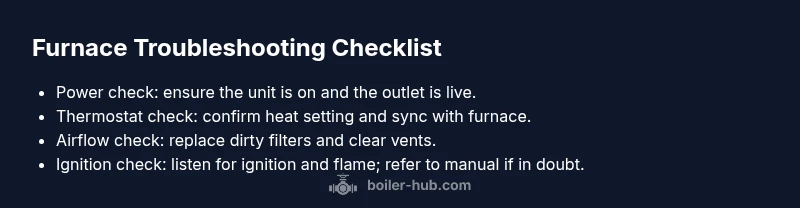
You can often identify the problem with a few safe checks. Start with power: confirm the furnace switch is ON and the circuit breaker feeding the unit is not tripped. Then check the thermostat: is it set to heat, is the temperature above the room temperature, and are unit power indicators active? If your thermostat is wireless, replace the batteries and re-sync it with the furnace. Inspect the air filter; a clogged filter reduces airflow and can trigger faults or limit heat output. Ensure air vents aren’t blocked by furniture or dust buildup. Listen for the furnace blower; if you don’t hear it running after a few minutes, or you see error LEDs, note the code and refer to the manual or a pro. These simple checks address the most frequent culprits and are quick to perform.
Diagnostic flow: symptom to solution (at a glance)
The diagnostic flow helps you reason from symptom to cause to fix. Symptom: no heat. Diagnosis: power, thermostat, air supply, or ignition. If the furnace has power and the thermostat is correct, inspect airflow and gas supply. Solutions: reset breakers, replace filters, or reset ignition. If the problem persists, escalate to professional service. This flow keeps you organized and reduces needless guessing, while prioritizing safety.
Step-by-step fixes for the most common causes
Step 1: Power and switches — Turn off power to the unit, then turn it back on. Look for a blown fuse or tripped breaker; replace or reset as needed. Pro tip: wait 60 seconds after resetting before testing heat again.
Step 2: Thermostat sanity check — Confirm mode is set to heat, the temperature is higher than room temperature, and the thermostat is synced with the furnace. Pro tip: if you have a digital thermostat, restart the device and re-pair it if necessary.
Step 3: Airflow and filter — Inspect the air filter and replace if dirty. Ensure supply and return vents are unobstructed. Pro tip: check for signs of restricted airflow like frost on supply registers.
Step 4: Gas supply and ignition — For gas furnaces, verify the gas valve is open and there are no gas odors. If the ignition click is weak or the flame won’t stay lit, do not force relighting. Pro tip: consult the manual for the correct ignition procedure.
Step 5: Spark/ignition system and flame sensor — If the furnace attempts to ignite but shuts down, the flame sensor or ignition system may be dirty or faulty. Pro tip: gently clean ignition components if you know how and have turned off power.
Step 6: Final test and safety check — Restore power, set thermostat, and observe the furnace cycle. If the unit still doesn’t heat, it’s time to call a pro. Pro tip: note any error codes and make a quick sketch of the wiring for the technician.
If the problem persists after these steps, do not continue attempting risky fixes; professional service is required for reliable, safe operation.
Prevention and maintenance to avoid future stoppages
Regular maintenance is the best defense against unexpected furnace failures. Schedule a professional tune-up at least once a year and perform basic checks monthly, such as changing or cleaning filters and ensuring vents remain unobstructed. Keep the area around the furnace clear and test CO alarms regularly. Boiler Hub analysis shows that many stoppages could be avoided with routine checks and a simple maintenance routine. Small proactive steps can extend equipment life, improve efficiency, and reduce the chance of sudden heat loss.
When to call a professional and what to expect
If you encounter gas odor, persistent ignition failures, unusual noises, or if the furnace still won’t heat after the basic checks and fixes, contact a licensed HVAC technician. A pro will perform a more thorough inspection, check electrical connections, verify venting and gas pressure, and test safety controls. Expect a diagnostic call, a written estimate, and safe, code-compliant repair work. Having notes from your DIY checks helps the technician pinpoint the issue faster and reduces downtime.
Steps
Estimated time: 45-60 minutes
- 1
Check power and switches
Turn off power to the furnace, then turn it back on. Look for a tripped breaker or a blown fuse and replace as needed. This step addresses the most common power-related failures that prevent heating.
Tip: If the breaker trips again, do not bypass it—seek professional help. - 2
Validate thermostat operation
Ensure the thermostat is set to heat and above room temperature. If it uses batteries, replace them and re-sync with the furnace. A misreading or dead battery is a frequent cause of no-heat conditions.
Tip: Keep a spare battery on hand for wireless thermostats. - 3
Inspect air filters and vents
Remove and inspect the furnace air filter; replace if dirty. Check that supply and return vents are not blocked by furniture or dust. Restricted airflow can trigger safety shutoffs or reduce heat.
Tip: Use the exact filter size recommended by the manufacturer. - 4
Check gas supply and ignition (gas furnaces only)
Verify the gas valve is fully open and there are no gas odors. If ignition is weak or you hear a click without flame, do not attempt a DIY fix—gas safety requires a pro.
Tip: Do not relight a pilot or attempt ignition if you smell gas. - 5
Inspect ignition and flame sensor
If the furnace attempts to ignite but shuts down, the flame sensor or ignition system might be dirty. Clean carefully following the manual or have a pro handle it.
Tip: Only touch ignition components after turning off power. - 6
Test the system and observe safety features
After reassembling, restore power and run a short heat cycle. Note any error codes or abnormal noises. If heat still does not appear, move to professional service with notes from your checks.
Tip: Record error codes for the technician to review.
Diagnosis: Furnace won't ignite or produce heat
Possible Causes
- highPower or electrical issue
- highThermostat or wiring fault
- highTripped circuit or blown fuse
- mediumGas supply or venting problem
- lowClogged filter or blower obstruction
Fixes
- easyCheck outlet and reset breakers; replace fuses if needed
- easyVerify thermostat settings and re-pair battery-powered units
- mediumInspect gas valve and ensure proper venting; do not relight if unsure
- easyReplace/clean air filter and clear blocked vents
- easyReset ignition or flame sensor if safe to do so per manual
Questions & Answers
Why won’t my furnace turn on even though the thermostat is set correctly?
Often the problem is power, a tripped breaker, or ignition. Start with power at the furnace, check the breaker, and test the thermostat batteries or wiring. If heat still won’t come, follow the diagnostic flow and move to the safe fixes.
Typically, power or thermostat wiring is the culprit—check power and thermostat batteries first.
What should I do if I smell gas or hear gas warnings?
If you smell gas or hear a hiss, leave the area immediately and contact your gas utility or emergency services. Do not operate switches or lighting in the area.
Leave the area and call for help if you smell gas.
Can a dirty air filter cause the furnace to stop heating?
Yes. A clogged filter can restrict airflow, trigger safety limits, and prevent the furnace from heating effectively. Replace the filter and see if heat returns.
A dirty filter can stop heat by restricting airflow.
Is it safe to reset the furnace myself?
Resetting is often safe if you follow the manual and take precautions. If you detect CO or gas, stop and call a pro. Always power down before handling electrical components.
Follow the manual, but if you smell gas or CO, call for help.
How often should I schedule furnace maintenance?
Most manufacturers recommend an annual professional tune-up. Regular checks help maintain safety, efficiency, and reliability.
Annual maintenance helps keep it safe and efficient.
Watch Video
Key Points
- Check power, thermostat, and filter first.
- Follow the diagnostic flow before calling a pro.
- Never ignore CO alarms or gas odors.
- Document steps to help technicians diagnose faster.
- Schedule annual maintenance to reduce future breakdowns.