What to Do If Your Furnace Stops Working in Winter: A Practical Troubleshooting Guide
Facing a cold house? This urgent, practical guide walks homeowners through checks, diagnostics, and safe fixes when a furnace stops in winter. Learn what to do now and when to call a pro.


Most winter furnace outages stem from simple, safe causes: a tripped circuit, thermostat miscommunication, or an ignition/gas issue. Quick fix steps include confirming power, resetting the furnace, verifying the thermostat wiring, and changing a dirty air filter. If heat remains off after these checks, shut down and call a licensed technician to inspect gas valves, safety switches, and venting.
Why a furnace may stop working in winter
If you're facing a cold house, don't panic. What to do if your furnace stops working in winter follows a practical, safety-first path. Most outages happen for predictable reasons: a tripped electrical circuit, a thermostat that isn't communicating with the furnace, a dirty air filter restricting airflow, a blocked exhaust or vent, or an ignition problem in gas furnaces. By recognizing these patterns, you can often restore heat quickly and safely. Boiler Hub's insights emphasize that timely, cautious troubleshooting reduces risk and speeds restoration. This guide from Boiler Hub Team is designed for homeowners and facility managers who want clear steps and practical checks rather than guesswork. According to Boiler Hub, quick, safe troubleshooting can prevent unsafe DIY attempts and hasten heat restoration during winter.
Safe, initial checks you can perform
Before you touch any furnace components, ensure your own safety. For homeowners, the first checks are low-risk and fast: verify the thermostat is set to heat and at the right temperature, confirm the furnace is receiving power (check the outlet or soft-start relay if present), and inspect the circuit breaker or fuse for a reset. Look for a lit indicator LED on the furnace control board; if you see no lights, there may be a power issue. Next, check the air filter; a clogged filter forces the furnace to work harder or shut down on safety; replace if dirty. For gas furnaces, ensure the gas valve is fully open and that there’s no obvious gas smell. If you notice gas odor, evacuate and call the gas utility. If the circuit breaker trips again, do not reset repeatedly—this can indicate a deeper electrical issue.
Read the thermostat and control board status
Thermostats and modern control boards can fail to communicate heat signals. Ensure the thermostat is powered (replace batteries if needed), verify the display shows correct settings, and that the thermostat wire harness is securely connected. If you have a programmable thermostat, confirm that schedule settings match your desired temperature. Some units will display error codes; consult the owner’s manual or Boiler Hub’s troubleshooting catalog to translate codes into actionable steps. A misconfigured safety setting can also stop heat; in that case, return the thermostat to a standard mode, then reattempt heat call. Modern smart thermostats should be rebooted if they fail to respond to a heat call. If the thermostat is old or damaged, replacing it can resolve persistent communication problems.
The diagnostic flow: symptom to solution
When heat is absent, begin with the simplest checks and progress to more involved diagnostics. Start by confirming power at the furnace and thermostat alignment. If power is present but heat still doesn’t arrive, inspect the gas supply and ignition sequence. If you hear the furnace but feel no warm air, inspect the blower and filter. In any case, pay attention to safety controls: CO detectors, vent obstructions, and flame sensor cleanliness. Document any error codes or unusual noises. If you cannot identify a safe fix after these checks, the next step is to contact a licensed technician. The diagnostic path is designed to prevent unnecessary disassembly and reduce the risk of electrical shocks or gas leaks.
High-level safety preventive steps you can take now
Safety is non-negotiable when dealing with heating equipment. Always cut power to the furnace before touching wiring. Do not attempt to bypass safety switches or relight a gas furnace if you smell gas; evacuate and call your gas provider. Use a flashlight, not a metal tool, when inspecting ducts or vents to avoid accidental damage. Keep children and pets away from the furnace during checks. Use CO detectors on every level and test them monthly. If you feel uncertain at any point, step back and seek professional help immediately.
Step-by-step: safe actions you can take now
This section provides a concise, hands-on sequence you can follow to address the most common winter furnace failure. If any step feels risky, stop and contact a professional. The goal is to restore heat safely without damaging components or risking health.
Safety precautions and when to call a pro
If you detect a strong gas odor, if the furnace makes unusual banging or rumbling noises, or if you observe lingering smoke or soot, evacuate and call emergency services or the gas utility. Do not relight or reset equipment that shows abnormal behavior. If the problem persists after the basic checks in this guide, it’s time to book a service call. A licensed HVAC technician will verify gas pressure, combustion efficiency, safety controls, and venting integrity. Regular professional maintenance can prevent these failures from becoming emergencies.
Prevention tips to avoid winter breakdowns
Preventive maintenance reduces the risk of winter outages. Schedule annual professional tune-ups, replace air filters every 1-3 months depending on use and filter type, and keep the outdoor unit free of debris. Test CO detectors monthly and replace batteries. Have a spare thermostat battery kit and a simple diagnostic checklist on hand. Consider upgrading older components that frequently fail, such as flame sensors or limit switches, before winter begins.
Quick reference: winter heat emergency checklist
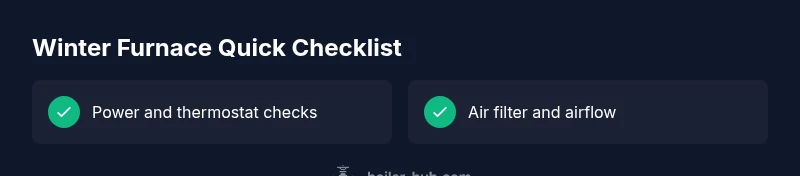
- Check power and thermostat settings
- Inspect air filter and clean or replace
- Confirm gas valve is open and no gas smell
- Check for error codes on the control board
- Inspect vents and outdoor intake for obstructions
- Know your service provider’s emergency number
Steps
Estimated time: 30-60 minutes
- 1
Power and safety check
Turn off power at the furnace and circuit panel, then back on to reset the system. Confirm the power switch on the furnace is in the 'on' position and that no breakers are tripped. This step prevents several safety-related shutdowns and confirms the device is getting basic power.
Tip: If the breaker trips repeatedly, do not keep resetting—there may be an electrical fault. - 2
Reset the furnace and control board
Locate the reset or restart procedure from your manual or the furnace's control panel and perform a full reset. Allow the system to initialize before retesting heat call.
Tip: Some units require a 60-second cool-down after a reset before attempting heat again. - 3
Thermostat check and re-sync
Verify the thermostat is powered, set to heat, and calling for heat. If you have a programmable thermostat, ensure the schedule is correct. Reconnect any loose wires and re-pair with the furnace if necessary.
Tip: Replace thermostat batteries if the display is dim or unstable. - 4
Air filter and ductwork
Inspect and replace a dirty air filter. Check for obvious blockages in supply and return ducts. Restricted airflow can cause safety shutoffs or poor performance.
Tip: Keep a spare filter on hand for quick swaps during the winter season. - 5
Gas supply and ignition
For gas furnaces, confirm the gas valve is fully open and listen for the ignition sequence. If you detect a gas odor, exit and call the gas utility immediately. Do not attempt ignition if combustion components appear damaged.
Tip: Only perform ignition relights if you are certain it is safe to do so according to the manual. - 6
Final test and prognosis
After completing checks, set the thermostat to heat again and observe whether heat returns. If still no heat or you hear unusual noises, document the symptoms and call a licensed HVAC technician for an in-depth inspection.
Tip: Keep a simple log of symptoms and times for the technician.
Diagnosis: No heat or furnace won't start in winter
Possible Causes
- highPower issue (tripped breaker or blown fuse)
- mediumThermostat miscommunication or wiring fault
- mediumIgnition failure or gas supply issue
Fixes
- easyReset the circuit breaker or fuse and restore power to the furnace
- easyTest thermostat wiring and replace batteries; re-sync with the system
- mediumInspect gas valve position and the ignition sequence; if gas odor is detected, evacuate and call the gas utility
Questions & Answers
What should I check first if my furnace won't start?
Start with power at the furnace, verify thermostat settings, and confirm the gas valve is open if you have a gas furnace. These quick checks resolve many winter outages without professional help.
First, check power and thermostat; make sure the gas valve is open if it’s a gas furnace. These basics resolve many winter outages.
Why is my furnace running but not producing heat?
This usually points to a thermostat misread, a clogged air filter, or a restricted duct. Check the thermostat, replace the filter, and inspect ducts for obstructions before calling a pro.
If it runs but no heat, check the thermostat, replace the filter, and inspect ductwork before calling a pro.
Can a dirty air filter cause the furnace to stop working?
Yes. A clogged filter can trigger safety shutoffs or reduce airflow so the system can’t heat effectively. Replace the filter and test again.
A dirty filter can trigger safety shutoffs; replace it and try again.
Is it safe to restart a furnace after a power outage?
Yes, but wait a few minutes for the system to reset, then restore heat. If it trips again, there may be an electrical issue requiring an electrician or HVAC tech.
You can reset after a power outage, but if it trips again, call a pro.
When should I call a professional?
If basic checks don’t restore heat, if you smell gas, hear unusual noises, or see error codes you can’t interpret, contact a licensed HVAC technician promptly.
Call a pro if basic checks fail or you sense gas or unusual noises.
Watch Video
Key Points
- Start with simple power, thermostat, and air-filter checks.
- Follow a safe, step-by-step diagnostic flow to avoid unsafe DIY fixes.
- Call a licensed pro if signs of gas issues, CO, or leaks appear.
- Prevent future failures with regular maintenance and clean filters.