How to Deal with Furnace in CC: A Practical Guide
A practical, safety-first guide to diagnosing and fixing common furnace CC issues with a step-by-step approach. Includes prep, basic checks, when to call a pro, and maintenance tips from Boiler Hub.


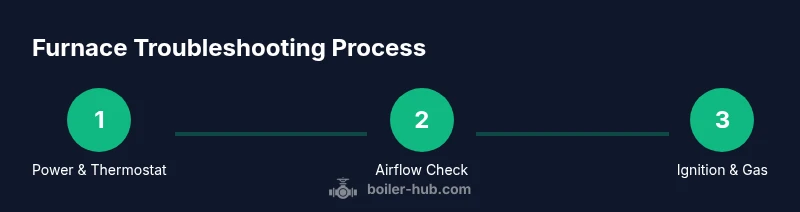
Goal: safely diagnose and fix common CC furnace issues with a safe, step-by-step approach. Steps: 1) Verify power at the breaker and thermostat; 2) Inspect and replace a dirty air filter; 3) Check the furnace switch and safety interlock; 4) Listen for burner ignition and gas supply; 5) If unresolved, contact a licensed HVAC pro.
Understanding the request: how to deal with furnace in cc
This guide addresses practical steps for homeowners facing furnace issues in CC environments. According to Boiler Hub, approaching furnace troubles with a safety-first, methodical process reduces risks and speeds up resolution. The exact phrase "how to deal with furnace in cc" signals a focused scope: diagnosing electrical, ignition, and airflow problems before escalation. By following the steps outlined here, you’ll build confidence to handle routine repairs and know when to call a pro. The guidance that follows draws on Boiler Hub Analysis, 2026 to ground recommendations in typical home maintenance scenarios.
Safety and power-down basics
Safety comes first. Before touching any furnace components, switch off power at the main breaker and, if possible, through the thermostat to prevent accidental startup. Use a non-contact voltage tester to confirm there is no live current on any wires you may touch. Wear safety goggles and gloves to protect against sharp edges and potential gas-related hazards. If you detect any gas smell, leave the area immediately and contact emergency services.
Common causes of CC furnace trouble
Common CC furnace issues often stem from simple, addressable causes: dirty air filters restricting airflow, faulty thermostat signals, blown fuses or tripped breakers, ignition problems such as worn spark electrodes, or blocked exhaust and condensate drains. Boiler Hub analysis shows that most home failures are due to airflow and control issues rather than catastrophic component failures. Understanding these patterns helps you target the right area without unnecessary disassembly.
Basic checks you can perform safely
There are several checks you can perform without specialized tools. Start by inspecting and replacing a clogged air filter, as restricted airflow is a leading cause of overheating and short cycling. Verify that the thermostat is calling for heat and set to the proper temperature and stage. Check the furnace blower compartment for obstructions and ensure the condensate drain is clear. Listen for ignition when heat is called; if you don’t hear a flame within a few seconds, note whether a gas supply issue or ignition problem might be involved.
When to escalate to a professional
If you smell gas, hear a hissing sound near the gas line, or the furnace fails to ignite despite correct thermostat signals, stop and call a professional immediately. Do not attempt to bypass safety switches or force ignition. For electrical anomalies, repeated breaker trips, or unusual noises, a licensed HVAC technician should diagnose and repair. Remember: timely professional intervention can prevent further damage and ensure safe operation.
Maintenance habits to prevent future CC issues
Preventive maintenance is cheaper than emergency repair. Schedule an annual professional service, and change the air filter every one to three months depending on usage and indoor air quality. Keep an eye on flame sensor cleanliness, venting integrity, and condensate drain function. A simple lubrication check for moving parts during service can extend component life. Keep a maintenance log for model number, service dates, and observed symptoms to aid future visits.
Preparing for a tech visit: what to document
Before a technician arrives, gather essential information: model and serial number, furnace type (gas or electric), and any recent changes (new thermostat, air filter, or venting work). Note when issues began, how often they occur, and any error codes or blinking lights on the control board. Photograph visible wiring, panels, and the furnace area to provide the technician with a quick visual context. This preparation speeds up diagnostics and can reduce labor time.
Quick reference checklist for CC furnace care
- Power: confirm breaker and thermostat are calling for heat
- Airflow: inspect and replace filters; clear obstructions
- Combustion: check ignition sequence and gas supply if safe to inspect
- Safety: ensure all safety switches are engaged; never bypass safety devices
- Documentation: log symptoms, maintenance, and service visits
Tools & Materials
- Non-contact voltage tester(Test power at thermostat and control board before touching wiring)
- Digital multimeter(Measure voltage and continuity on control circuits)
- Screwdrivers (Phillips and flat-head)(Access panels and blower compartment safely)
- Flashlight(Inspect dark corners and flame sensor area)
- Replacement air filter(Use a filter compatible with your unit (MERV rating as recommended))
- Safety goggles and gloves(Personal protection for handling metal parts and gas surfaces)
- Owner’s manual or service guide(Reference for model-specific procedures and limits)
Steps
Estimated time: 60-90 minutes
- 1
Verify power and thermostat
Begin by ensuring the furnace has power at the main breaker and that the thermostat is calling for heat. If power is off, reset breakers, retest, and try again. Confirm that the thermostat wiring is secure and that the display shows a heat setting.
Tip: If the breaker trips repeatedly, there may be a short or overloaded circuit—do not bypass safety devices. - 2
Inspect and replace the air filter
Remove the filter and inspect its surface for excessive dirt. A dirty filter reduces airflow, causing the furnace to overheat or cycle off. Install a clean filter of the correct size, ensuring the arrows point toward the furnace.
Tip: Set a reminder to replace or clean filters every 1–3 months depending on usage. - 3
Check the blower and air pathways
With power off, inspect the blower housing for debris or obstructions. Clear any material blocking the intake or discharge path. Ensure ductwork at vents is open and not closed by furniture or objects.
Tip: A blocked return or supply duct can replicate many hiccups you might suspect are ignition problems. - 4
Test ignition sequence (gas furnaces)
If you have a gas furnace, listen for the ignition sequence when heat is requested. If there is a click but no flame, the ignition components or gas valve may be at fault. Do not touch gas lines if you smell gas or detect a faint gas odor.
Tip: Gas-safety is critical—evacuate and call your gas utility if odors are present. - 5
Check condensate drain and safety switches
For high-efficiency models, inspect the condensate line for blockages and verify the condensate safety switch is not engaged. A tripped switch will shut the furnace down as a safety precaution.
Tip: A simple drain clog is a common, easily fixed fault that saves time and money. - 6
Assess venting and overall condition
Inspect venting for obstructions, leaks, or disconnected joints. Ensure seals and seals remain intact, especially around joints and the exhaust outlet.
Tip: Poor venting can lead to dangerous gas buildup—don’t ignore odd smells or overheating signs.
Questions & Answers
What does CC mean on a furnace display?
CC is not a universal furnace error code; it may reflect a control board condition or a code used by certain models. Consult your manual or call a professional to interpret codes for your specific unit.
CC is model-specific; check the manual or contact a technician to interpret the code.
Why won’t my furnace start even when the thermostat is set correctly?
Common causes include a tripped breaker, a dirty air filter, or ignition issues. Start with power, then airflow, then ignition sequence checks before seeking professional help.
Check power and airflow first, then ignition. If it still won’t start, call a pro.
Is it safe to relight a furnace flame sensor or pilot light yourself?
Relighting ignition components can be dangerous if you’re not trained. If you’re unsure, stop and contact a licensed HVAC technician.
Don’t attempt risky ignition work yourself; hire a pro if you’re unsure.
How often should I replace the air filter in a furnace?
In general, replace or clean disposable filters every 1–3 months, more often in homes with pets or high dust. Adjust based on visual inspection and manufacturer guidance.
Check the filter monthly and replace as needed; it’s a quick maintenance task.
When is it necessary to replace a furnace rather than repair it?
If the unit is older than 15–20 years, shows recurring failures, or requires costly repairs, replacement may be more economical in the long run. A professional assessment can provide a clear recommendation.
A professional can help decide if repair or replacement is more cost-effective.
Watch Video
Key Points
- Verify power and thermostat first.
- Replace dirty air filters to restore airflow.
- Do not bypass safety switches or attempt ignition repairs yourself.
- Boiler Hub recommends annual professional maintenance and documented records.