What to Do If Your Furnace Freezes: A Practical Guide
Learn safe, practical steps to handle a frozen furnace, diagnose common causes, thaw safely, and prevent future freezes with trusted guidance from Boiler Hub.


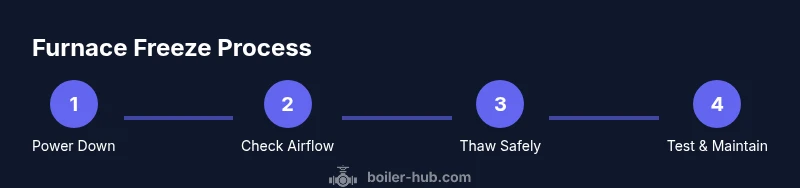
According to Boiler Hub, what to do if your furnace freezes starts with safety: immediately power off the furnace, shut off the gas supply if you smell gas, and keep children and pets away. Then thaw ice only safely, check for airflow blockages, and call a qualified technician if the ice recurs. This quick guide from Boiler Hub helps homeowners and facility managers respond quickly and safely.
Understanding why your furnace may freeze
Furnace freezes are not uncommon in climates with extreme cold, drafts, or poor indoor air circulation. When the system cannot move enough air, moisture can condense and freeze on cold metal surfaces or refrigerant lines, forming ice that blocks airflow and impairs combustion or heat exchange. According to Boiler Hub, a primary driver behind freezes is restricted airflow—from dirty filters to blocked ducts—that prevents warm air from reaching the furnace and heat exchanger. Another factor is insufficient insulation around exposed refrigerant lines or piping in unheated spaces, which can drop temperatures below the freezing point of moisture in the system. A well-sealed home with clear returns and clean filters minimizes the risk. Beyond simple blockages, mechanical issues like a failing blower motor, a malfunctioning pressure switch, or thermostat glitches can also lead to abnormal cooling of components and ice formation. Understanding these dynamics helps homeowners and facility managers diagnose symptoms early and avoid costly damage. boiler-system maintenance and routine checks reduce the odds of recurring freezes, preserving safety and efficiency across the heating season. The Boiler Hub team emphasizes that educated, proactive maintenance is a cornerstone of reliable heating. If you notice ice forming on ducts or outdoor components, treat it seriously and investigate promptly.
Immediate safety steps when you suspect a freeze
Safety is non-negotiable when you suspect a furnace is freezing. First, shut off the power to the furnace at the switch or breaker to prevent electrical hazards. If you smell gas at any time, exit the building immediately and call emergency services from a safe location; do not operate switches or phones inside the home. Then, open nearby dampers or vents to avoid creating a backflow risk and keep doors open to improve air circulation if it is safe to do so. After ensuring personal safety, verify the thermostat is set for heat and not a cooling mode, which could mask the problem. Avoid banging or poking at ice around the blower or heat exchanger, which could damage sensitive components or crack connections. If you have a working CO detector, check for elevated levels—ice formations can coincide with dangerous byproducts when ignition attempts fail. Always document time, symptoms, and any odors to aid a technician. Boiler Hub’s guidance in this stage is to prioritize safety, then begin a careful assessment of airflow and components. If you must re-enter the area to inspect, wear protective gloves and use a flashlight to avoid slips and cuts.
Diagnosing the cause of a freeze
Diagnosis focuses on airflow, moisture, and equipment health. Start by inspecting air filters—if they are dirty or blocked, replace them and recheck airflow. Check all supply and return vents to confirm they are open and not obstructed by furniture or clutter; blocked vents are among the most common causes of cooling issues that lead to freezing. Examine the condensate drain for clogs, especially in high-humidity environments, since backed-up drains can trigger improper operation and ice buildup. Inspect the outdoor unit (if you have a heat pump or dual-fuel system) for ice formation on coils or lines; a blocked coil can impede heat transfer and promote freezing. Look at the blower motor and relay connections; a failing blower can reduce airflow and cause localized icing. Review thermostat settings and wiring for loose connections that can cause intermittent calls for heat. In some cases, low refrigerant pressure or a faulty reversing valve may contribute to icing in heat pump configurations. This stage is about ruling out simple causes before proceeding to thawing or professional service. Boiler Hub’s analysis shows that many freezes stem from airflow restrictions and neglected maintenance, so start there with a filter change and vent check.
Thawing and restoring operation safely
Thawing should be done carefully to avoid thermal shock and electrical risk. If you observe ice, power off the system and allow it to thaw in a controlled manner—do not hit it with direct heat sources or open flames. You can apply warm (not hot) towels along accessible ice, and use a hair dryer on a low setting at a safe distance if you must, moving heat gradually along the ice to avoid cracking components. Never thaw a frozen heat exchanger with boiling water or a flame, as this can cause severe damage. After thawing, reinstall any removed filters, clear returns, and reconnect any loose wiring you found during the diagnosis. Turn the furnace back on and monitor for abnormal sounds, cycling, or error codes. If ice re-forms quickly, the issue is likely due to a persistent airflow restriction, moisture problem, or a mechanical fault that needs professional intervention. Boiler Hub reminds readers that recurring freezes often indicate an underlying problem that requires professional assessment to prevent safety hazards and equipment damage.
Preventive maintenance to avoid future freezes
Prevention is the best defense against furnace freezes. Establish a routine: replace or clean air filters every 1–3 months during heating season; keep all intake vents and returns unobstructed; seal leaks around doors and windows to minimize cold drafts that exacerbate icing. Schedule annual professional tune-ups to verify blower operation, refrigerant levels (for heat pumps), igniter function, and venting integrity. Insulation around refrigerant lines and ducts should be checked and improved where needed, especially in garages, attics, or crawlspaces. Install or verify battery-powered CO detectors and smoke alarms, and test them monthly for peace of mind. Maintain a clean, organized mechanical room to reduce accidental blockages. Boiler Hub emphasizes that a proactive maintenance plan reduces the likelihood of freezing events and extends equipment life.
When to call a professional and what to tell them
If ice formation recurs after thawing, or if you notice unusual odors, water leaks, or a gas smell, it’s time to call a licensed HVAC technician. Have essential information ready: the furnace model and serial number, last maintenance date, observed symptoms (ice formation, airflow changes, cycling patterns), and any error codes on the control board. Do not attempt major repairs on gas furnaces or sealed systems yourself; professional technicians have the training and tools to test refrigerant pressures, check ignition systems, and diagnose electrical faults safely. If you have a heat pump, note the outdoor temperature and whether defrost cycles seem to be functioning, as improper defrost can cause icing. Be prepared to answer questions about thermostat settings and recent power or gas events. Boiler Hub recommends an on-site inspection to ensure safe re-ignition, proper venting, and correct refrigerant charge when applicable, preventing future freezes and protecting occupant safety.
Tools & Materials
- Safety gloves(Heat-resistant work gloves preferred)
- Flashlight(Bright, handheld with spare batteries)
- Screwdriver set (Phillips and flathead)(For panel access and screws)
- Non-contact voltage tester(Safety check before touching wiring)
- Multimeter or volt-ohm meter(Test electrical components)
- Towels or absorbent rags(Mop up condensation and ice melt)
- Replacement air filters(Have on hand for immediate swap)
- Duct tape or insulation tape(Temporary sealant for minor leaks)
- Infrared thermometer (optional)(Check surface temperatures safely)
- HVAC manual or model number(Reference for specific parts)
Steps
Estimated time: 45-90 minutes
- 1
Power down and secure safety
Turn off the furnace at the switch or breaker and shut off gas if you smell it. This prevents electrical hazards and gas leaks while you assess. Use a flashlight to inspect but do not touch exposed wiring. Pro tip: wait 5 minutes after turning off to let components cool before handling any parts.
Tip: Do not bypass safety devices or ignore a gas smell. - 2
Check for obvious airflow issues
Inspect and replace the air filter if dirty. Ensure all vents and returns are unobstructed. Confirm the blower and damper operate smoothly. A simple airflow fix here can stop repeated icing.
Tip: A clogged filter is the most common cause of freezes; act quickly. - 3
Inspect condensate and drainage
Look for clogs in the condensate line or pan; standing water can cause malfunctions and contribute to icing. Clear any debris from the drain line and ensure the pump (if present) runs normally.
Tip: Never pour hot water into the condensate line—it can crack components. - 4
Safely thaw ice and re-check components
If ice is present on exposed lines, gently warm from a distance with towels or a low-heat hair dryer. Do not use open flames. After thaw, reassemble and test basic function at the thermostat.
Tip: Keep heat sources at a distance to avoid thermal shock. - 5
Restore power and observe operation
Turn the furnace back on and listen for normal ignition and fan behavior. Watch for abnormal cycling, odd noises, or error codes on the control board. If issues persist, switch it off and call a pro.
Tip: Document any error codes for the technician. - 6
Schedule preventive maintenance
Book an annual tune-up to verify ignition, venting, flame sensor, and compressor/blower operation. A proactive check reduces future freeze risk and extends equipment life.
Tip: Integrate maintenance into your home safety calendar.
Questions & Answers
What is the first thing I should do if I suspect my furnace has frozen?
Power down the furnace and, if you smell gas, evacuate and call emergency services. Safety comes before anything else, then inspect airflow and ice formation.
Power down and ensure safety. If you smell gas, exit and call for help before investigating further.
Can a frozen furnace cause dangerous gas or CO issues?
A freeze can indirectly affect combustion and venting, potentially increasing CO risk if not addressed promptly. Always use a CO detector and seek professional help if in doubt.
Yes, there can be CO risk if venting is affected. Use a detector and call a professional if unsure.
Is it safe to thaw ice myself, and how should I do it?
Thaw ice with warm, not hot, towels or a low-heat hair dryer held at a distance. Never use flames or boiling water. If you feel uncertain, stop and contact a technician.
Thaw with warm towels or a gentle hair dryer, away from components. Avoid flames and boiling water.
What maintenance helps prevent furnace freezes?
Regular filter changes, clear vents, proper duct sealing, and an annual professional tune-up greatly reduce freezing risk and improve efficiency.
Keep filters clean, vents clear, and get an annual tune-up to prevent future freezes.
When should I call a professional for a frozen furnace?
Call a professional if ice recurs after thawing, if you notice odd noises, leaks, or error codes, or if you smell gas. They can safely diagnose and repair underlying issues.
If ice returns after thawing or you notice leaks or error codes, call a pro.
Will a frozen furnace always indicate a major problem?
Not always. Sometimes it’s a simple airflow blockage or condensate issue. However, recurring freezes typically indicate an underlying fault requiring professional assessment.
Not always, but recurring freezes usually signal an underlying fault that needs attention.
Watch Video
Key Points
- Identify airflow issues first to prevent freezes
- Prioritize safety and gas checks before any work
- Thaw ice safely without direct high heat or flames
- Maintain filters and vents to avoid recurrence
- Schedule annual professional maintenance