What to Do When Your Furnace Goes Out in Winter
Winter heat outage? This Boiler Hub guide offers fast, safe steps, explains common causes, and provides a practical diagnostic path plus prevention tips to keep your home warm.


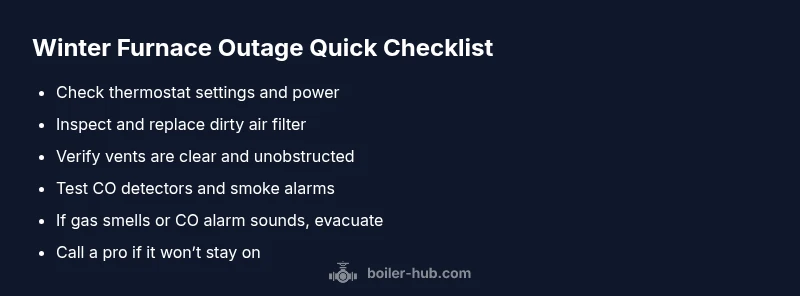
Likely causes are power loss, thermostat misreads, or a dirty flame sensor. Start with safety and quick checks: verify thermostat settings and power, reset if allowed, check and replace the air filtration, and confirm vents aren’t blocked. If the unit won’t stay on, contact a pro.
What to do when a furnace outage in winter means you must act quickly
When heat stops in the dead of winter, every minute matters. If you’re wondering what to do when furnace goes out in winter, start with safety, then quick checks you can perform yourself. According to Boiler Hub, winter outages can raise risks of frozen pipes and carbon monoxide, so prioritize safety first. This section explains the most likely causes, how to diagnose them without specialized tools, and the practical steps you can take to restore heat or determine when a professional is needed. The goal is to help homeowners and facility managers respond calmly, reduce damage, and get back to normal temperatures as soon as possible.
Immediate safety steps you should take now
Safety comes first. If you detect gas smell or CO, evacuate immediately and call emergency services. When safe, verify these basics: (1) thermostat is set to heat and fan auto, (2) power is supplied to the furnace, (3) the circuit breaker or switch feeding the furnace is ON, (4) there are no obvious gas leaks, and (5) CO detectors are functioning on every level. After these checks, ensure vents and return ducts are unobstructed and replace a dirty air filter if present. If any safety alert remains or you cannot restore heat, stop and call a licensed professional. This approach aligns with Boiler Hub’s winter guidance on staying safe during outages.
Understanding the common causes behind a winter outage
Outages typically arise from simple, addressable issues. Common culprits include power loss or a tripped breaker, thermostat misreads or dead batteries, and a dirty air filter that triggers limit switches. Less frequent but critical causes are ignition failures or flame sensor fouling, condensate trap blockage, or issues with gas supply and venting. Cold climates amplify problems, as frozen condensate lines and restricted airflow can compound outages. Recognizing these causes helps you prioritize fixes and avoid unnecessary service visits. Boiler Hub Analysis, 2026 notes that diagnostics that start with power, thermostat, and airflow tend to be the most effective first steps.
How to diagnose the problem safely (without tools)
Follow a safe, logical flow to narrow down the issue. First, confirm the furnace is receiving power and the thermostat is communicating heat mode. Next, check for obvious obstructions and ensure the air filter is clean. If the unit still won’t operate, inspect the gas supply valve (if applicable) and listen for burner ignition sounds. Look for error codes on the control board if your model displays them. If you notice gas odors, persistent CO alarm, or if you’re unsure about any step, escalate to a professional right away.
Maintenance and prevention tips for winter reliability
Prevention is easier than crisis management. Schedule an annual tune-up with a qualified technician, replace or clean filters regularly (at least every 1-3 months during heavy use), and ensure CO detectors are tested monthly. Keep outdoor vents clear of snow and debris, verify that intakes and exhausts are unobstructed, and inspect insulation around the furnace closet or attic to minimize heat loss. A small routine can dramatically reduce the likelihood of a mid-winter outage and extend equipment life. As Boiler Hub Team emphasizes, proactive maintenance is the most reliable defense against sudden outages.
When to call a professional and what to expect
Some problems require professional expertise. You should call a licensed HVAC technician if the furnace won’t stay on after basic checks, you smell gas, CO alarms sound, or you hear unusual banging or popping noises. A technician will typically perform a safety inspection, verify gas pressure, test ignition and flame sensors, check venting, and inspect electrical components. Expect a diagnostic report, potential parts replacement, and a clear estimate before any work. The Boiler Hub team recommends scheduling service promptly if you’re unsure about the cause or safety of attempting repairs yourself.
Steps
Estimated time: 45-60 minutes
- 1
Check safety and power
Ensure the area is safe. Confirm there is no gas odor, then verify that the furnace is receiving power and the switch is ON. If it’s off, switch it on and attempt a restart.
Tip: If you hear a click but no ignition, note the sound and move to the next step. - 2
Verify thermostat operation
Set the thermostat to heat, and increase to a temperature above the current room temp. If the thermostat is wireless, ensure its receiver is powered and connected.
Tip: Replace thermostat batteries if it has a battery-powered sensor. - 3
Inspect the circuit and blower switch
Check the furnace’s dedicated breaker and any external switch. A tripped breaker or a switched-off disconnect can stop heat without triggering a full fault code.
Tip: Reset firmly and evenly; if the breaker trips again, stop and call a pro. - 4
Check the air filter
Remove and inspect the air filter. If clogged or dirty, replace with a correctly sized filter. A clogged filter can cause overheating and cooling cycles to stop heat.
Tip: Keep a spare filter on hand for swift replacement. - 5
Attempt a safe reset (if supported)
Some furnaces have a reset switch. If your model includes one and you’re confident in the procedure, perform a gentle reset following the user manual.
Tip: Do not repeatedly reset; excessive resets can damage control boards. - 6
Assess gas and venting safety
If you suspect gas issues or detect a strong gas odor, or the CO detector alarms, evacuate and call emergency services. Do not operate the furnace further.
Tip: Keep exits clear and have a phone ready to contact your gas utility.
Diagnosis: Furnace won't start or no heat during winter
Possible Causes
- highPower issue (outlet, breaker, switch)
- highThermostat fault or dead battery
- mediumDirty air filter causing overheating/shutdown
- lowIgnition/flame sensor failure
- lowGas supply or venting problem
Fixes
- easyReset breakers and ensure power to furnace is on; verify thermostat setting to heat
- easyReplace thermostat batteries or recalibrate; verify thermostat wiring and function
- easyReplace or clean air filter; ensure intake/outlet ducts are clear
- mediumIf ignition or flame sensor is suspected, call a professional; do not bypass safety features
- hardCheck gas supply and venting; if CO detectors alert, evacuate and contact the gas company or emergency services
Questions & Answers
What should I do first if my furnace won't start in winter?
Check safety, verify power and thermostat settings, and confirm the furnace has power. If these don’t resolve the issue, check the air filter and vents, then attempt a safe reset if available.
First, check safety and power, then thermostat settings. If not resolved, inspect the filter and vents, and try a safe reset if your unit supports it.
Can a dirty filter really cause a furnace to shut off?
Yes. A clogged filter can cause overheating or trigger safety shutoffs, leading to no heat. Regular filter changes help prevent this.
Yes, a dirty filter can cause overheating or safety shutoffs, resulting in no heat.
Is it safe to reset the furnace thermostat or switch myself?
Only if your unit explicitly allows a reset and you’re following the manufacturer’s instructions. If in doubt, call a pro rather than risk damage.
Only reset if the manual says it’s safe; otherwise contact a professional.
What do CO detector warnings mean and what should I do?
If CO is detected, evacuate immediately and call emergency services. Do not re-enter the space until officials declare it safe.
If CO is detected, leave the area and call emergency services.
When should I definitely call a professional?
If the unit won’t stay on, you smell gas, CO alarm sounds, or there are unusual noises. A licensed HVAC tech should assess safely.
Call a pro if it won’t stay on or you detect gas or CO alarms.
Can maintenance prevent future outages in winter?
Yes. Regular tune-ups and timely filter changes reduce risk and extend furnace life.
Regular maintenance helps prevent outages.
Key Points
- Prioritize safety first in every outage situation.
- Start with simple checks before calling a pro.
- Regular maintenance reduces winter outages.
- Know when to call a professional for dangerous signs.