What to Do When Boiler Flame Goes Out: Urgent Troubleshooting Guide
Urgent, practical steps to diagnose and fix a boiler flame going out. Safety first, common causes, diagnostics, a step-by-step fix, and prevention tips from Boiler Hub.


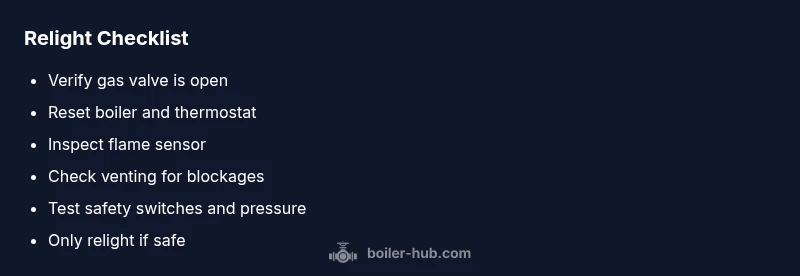
Most often a boiler flame goes out due to low gas pressure, a safety interlock, or a dirty flame sensor. Start with the simplest checks: verify the gas valve is fully open and power is on, then reset the boiler and thermostat. If the flame still won’t relight, turn off power and call a licensed technician immediately.
Why the Boiler Flame Might Go Out
There are several reasons a boiler flame can go out, ranging from simple user errors to safety-driven shutdowns. In many homes, the early clues are a clicking sound, a flicker of the flame, or a boiler that rests on standby with a fault code. According to Boiler Hub, the most common culprits are gas supply issues, a dirty flame sensor, or a tripped safety interlock. Environmental factors such as high drafts, blocked vents, or a recent thermostat change can also lead to ignition instability. The goal is not panic but a systematic check of each potential cause. By understanding the sequence of events that lead to a flame outage, you can prioritize the safest and most effective fixes first.
Key point: keep a calm, methodical approach. This minimizes risk to you and your household while preserving fuel efficiency and equipment longevity. Remember to communicate with your family about staying away from the boiler area during checks; safety should come first. Boiler Hub’s guidance emphasizes precaution, not haste, when a flame goes out in the home."
Safety First: Immediate Actions to Take
Safety is the top priority when a boiler flame goes out. If you suspect a gas leak, smell rotten gas, or hear hissing sounds, leave the area immediately and call your gas utility or emergency services. If there are carbon monoxide detectors in your home, ensure they are functioning and activated. Do not attempt to relight a boiler if you are unsure about gas safety or if the area feels unsafe. Before you touch any controls, switch off the boiler at the power switch and, if you know where it is, the gas shut-off valve. Ventilate the space by opening exterior doors if it is safe to do so, and keep children and pets away from the boiler until it is confirmed safe. Boiler Hub emphasizes that safety overrides every troubleshooting step; if in doubt, contact a licensed professional.
Pro tip: always have a working CO detector on each sleeping level and near the boiler area. If your detector alarms, evacuate and call emergency services immediately.
Steps
Estimated time: 25-40 minutes
- 1
Check basic power and gas supply
Turn off the boiler, then verify the power switch, circuit breaker, and the gas shut-off valve are in the correct positions. If the gas valve is off, toggle it to the on position and check the gas meter for any notices or alarms. Reconnect power and attempt a relight only if the area is safe.
Tip: Never bypass safety devices; a simple valve position can prevent a dangerous situation. - 2
Reset the boiler and thermostat
If the flame won’t relight, reset the boiler according to the manufacturer’s instructions. Also reset the thermostat to the default temperature and re-pair any wireless remotes if applicable. After resetting, wait the advised time before attempting a relight again.
Tip: A full reset can clear transient faults that block ignition. - 3
Inspect the flame sensor and igniter
Look for soot or buildup on the flame sensor; gently clean with a soft brush or cloth if you can access it safely. If the igniter shows cracks or corrosion, it may need replacement. Do not attempt delicate electronics beyond your skill level.
Tip: A clean flame sensor improves ignition reliability. - 4
Check venting and drafts in the area
Ensure the flue or vent is free of debris and not blocked by leaves, snow, or other objects. A strong draft near the intake can extinguish a flame; consider temporarily closing interior doors or adjusting room ventilation while testing.
Tip: Improper venting is a common, solvable cause. - 5
Test safety switches and water level
If you have boiler water level sight glass or a safety switch, verify there are no alarms or low-water indications. Some systems require topping up water or adjusting the pressure, but only if you are trained and authorized to do so.
Tip: Low water or misadjusted pressure can trigger automatic shutdown. - 6
Attempt a controlled relight (if safe to do so)
Follow the manufacturer’s relight procedure. If it involves lighting a pilot or using a button, do so with steady hands and proper PPE (gloves, eye protection). Stop immediately if the flame wavers or the CO detector signals any warning.
Tip: If you sense gas smell at any point, stop and exit the area. - 7
Observe the flame stability after relight
After relighting, watch the flame for a stable blue color without yellow tips or flickering. Listen for unusual noises and check for error codes on the boiler display. Note any sustained failures and prepare to call a professional.
Tip: A stable flame is the best indicator of ignition health. - 8
Know when to call a professional
If the flame goes out again or you cannot complete any step safely, contact a licensed heating technician. Persistent ignition problems could indicate a gas supply issue, faulty components, or a dangerous condition.
Tip: Professional service is essential for persistent outages.
Diagnosis: Boiler flame goes out
Possible Causes
- highLow gas pressure or interrupted gas supply
- highFaulty or dirty flame sensor/thermocouple
- mediumDrafts or improper venting causing ignition instability
- mediumOverheating or low water level triggering safety shutdown
- lowElectrical control failure or thermostat malfunction
Fixes
- easyVerify gas supply valve is fully open and gas meter/pipes show no alert.
- easyReset boiler power and thermostat to restore normal operation.
- mediumClean or replace flame sensor/igniter if accessible and free of soot.
- mediumInspect flue venting and ensure outdoor air supply is free of obstructions; clear any simple blockages.
- hardIf gas pressure remains low or controls fail, contact a licensed technician; do not operate the boiler.
Questions & Answers
What should I do first if the boiler flame goes out?
Shut off power, verify gas valve is open, and check for obvious safety triggers. If gas smells are present, evacuate and call emergency services. Then consult the manual for relight procedures or contact a professional.
First, turn off the boiler and gas, check for gas smells, and call for help if it’s unsafe.
Is it safe to relight the boiler flame by myself?
Relighting can be safe if you follow the manufacturer’s relight steps and there are no gas smells or alarms. If you’re unsure, it’s wiser to pause and call a licensed technician.
Relight only if you’re certain of the procedure and safety; otherwise, call a pro.
What are the common causes for a boiler flame going out?
Gas supply issues, dirty flame sensor, venting problems, and safety interlocks are the typical culprits. Electrical faults and low water can also contribute, depending on the model.
Gas supply problems, sensor fouling, and venting issues are the usual suspects.
How do I check the gas supply and shut-off valve?
Ensure the main gas valve is fully open and listen for gas odors. If you don’t feel confident, contact your utility or a technician for a safe inspection.
Make sure the gas valve is on; if something smells wrong, call for help.
When should I call a professional?
If the flame won’t relight after basic checks, if you detect gas odors or CO alarms, or if the boiler shows persistent faults or error codes, call a licensed heating technician.
Call a pro if relighting fails or safety alarms go off.
Can a carbon monoxide detector help if the flame goes out?
Yes. CO detectors can alert you to dangerous gas buildup when ignition fails. If it alarms, leave the area and call emergency services.
CO detectors warn you of dangerous gas presence—evacuate if they go off.
Watch Video
Key Points
- Check power and gas first.
- Reset and relight only if safe.
- Clean the flame sensor to improve ignition.
- Vent and safety switches are common hidden culprits.
- Call a pro if issues persist or CO is detected.