Why Your Boiler Won't Ignite: Urgent Troubleshooting Guide
Urgent troubleshooting guide to diagnose why your boiler won t ignite and provide safe, practical fixes for homeowners and facility managers.


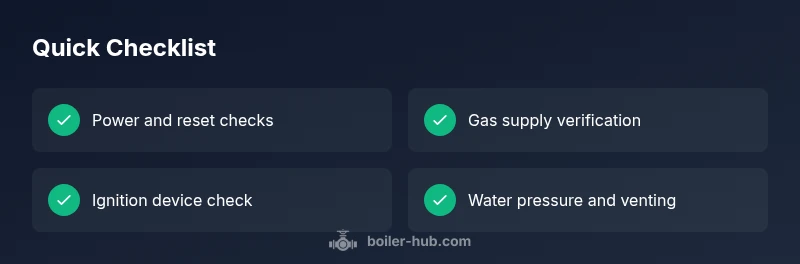
Most likely causes: power off, gas supply interrupted, or a failed ignition sensor. First, verify boiler is plugged in and the reset button hasn’t tripped; second, check the gas valve and the pilot light or electronic igniter; third, confirm thermostat demand is present. If you smell gas, do not attempt repairs—evacuate and call emergency services. See our full guide for details.
Why a boiler won't ignite
If you’re asking, why boiler won t ignite, you’re likely facing one of several urgent, interrelated issues. The most common culprits are power problems, gas-supply interruptions, and failures inside the ignition system. This section unpacks the core causes in plain language and explains why each one can stop ignition at the burner. You’ll learn how to spot symptoms—like a boiler that clicks without flames or a complete no-click, no-burn scenario—and why certain warning signs demand immediate action. Throughout, the guidance stays practical for homeowners and facilities managers who rely on reliable heat in cold weather. By understanding these dynamics, you’ll be better prepared to triage safely and efficiently, reducing downtime and protecting your equipment. The keyword you’ll see echoed here is why boiler won t ignite, used to frame the most frequent interruptions and what they imply for repair strategy. According to Boiler Hub, ignition issues often begin with simple electrical or gas-related checks, so start with the basics and progress carefully.
Electrical and control signals: power, relays, and safeties
Power supply and control logic are the gatekeepers of ignition. A boiler will not light if it isn’t receiving steady power, if a circuit breaker has tripped, or if a fuse has blown. Modern boilers also rely on safety relays and lockout conditions that prevent ignition if a fault is detected elsewhere in the system. In many cases, the fix is simple: verify the boiler is plugged in, check the wall switch and the boiler’s own on/off button, inspect the circuit breaker panel for tripped breakers, and perform a safe reset if the unit supports one. If the boiler displays an error code, refer to the owner’s manual or the manufacturer’s app for the exact meaning and recommended action. A faulty pressure switch or a failed primary control can mimic a power issue, so don’t stop at the first symptom—trace the signal path from the power source to the burner safely. If you’re unable to clear a lockout or error code after a reset, that’s a strong signal to involve a professional.
Gas supply and ignition: pilots, igniters, and flame sensors
Gas delivery and the ignition device are the other half of the ignition equation. A gas valve that’s off, an empty gas line, a pilot light that won’t stay lit, or a malfunctioning electronic igniter can all prevent ignition. Heat-producing ignition requires a flame sensor to verify the burner flame is present; if the flame sensor is dirty or defective, the system may shut down to protect the boiler. In climates where gas pressure is fluctuating, or where the venting system is blocked, ignition can fail despite a healthy pilot or igniter. When diagnosing gas-related ignition problems, always prioritize safety: do not attempt to combust gases in unsafe conditions, and never bypass safety controls. If you detect a gas odor, leave the building and call the gas utility or emergency services immediately. For ignition devices, visual inspection, gentle cleaning with a soft brush, and replacement of a faulty sensor or igniter should be handled by a qualified technician.
Water pressure, venting, and condensate: hidden culprits
Ignition isn’t just about power and gas; it also depends on proper water pressure and unobstructed venting. Low standing water pressure can trigger cutoffs that prevent ignition, while airlocks in the supply lines can mute flame due to improper flow. Condensate traps and drain lines must be clear; a blocked condensate line can cause lockouts and prevent ignition in high-efficiency condensate boilers. Poor venting creates backpressure that disrupts combustion and can trigger safety shutoffs. In some systems, a clogged air intake or flue can mimic ignition faults. When inspecting these areas, avoid forcing components or bypassing safety devices. If you’re unsure about your boiler’s water pressure, consult the manual for the recommended range and use the filling loop carefully to bring the pressure within spec.
Common homeowner mistakes and how to avoid them
Rushed DIYs and skipped safety checks are a frequent source of ignition failures. People often reset a boiler multiple times without addressing the underlying cause, or they ignore warning codes that point to a sensor or valve fault. Another mistake is attempting to light a boiler with a damaged ignition module or an exposed electrical connection, which is dangerous and could cause an electrical shock or fire. We strongly advise against using makeshift fixes or attempting to diagnose complex gas fittings without proper training. Keeping a regular maintenance schedule, replacing worn gaskets or valves as recommended by the manufacturer, and scheduling annual professional inspections dramatically reduce the odds of an ignition failure later. Remember, a boiler that won’t ignite is an urgent signal to assess safety first and then pursue safe, methodical troubleshooting steps.
What to do next: professional help and maintenance planning
If the basic checks fail to restore ignition, don’t press your luck. Ignition faults can point to gas-supply issues, defective ignition components, or unsafe venting—problems that require certified technicians and proper gas-safety protocols. Schedule a professional service as soon as possible, especially if you detect gas odor, a persistent error code, or unusual noises. As part of ongoing maintenance, set a planned yearly inspection, test safety devices, and confirm low-water cutoffs, pumps, and expansion tanks are functioning properly. Regular maintenance not only resolves the current ignition issue but also reduces the risk of future breakdowns during peak heating season. The Boiler Hub team emphasizes proactive checks and scheduled service to keep your system reliable and safe.
Prevention: build a quick ignition-safe routine
Create a short, safety-first routine to minimize future ignition problems. Keep electrical access clear, note any error codes, and track when the boiler last ran diagnostics. Maintain consistent gas supply with your utility provider, and ensure the venting and condensate systems are inspected during each service visit. By keeping to a maintenance schedule and addressing minor issues promptly, you’ll reduce the chance of a no-ignite situation spreading into a full system outage. Remember: safety and vigilance are your best defenses when a boiler won’t ignite.
Steps
Estimated time: 60-75 minutes
- 1
Power check and reset
Begin by confirming the boiler is powered on. Check the wall outlet, power strip, and the boiler’s own reset button if it has one. If the display shows an error, write it down for reference.
Tip: Use a known-good outlet to rule out a bad circuit. - 2
Verify thermostat demand
Ensure the thermostat is set to a heat call and is communicating with the boiler. If your system has multiple thermostats, check all zones. Some lockouts clear after a brief reset.
Tip: Note the current temperature and setpoint before resetting. - 3
Gas supply check
Make sure the gas valve is fully open and there is no gas odor. If you have a gas meter, verify that it is supplying gas to the house and that other gas appliances are working.
Tip: If you smell gas, evacuate immediately and call the gas company or emergency services. - 4
Ignition device inspection
Inspect the ignition electrode and flame sensor for buildup or damage. Clean with a soft brush and visual inspection; replace if corrosion or cracks are evident.
Tip: Do not touch electrical components with wet hands. - 5
Water pressure and valves
Check the boiler water pressure gauge and bring it within the manufacturer’s recommended range. If pressure is low, use the filling loop to top up slowly while watching for leaks.
Tip: Do not overfill; pressure increases too much may trigger safety shutoffs. - 6
Vent and condensate review
Ensure vents are clear of obstructions and condensate drains are not clogged. A blocked vent can cause backpressure and ignition faults, especially on high-efficiency models.
Tip: Never vacuum a vent line; use a safe manual method to clear debris. - 7
Attempt ignition and observe
After performing the above checks, attempt ignition again. Listen for burner ignition and watch for flame presence on the flame sensor. If ignition still fails, move to the next step.
Tip: If you see a flame but it goes out, the flame sensor may be out of alignment. - 8
Call a professional
If ignition remains unsuccessful after all basic checks, contact a licensed technician. Gas safety, electrical integrity, and venting concerns require professional handling.
Tip: Schedule a preventive maintenance visit to prevent future failures.
Diagnosis: Boiler won't ignite
Possible Causes
- highPower issue or tripped breaker
- highGas supply interrupted or valve closed
- mediumIgnition device failure or dirty flame sensor
- mediumThermostat demand missing or safety lockout
- lowLow water pressure or air in lines
- lowVenting blockage or condensate trap issue
Fixes
- easyCheck power at the outlet and reset the boiler if applicable; inspect the circuit breaker and fuses
- easyVerify gas supply is on; confirm gas valve is open and there is no odor of gas
- mediumInspect ignition electrode and flame sensor; clean gently or replace if faulty
- easyCheck thermostat settings and ensure demand is present; clear any lockouts
- easyCheck boiler water pressure and refill if below the recommended range; bleed air if needed
- easyInspect venting and condensate drainage for blockages; clear debris safely
- mediumIf issues persist, contact a qualified technician for gas, electrical, or venting problems
Questions & Answers
What are the most common reasons a boiler won't ignite?
The most common reasons are power issues, a closed gas valve, or a faulty ignition component such as the igniter or flame sensor. Thermostat lockouts and low water pressure can also prevent ignition. Start with power and gas checks, then inspect ignition parts if needed.
Common reasons include power issues, gas valve problems, or ignition component failures. Start with power and gas checks, then inspect ignition parts if needed.
Should I reset my boiler when it won t ignite?
Resetting can clear a transient fault, but it won’t fix underlying issues. If the boiler remains unlit after a reset, check safety codes and consider professional inspection. Document any error codes to guide the service visit.
Resetting may clear a fault, but if it stays unlit, call for service and note the error codes.
I smell gas; what should I do?
If you detect a gas odor, evacuate immediately and call your gas utility or emergency services. Do not operate electrical switches or try to light the boiler. Once it is safe, a licensed technician should assess the system.
If you smell gas, leave the area and call emergency services right away.
Can a dirty flame sensor stop ignition?
Yes. A dirty or defective flame sensor can prevent ignition by failing to confirm flame presence. Cleaning or replacement by a technician often resolves the issue and restores reliable ignition.
A dirty flame sensor can stop ignition; cleaning or replacement usually fixes it.
What is the safe way to check for power at the boiler?
Turn off power before inspecting wiring. Check the boiler’s plug or disconnect switch, and use a non-contact voltage tester to confirm live power. Never touch live conductors with wet hands.
Turn off power, inspect wiring safely, and verify power with a tester.
When should I call a professional?
Call a professional if ignition continues to fail after basic checks, or if you detect gas odors, repeated lockouts, or unusual noises. Gas, electrical, and venting issues require licensed technicians for safe resolution.
Call a professional when basic checks don’t fix ignition or if you smell gas.
Can low boiler pressure prevent ignition?
Low pressure can trigger boiler safety features that prevent ignition. Check the pressure gauge and refill to the recommended range if needed, then retry ignition. If the problem recurs, seek professional assessment.
Low pressure can stop ignition; refill to the recommended range and test again.
Watch Video
Key Points
- Start with power and gas checks before deeper diagnostics
- Ignition device and flame sensor are common failure points
- Don’t bypass safeties; call a pro for gas or venting issues
- Regular maintenance reduces ignition problems
- Monitor water pressure and venting as part of routine checks