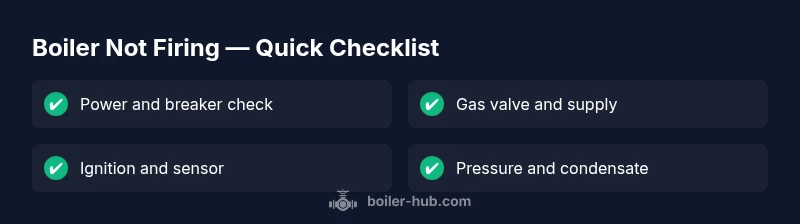
Why is the boiler not firing: A practical troubleshooting guide
Diagnose and fix a boiler that won’t fire with a step-by-step diagnostic flow, safety tips, and when to call a pro. Boiler Hub provides homeowner-friendly guidance for quick, safe resolution.


Most likely causes are power/ignition failure or a tripped safety switch. Start with the simplest checks: confirm the boiler is receiving power, reset the thermostat, and verify the gas supply valve is open. If the unit still won’t fire, stop and call a licensed professional. Boiler Hub's quick fix steps help you triage safely.
Common causes of a boiler not firing
If you’re asking why is the boiler not firing, you’re not alone. A boiler that won’t light or stay lit is often a symptom of a simple fault that homeowners can verify themselves before calling a technician. According to Boiler Hub, the most frequent culprits are power or ignition issues, a blocked flame sensor, or a disrupted gas supply. By approaching the problem methodically, you can triage quickly and reduce time to a safe resolution. In this guide, we outline the typical failure modes and how they manifest, so you can identify which path to take next. You’ll learn to distinguish electrical reset needs from more complex issues like a failing ignition module, a dirty sensor, or a pressure-related shutdown. Use this as a practical checklist rather than a blind trial-and-error, and always prioritize safety.
Heuristics from Boiler Hub Analysis, 2026 indicate that power loss due to tripped breakers, ignition faults, and gas-supply interruptions are the top recurring reasons for no-fire situations. Keep a calm, methodical approach as you investigate, and document each step so you don’t overlook a clue. If your boiler’s status light is blinking, note the sequence and consult the user manual or your local technician; some error codes map to specific faults (ignition failure, flame sensor issues, or low pressure).
This section is designed to help homeowners distinguish quick, safe checks from deeper issues. Remember: many no-fire problems start with something you can fix in minutes, while others require professional equipment and training. Your goal is to confirm whether the fault is operational (settings, power, or basic gas flow) or mechanical (igniter, sensor, or valve). If in doubt, pause and seek professional help—safety first.
Safety first: What to check before you touch the boiler
Before you touch any boiler components, ensure you’re working in a well-ventilated area and that all power to the unit is switched off. Wear gloves and eye protection, and never attempt repairs on gas lines or electrical parts beyond simple resets. If you smell gas or hear hissing, evacuate the area and contact your energy supplier or emergency services. This guide emphasizes safe, controlled steps you can take without specialized tools. If you’re uncomfortable with any task, skip it and call a professional.
Safety is the bedrock of any boiler troubleshooting effort. A no-fire situation can involve gas leaks, carbon monoxide risks, or dangerous electrical conditions. Always verify the basic safety conditions first—clear area, proper ventilation, and no open flames nearby. When you’re sure the environment is safe, proceed with controlled checks such as power verification or valve status. If the boiler displays an alarm code, refer to the manual or the Boiler Hub guide for interpretation and recommended next steps.
Electrical and power checks
Electrical issues are a leading cause of a boiler not firing. Start by confirming the boiler’s power switch is on and that the wall outlet is supplying power (you can test with a simple lamp). Check the circuit breaker or fuse box for trips and reset if needed. If the unit has a dedicated boiler timer or smart thermostat, ensure the thermostat is calling for heat and the settings are correct. Some boilers require a reset after a power interruption; follow the manufacturer’s reset procedure—usually a button or a sequence in the control panel. If the power supply is sound but the boiler still won’t fire, the problem may lie with the ignition module or flame sensor, which often require a professional diagnosis.
From a reliability standpoint, ensuring clean electrical connections and stable voltage is essential. Loose wires or corroded terminals can mimic a power failure and frustrate ignition. Document any error codes on the display and cross-check them with the manual or Boiler Hub resources to translate symbols into actionable steps. In many cases, the fix starts with reseating a connector or replacing a worn thermostat battery—simple maintenance that prevents bigger outages.
Gas supply and ignition considerations
If you have a gas boiler, ignition issues are a common culprit when the boiler won’t fire. First, verify the gas shut-off valve is fully open and that there’s gas supply to the appliance. If you smell gas, evacuate immediately and contact the gas supplier or emergency services. Modern boilers use electronic ignition rather than a standing pilot; if ignition sparks but flame fails to light, the issue could be a dirty igniter, a faulty flame sensor, or a blocked gas valve. Safety-first checks include ensuring the condensate trap isn’t blocked, as a water-filled trap can shut down the boiler to prevent ignition.
Gas-related problems require careful handling. Do not attempt to fix gas lines or valve internals yourself. If you’ve confirmed gas supply and valve position, but ignition still fails, it’s likely a component (igniter, sensor, or control module) needing professional service. Boiler Hub emphasizes routine inspection of gas connections and proper venting to prevent CO buildup and to maintain safe operation.
Additionally, ensure the boiler’s flue is clear and that there’s adequate ventilation around the appliance. A blocked vent can cause the boiler to lock out to prevent dangerous conditions. If the venting looks obstructed or shows signs of damage, pause troubleshooting and call a pro to assess the exhaust system safety.
Mechanical issues that can stop firing
Beyond electrical and gas concerns, several mechanical issues can prevent a boiler from firing. A low system pressure can trigger a lockout; check the pressure gauge and compare to the manufacturer’s recommended range. Dirty or clogged flame sensors, igniters, or heat exchangers reduce ignition reliability. Circulation problems, such as a failed pump or air in the system, can prevent heat transfer and cause the boiler to shut down as a protective measure. Condensate drains should be clear and free of ice or blockages that could alter pressure.
In many cases, a sluggish pump or airlock is easier to fix than a failed sensor. Bleed radiators to remove air, and verify that automatic air vents are functioning. For complex fixes, such as replacing an ignition module or cleaning the heat exchanger, schedule professional service. Boiler Hub notes that routine inspection of internal components during off-season can prevent unexpected outages during winter peaks.
When to call a professional
If you’ve performed the basic checks and the boiler still won’t fire, it’s time to bring in a professional. You should seek help if you detect a gas smell, suspect a gas line issue, observe a flame that won’t ignite with a proper fuel supply, or notice persistent error codes that you cannot translate. The safest course is to rely on a licensed HVAC technician who has the tools to test gas pressure, ignition circuits, and emissions safely. A professional can also check for carbon monoxide risks and verify venting integrity, which is critical for home safety.
Boiler Hub advises homeowners to maintain a list of observed symptoms, codes, and recent maintenance actions to speed up diagnosis with a technician. Even when you can fix straightforward issues, a yearly professional inspection helps catch developing problems before they escalate into expensive repairs or unsafe conditions.
Prevention and maintenance to avoid future outages
Prevention is the best strategy to minimize boiler outages. Schedule annual service, replace worn components before they fail (ignition modules, sensors, and pumps), and keep the condensate trap and drainage clear. Regularly test the boiler’s safety devices and ensure the thermostat is accurate and responsive. Keep the area around the boiler clean and free of dust and debris that can interfere with sensors and switches. Maintain appropriate fuel supply practices, including inspecting gas lines for leaks and ensuring venting systems remain clear. By implementing a routine maintenance plan, you reduce the odds of calls for emergency service and extend the life of the boiler. Boiler Hub’s guidance emphasizes proactive checks, not reactive fixes, to keep systems safe and efficient.
Steps
Estimated time: 60-90 minutes
- 1
Verify power and breakers
Turn off the boiler, check the dedicated switch and the wall outlet. If the outlet is dead, reset the breaker or replace a blown fuse. Once power is restored, turn the boiler back on and note any error codes.
Tip: If the boiler has a plug-in timer, unplug and replug to reset the control circuit. - 2
Check thermostat and controls
Ensure the thermostat is calling for heat and that schedules haven’t been changed unexpectedly. If your system includes a smart thermostat, test manually and with the app to see if heat is being requested. Sometimes a simple reset fixes a stuck control.
Tip: Test by lowering setpoint then raising it again to trigger a call for heat. - 3
Inspect gas supply and ignition
Verify the gas shut-off valve is fully open and that there is gas flow to the appliance. For electronic ignition systems, listen for sparks while the boiler attempts to ignite. If you smell gas or hear continuous hissing, evacuate and contact authorities.
Tip: Do not attempt to disassemble gas valves or tubing. - 4
Check pressure and condensate drainage
Look at the pressure gauge to ensure it’s within the manufacturer’s recommended range. Inspect the condensate trap for blockages or ice; a frozen trap can lock out the boiler. Bleed radiators if you notice cold spots.
Tip: Low pressure often triggers a lockout—refill per the manual. - 5
Reset ignition components
If accessible, reset ignition control or module according to the manual. Re-seat any loose connectors and wipe away dust from sensors. Do not bypass safety interlocks.
Tip: Unplug power for a minute to reset microprocessors. - 6
Test after fixes and monitor
Turn the boiler back on and observe if ignition occurs. Check for proper flame and stable operation for at least 15 minutes before considering the fix complete.
Tip: If it fires briefly and goes out again, a faulty sensor or control module is likely.
Diagnosis: Boiler won't fire
Possible Causes
- highNo power or tripped breaker
- highIgnition or flame sensor failure
- mediumGas supply valve closed or pilot/gas issue
- lowLow boiler pressure or condensate-related shutdown
Fixes
- easyReset tripped breaker, ensure outlet is live, and verify basic power to boiler
- easyInspect and clean ignition components or flame sensor if accessible
- mediumOpen gas valve, verify gas supply, and check pilot/ignition circuitry with professional assistance if ignition still fails
- easyCheck boiler pressure and condensate trap; bleed air and restore proper pressure
Questions & Answers
What should I do first if my boiler won’t fire?
Begin with safety checks: ensure power is on, reset the thermostat, and verify gas supply is open. If the boiler still won’t fire, consult the diagnostic flow and consider contacting a professional.
First, make sure there’s power and gas supply, then reset the thermostat. If it still won’t fire, check the ignition and, if needed, call a pro.
Is it safe to reset the boiler myself?
Yes, a standard reset is safe if you follow the manufacturer’s instructions and ensure the area is safe. Do not bypass safety interlocks or attempt to repair gas lines.
Resetting is usually safe if you follow the manual and ensure the area is ventilated and safe.
Could a dirty flame sensor cause the boiler not to fire?
Yes. A dirty flame sensor can prevent ignition by failing to detect flame. Cleaning with a soft brush or cloth can help, but avoid liquid cleaners on electrical components.
A dirty flame sensor can stop ignition; cleaning it may help, but be careful around electrical parts.
When should I replace components like igniters or sensors?
If ignition issues persist after cleaning and resets, a professional may replace the igniter or flame sensor. These parts wear over time and can fail without obvious warning signs.
If ignition keeps failing after simple fixes, a pro may replace the igniter or sensor.
Can boiler problems be caused by low water pressure?
Yes. Low boiler pressure can prevent firing or cause lockouts. Refill and calibrate to the recommended range per the manual.
Low pressure can stop firing; check your boiler’s pressure and refill if needed.
When is it time to call a professional?
Call a professional if you detect gas smells, suspect a gas line issue, see persistent error codes you cannot interpret, or after completing basic checks the boiler still won’t fire.
If gas is involved or errors persist after basic checks, contact a pro.
Watch Video
Key Points
- Start with power and control checks to triage quickly
- Gas and ignition issues require professional assessment
- Regular maintenance prevents most no-fire outages
- Know when to call a pro for safety-critical faults
- Keep a log of symptoms and codes for faster diagnostics