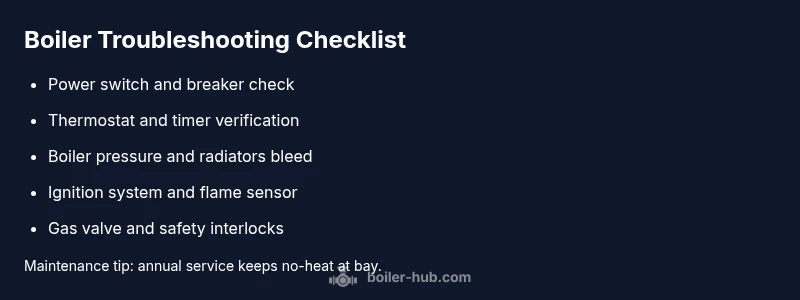
Why is your boiler not coming on? A practical troubleshooting guide
Urgent boiler troubleshooting guide to diagnose why your boiler won't turn on and how to fix common issues safely. Step-by-step checks, diagnostic flow, and when to call a pro.


According to Boiler Hub, the most common reason a boiler won't come on is a simple power, thermostat, or gas-supply issue. Quick fixes include turning on the boiler's power switch, resetting a tripped breaker, and confirming the thermostat is calling for heat. If it still won't ignite, follow the deeper diagnostic flow.
Why Boilers Fail to Ignite: Common Causes
Boilers refuse to start for predictable reasons. In many homes, the culprit is something you can check in a few minutes. The most frequent issues are loss of power (the switch tripped or a circuit breaker flipped), thermostat problems (the thermostat isn’t calling for heat or its batteries are dead), and an interrupted gas supply (valve closed, gas line shut, or gas meter problems). Other common factors include low system pressure, a faulty ignition or flame sensor, venting restrictions, and safety devices that have tripped due to faults such as overheating or pressure spikes. For some models, frost protection or misconfigured timers can prevent ignition. The Boiler Hub approach emphasizes systematic checks: verify each potential cause in turn, document what you observe, and work through a logical sequence. This reduces wasted time and increases safety.
Safe Quick Checks You Can Do Right Now
Safe checks can restore warmth in minutes in many cases. Start with the basics: 1) confirm the boiler's power switch is on and that the main supply is live. 2) inspect the household circuit breaker or fuse box for a trip; reset if needed and listen for the boiler to click on. 3) check the thermostat and any programmer or timer to ensure heat is being requested now. 4) verify the gas valve is open on gas boilers; do not attempt to adjust gas lines if you’re unsure. 5) read the boiler display for fault codes; consult the manual for exact meanings. If you smell gas or hear gas escaping, leave the area immediately and call your gas supplier or emergency services. Never operate electrical components near a suspected gas leak.
Type-Specific Considerations: Combi, System, and Conventional Boilers
Combi boilers heat water on demand and have no separate hot water cylinder. If the unit won’t start, verify there is domestic hot water demand and that the diverter valve isn’t stuck. System and conventional boilers rely on water pressure and an charged expansion vessel. Low pressure, valve issues, or a frost thermostat can lock out ignition. In all cases, glance at fault indicators and service codes to guide action. Model differences matter, so consult your manual or our guide if you’re unsure. Boiler Hub notes that following your model-specific steps reduces misdiagnosis and improves safety.
How Pressure and Water Levels Affect Ignition
Low boiler pressure or an empty expansion tank can prevent ignition. If the gauge indicates a low level, follow the manual to restore pressure. Bleeding radiators can affect readings, so complete any radiator work before adjusting pressure. Never force a refill beyond the recommended procedure and avoid adjusting pressure while the system is hot. If you’re uncertain about the correct target pressure or procedure, pause and contact a professional for guidance. Safety first remains the priority when handling pressure-related issues.
Diagnostic Flow Overview (High-Level)
Use this flow to quickly narrow down causes: observe the symptom, list potential causes, and map to practical fixes. Start with the simplest explanations (power, thermostat, gas supply) and progress toward more involved checks (ignition and sensors). If a fix requires opening the boiler casing or dealing with gas components, stop and contact a licensed technician. This approach aligns with Boiler Hub’s emphasis on safety and stepwise troubleshooting.
When to Call a Professional and How to Choose One
If you detect gas odors, hear unusual hissing, or the boiler refuses to light after basic checks, professional help is essential. A qualified technician can safely diagnose ignition faults, gas-connection concerns, or control-board failures. When selecting a pro, ask about current gas-safety certifications, warranty coverage, and a transparent estimate. Regular service from a reputable Boiler Hub‑listed technician can prevent future no-heat events and extend boiler life.
Prevention: Keep Your Boiler Ready for Winter
Preventative steps reduce cold snaps and expensive outages. Schedule annual maintenance, keep an up-to-date service record, test the boiler at the start of the heating season, and replace worn parts like thermostats and pressure relief valves before they fail. Ensure proper venting and clear space around the boiler for safe operation. A small investment in maintenance now saves bigger headaches later.
Steps
Estimated time: 60-90 minutes
- 1
Check power and basic controls
Begin with the simplest checks: confirm the boiler’s power switch is ON, verify the circuit breaker hasn’t tripped, and listen for the boiler’s ignition sequence. If the unit doesn’t respond, reset the breaker and attempt a restart. Ensure any wall or boiler-mounted switches are in the correct position before proceeding.
Tip: Always start with the basics; power issues are the most common cause. - 2
Verify thermostat settings and timing
Inspect the room thermostat and any programmable timer. Ensure the thermostat is set to heat and that its display is functioning. If the thermostat uses batteries, replace them and re-sync with the boiler if needed. A misconfigured timer can prevent heat demand from reaching the boiler.
Tip: Confirm the thermostat is calling for heat during the current program window. - 3
Check water pressure and system charge
Look at the boiler pressure gauge; if it reads low, follow the manual’s procedure to restore pressure. Bleed radiators to remove trapped air and recheck the gauge. Do not overfill; restore to the recommended range and avoid rapid pressure changes.
Tip: Bleeding radiators first can help stabilize pressure readings. - 4
Examine ignition and flame sensing
If ignition occurs but a flame isn’t established, inspect flame sensor and ignition leads for moisture or corrosion. Some models show a fault code for ignition failure. Do not touch ignition electrodes with bare hands and avoid experiments with gas components.
Tip: If you hear a click but no flame, record fault codes before contacting a pro. - 5
Check gas supply and safety interlocks
For gas boilers, ensure the gas valve is fully open and the gas line is delivering fuel. If you smell gas, evacuate immediately and call the gas emergency line. If the boiler has safety interlocks or lockouts, reset only as allowed by the manual.
Tip: Gas safety first: never bypass interlocks or adjust gas lines. - 6
Restart and verify operation
After performing the checks, reset the boiler, wait for the normal ignition sequence, and monitor for proper heating and hot water delivery. If the boiler still does not start, document fault codes, and schedule a professional inspection.
Tip: Keep a note of any error codes to speed up diagnostics.
Diagnosis: Boiler won't turn on
Possible Causes
- highPower issue (no electricity, tripped breaker)
- highThermostat not calling for heat or misreading
- mediumGas supply valve closed or ignition failure
- mediumLow boiler pressure or water shortage
- lowFaulty ignition component or flame sensor
- lowSafety interlock tripped due to overheating/airing
Fixes
- easyCheck main power switch and reset any tripped breaker
- easyVerify thermostat is calling for heat and replace batteries if needed
- mediumEnsure gas valve is open and gas line is delivering gas; if gas smell exists, leave area and call emergency services
- mediumInspect boiler pressure and refill per manual; bleed radiators if necessary before rechecking pressure
- hardInspect ignition components or flame sensor; if ignition or sensing faults persist, call a pro
Questions & Answers
What is the most common reason a boiler won’t turn on?
Power issues and thermostat settings are the usual suspects. Start with checking the switch, breaker, and thermostat, then move to the ignition and gas supply if needed.
Power and thermostat issues are typically the culprits. Check the switch, breaker, and thermostat first, then proceed with ignition checks if needed.
Should I reset the boiler to fix startup problems?
A safe reset can clear minor faults. Avoid resets if you smell gas or see a gas leak; follow the manual for the correct sequence and only reset if you understand the fault.
Resetting can help for simple faults, but never reset if you smell gas. Follow the manual for the proper steps.
What do error codes mean on a boiler that won’t start?
Error codes point to specific issues like low pressure, ignition failure, or sensor faults. Check the manual or the boiler’s display guide to interpret codes accurately.
Error codes indicate the problem; refer to the manual or display guide to interpret them, then act accordingly.
Can air in radiators prevent a boiler from starting?
Air can affect heating efficiency and cycling. Bleed radiators if needed, but restarting the boiler should not be delayed if you suspect air pockets.
Air in radiators can hinder heat delivery. Bleed if needed, but don’t delay addressing ignition issues.
When should I call a professional for a non-starting boiler?
Call a professional if you smell gas, hear gas escaping, or the boiler still won’t start after basic checks. A licensed technician can diagnose ignition, gas, or control issues safely.
Call a professional if you smell gas or ignition doesn’t fix after basic checks. They’ll safely diagnose gas and control issues.
How can I prevent boiler startup problems in the future?
Schedule regular maintenance, check pressure periodically, and keep the area around the boiler clear. A simple annual service reduces the risk of no-heat events.
Regular maintenance and keeping the area clear helps prevent future startup problems.
Watch Video
Key Points
- Check power first to restore ignition
- Verify thermostat and timers are configured
- Inspect boiler pressure and gas supply if safe
- Call a professional for ignition or gas concerns
- Schedule annual maintenance to prevent no-heat events