Why Is My Boiler Not Firing Up? A Troubleshooting Guide
Diagnose why your boiler isn’t firing up with a practical, step-by-step guide. Learn common causes, safety checks, and when to call a professional from Boiler Hub.


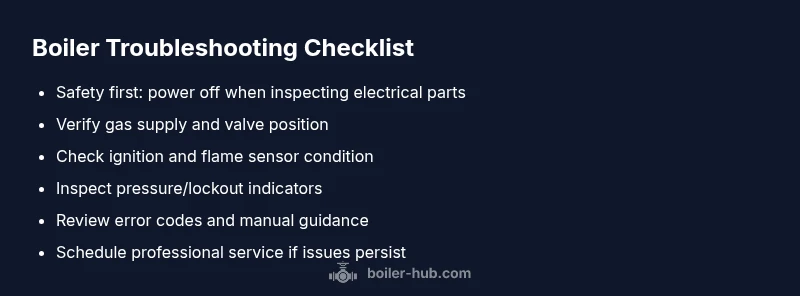
Most often, a boiler won’t fire due to a simple power, gas supply, or ignition issue. Start by checking the power switch and thermostat, then verify the gas supply and ignition system. If these basics fail, reset the boiler and inspect error codes. For safety, never bypass protections—call a professional if you’re unsure.
Common Causes of a Boiler Not Firing Up
When a boiler won’t fire, the root causes are usually simple, fixable, and safety-related. Common issues include a tripped electrical circuit or switch, an off thermostat, a shutoff gas valve, or ignition problems such as a dirty electrode or sensor fault. Less obvious causes include boiler lockouts triggered by safety protections, air in the fuel line, or a failed pressure sensor. In many cases, addressing the easiest problem first—power, thermostat, and gas supply—will restore firing. If the boiler still won’t ignite after these checks, the fault is more likely tied to ignition components or control logic. Boiler Hub’s guidance emphasizes a methodical approach to avoid accidental risk and to prevent future failures.
Safety First: Protecting Your Home When a Boiler Won’t Fire
Safety is non-negotiable when dealing with boilers. If you smell gas, hear hissing, or notice unusual flaring around the unit, evacuate the area and call emergency services. Do not operate switches or attempt relighting in such cases. Ensure carbon monoxide detectors are active near the boiler and living spaces. Clear a safe working area and consider having a CO alarm professionally installed if you don’t already have one. After confirming safety, proceed with calm, systematic troubleshooting steps.
Electrical Checks You Can Perform (Power, Switches, Fuses)
Electrical faults are among the top reasons boilers fail to ignite. Begin by verifying the boiler’s main power is on, the wall switch is engaged, and the circuit breaker feeding the boiler is not tripped. If the display is blank or shows error codes, consult the manual for code meanings and safe reset procedures. Do not bypass fuses or reset buttons repeatedly; repeated resets can hide underlying hardware faults. If the boiler’s power supply is intermittent, inspect nearby outlets and any extension cords; never rely on damaged cables. When in doubt, contact a licensed professional to inspect electrical components safely.
Fuel Supply, Ignition, and Pilot Light Basics
Gas supply issues and ignition problems are frequent culprits behind a boiler that won’t fire. Ensure the gas valve is fully open and that there is no shutoff at the boiler inlet. If you hear a click but no flame, the ignition module or flame sensor may be dirty or faulty. Dirt, condensation, or debris can impede ignition. Do not attempt to manually bypass ignition safeguards. If your boiler has a pilot light, ensure it’s lit according to the manufacturer’s instructions; if the pilot won’t relight, professional servicing is advised.
Pressure, Lockouts, and Error Codes
Boilers use internal safety locks triggered by abnormal pressure or sensor faults. A common symptom is the boiler failing to ignite and displaying an error code or a flashing LED. Without correct pressure, the boiler may refuse to fire to prevent damage. Do not attempt to manually override pressure or safety valves. Record any fault codes shown on the display; these codes guide service technicians and may help you communicate the issue clearly when you call for help.
Maintenance, Age, and Routine Servicing
A boiler’s reliability declines without regular servicing. Over time, components such as igniters, flame sensors, or heat exchangers accumulate deposits that hamper ignition. Routine servicing by a qualified technician includes cleaning, part replacement, and calibration, which reduces the likelihood of ignition issues. If your boiler is older or has not been serviced within the advised interval, scheduling a visit can prevent unexpected outages and improve efficiency.
Quick Home Checks You Can Do Safely
Some checks can be performed by homeowners without specialized tools. Confirm the thermostat is set correctly and within the heat range you expect. Inspect visible pipes for frost or condensation that might indicate a leak or poor insulation. If you notice water leaks, damp areas, or unusual noises, turn off the boiler and contact a professional. Always use caution around hot surfaces and electrical connections, and never attempt major repairs without professional guidance.
Steps
Estimated time: 60-90 minutes
- 1
Verify power and controls
Confirm the boiler’s power switch is ON, the room thermostat is calling for heat, and the circuit feeding the boiler is not tripped. If there is an error code on the display, note it down for reference. A failed power supply is by far the easiest fix that often resolves the issue.
Tip: Keep the boiler’s manual handy for code meanings. - 2
Check gas supply and valve position
Ensure the gas supply valve is fully opened and that the boiler’s gas line is free of kinks and obstructions. If you smell gas, evacuate immediately and call the gas company or emergency services. Do not operate switches or attempt ignition in a gas-smell scenario.
Tip: Never bypass gas safety devices or ignore a gas odor. - 3
Inspect ignition system
If you hear a clicking but no flame, the ignition electrode or flame sensor may be dirty. Disconnect power before inspecting ignition components if you are comfortable; otherwise, contact a pro. A dirty sensor can prevent reliable ignition.
Tip: Use a soft brush to clean surrounding deposits; avoid applying liquids to electrical parts. - 4
Check boiler pressure and safety locks
Look at the pressure gauge and any safety lockouts indicated by codes. If pressure seems abnormal, do not attempt risky fixes; consult the manual or a technician. Some lockouts require specialized tools to reset safely.
Tip: Note the exact error code to speed up diagnosis. - 5
Reset and test firing
Perform a safe reset as described in the manual, then attempt a controlled ignition. If the boiler still won’t fire, do not repeatedly restart; persistent failures require professional assessment.
Tip: Limit resets to avoid aggravating fault conditions. - 6
Plan professional follow-up
If ignition remains elusive after these steps, schedule a service visit. A licensed technician can diagnose sensor failures, control board issues, and gas safety concerns with the right tools.
Tip: Ask for a written assessment and a clear estimate before work begins.
Diagnosis: Boiler won't ignite or fires briefly then shuts down
Possible Causes
- highPower issue or tripped switch
- highGas supply off or faulty gas valve
- mediumIgnition failure or dirty flame sensor
- lowLow/system pressure or safety lockout
Fixes
- easyCheck main power, wall switch, and circuit breaker; restore power if tripped
- easyVerify gas supply is on and boiler valve is fully open; call utility if gas odor present
- easyRelight per manual or perform a safe reset; avoid forcing ignition if unsure
- mediumInspect ignition electrodes and flame sensor for dirt; clean or replace if needed
- mediumAddress pressure or lockout by following manufacturer steps or professional service
Questions & Answers
What are the most common reasons a boiler won't fire up?
Most boilers fail to ignite due to power issues, gas supply problems, or ignition faults. Check the main power, thermostat, and gas valve first, then inspect the ignition system. If these steps don’t resolve the problem, a professional should assess sensor and control issues.
Common causes are power, gas, or ignition problems. Start with power and gas checks, then inspect the ignition system. If it still won’t ignite, call a professional.
Can low boiler pressure prevent firing up?
Yes. Low pressure can trigger safety lockouts that prevent firing. Do not attempt to adjust pressure beyond the manual’s instructions. If pressure is off, contact a qualified technician to restore proper balance.
Low pressure can trigger a lockout, preventing ignition. Contact a technician to correct it safely.
How do I safely reset a boiler?
Refer to your boiler manual for the exact reset procedure. Ensure the area is clear, power is on only when advised, and you do not reset repeatedly if the fault persists. If unresolved, professional diagnosis is recommended.
Use the manual’s reset steps, keep the area clear, and don’t reset multiple times if the fault remains.
What maintenance steps reduce no-fire risk?
Annual professional servicing is key. Regular cleaning of ignition components and sensors, checking gas connections, and testing safety mechanisms lower the risk of ignition failure. Maintain proper venting and replace worn parts as recommended by the manufacturer.
Get annual service, clean ignition parts, and test safety systems to reduce ignition risks.
Is it safe to relight a pilot light myself?
Relighting a pilot light should follow the manufacturer’s procedure. If you’re uncertain, stop and call a professional. Improper relighting can cause gas leaks or appliance damage.
Only relight per the manual. If unsure, call a pro to avoid gas or appliance hazards.
When should I call a professional?
Call a professional if ignition issues persist after basic checks, if you smell gas, or if error codes indicate a safety lockout. A licensed technician can safely diagnose electrical, gas, and control-system faults.
Call a professional if basic checks don’t fix ignition, if you smell gas, or if there’s a safety lockout.
Watch Video
Key Points
- Check power, gas, and ignition first.
- Follow the diagnostic flow to isolate causes.
- Use the step-by-step fixes for common issues.
- Call a professional for persistent or dangerous faults.