What to Do When Your Boiler Stops Working: A Troubleshooting Guide
Urgent boiler troubleshooting guide for when your boiler stops working. Quick checks, diagnostic flow, safe steps, and professional help when needed.


If you’re wondering what to do when boiler stops working, start with the simplest checks: ensure the power is on, reset the boiler, and verify system pressure. The most common causes are a tripped breaker, power loss, or a faulty thermostat. If it still won’t fire, switch off at the mains and contact a licensed boiler professional immediately.
What to Do First When a Boiler Stops Working
When your heat goes cold, the clock starts ticking. If you’re wondering what to do when boiler stops working, start with safe, simple checks. First, confirm the power supply to the boiler and that the circuit breaker hasn’t tripped. If the power is off, reset the breaker and try again. Next, check the boiler’s display for fault codes and perform the basic reset described in the manual. Then verify the system pressure on the gauge; most residential boilers operate around 1-2 bar when cold. If pressure is too low, you may need to re-pressurize following the manufacturer’s instructions. If the boiler fires but shuts off, it may indicate a cycling fault or overheating protection. Keep the area clear and avoid touching exposed electrical parts. According to Boiler Hub, starting with power and pressure is the fastest way to determine if you can safely restore heat without a service call. If any step feels uncertain, pause and call a pro.
Common Causes and Quick Fixes
Most outages fit a few patterns: power disruption, control or thermostat faults, low boiler pressure, and gas-supply issues for gas boilers. Boiler Hub analysis shows that power loss and faulty controls are the two most frequent culprits in modern homes. Begin with the simplest fixes: confirm power at the outlet, check the wall switch by the boiler, and perform a reset. Then inspect the pressure gauge and re-pressurize if needed using the filling loop per the manual. If the unit is silent or flashing an error code, record the code and consult the manual or a professional. Do not bypass safety features or force damaged components. Keeping the area free helps you spot leaks, corrosion, or frost buildup early. If you smell gas or see signs of a gas issue, call a licensed technician immediately. Boiler Hub recommends professional help for gas-related issues and for any fault codes lasting more than a few minutes.
Safety First: What Not to Do
Never open the boiler casing or attempt electrical or gas repairs yourself, especially if you smell gas or hear hissing sounds. Do not ignore unusual noises such as banging, which can indicate circulating-pump problems or air in the system. Do not bypass safety devices or try to bypass limits with makeshift fixes. If you suspect a gas leak, leave the area, evacuate, and call your gas supplier or emergency services. Always turn off power at the wall switch and, if safe, the boiler’s circuit breaker before inspecting. When in doubt, a professional should handle ignition, gas valves, and fault-code repairs. Boiler Hub emphasizes safety above all when troubleshooting.
Diagnostic Checklist You Can Run
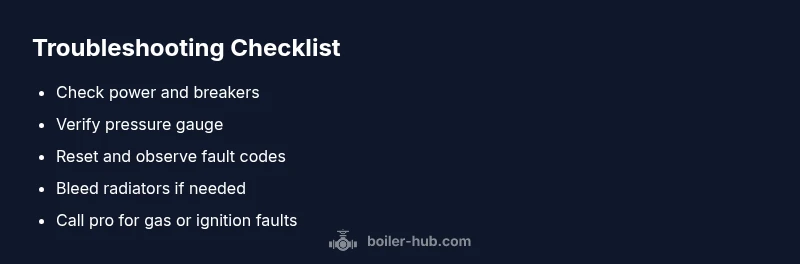
A practical, safe diagnostic flow helps identify whether you can restore heat without a service call. Start with: 1) Is the unit powered? 2) Has the breaker tripped or fuse blown? 3) Is the pressure in the green zone on the gauge? 4) Are there fault codes on the display? 5) Are radiator valves fully open and is there air in the system? 6) If feasible, reset the boiler and attempt a controlled restart. If a fault code appears, note it and consult the manual or Boiler Hub’s guidance. If no codes appear and the boiler won’t ignite, the next step may involve rechecking the gas supply or ignition safety, or calling a pro. Use a flashlight for panel checks, and never place hands inside panels while powered.
When to Call a Professional and What to Expect
Even with basic home troubleshooting, many issues require a pro. If the boiler won’t power on after resets, if pressure cannot be stabilized, or you notice a gas odor, contact a licensed boiler technician immediately. A trained pro will verify electrical connections, diagnose ignition or flame-sensing faults, inspect the pump, and test for carbon monoxide risk. They’ll also check the expansion tank, pressure relief valves, and overall system cleanliness. Expect a service call to include a safety check, possible component replacement, and a system flush if needed. Regular servicing reduces unexpected outages and helps catch small problems before they become costly.
Prevention and Maintenance to Reduce Future Breakdowns
Proactive maintenance is the best defense against sudden boiler outages. Create a winter maintenance plan that includes annual service, filter checks, radiator bleeding, and pressure testing. Replace worn seals, inspect the expansion tank, and verify venting and condensate pipes are clear. Keep a log of fault codes and service dates to track recurring issues. This routine maintenance also improves energy efficiency and reliability, saving money over time. Boiler Hub analysis shows that a regular service schedule pays off in fewer emergency calls and longer system life.
What to Expect After a Repair
After a technician resolves the fault, heat should return quickly and system pressure should stabilize. Request a written report detailing the fault, parts replaced, and any diagnostic codes. Schedule the next service appointment and set reminders for annual checks. If the problem recurs, keep a fault-code log and contact your installer with the code for faster diagnostics. Boiled down, consistent maintenance is your best defense against future outages, according to Boiler Hub guidance.
Steps
Estimated time: 60-120 minutes
- 1
Check power and reset
Verify the boiler is plugged in or hard-wired, check the circuit breaker, and perform a full reset according to the manual.
Tip: Keep the model number handy in case you need service guidance. - 2
Assess boiler pressure
Look at the pressure gauge; if it’s outside the recommended range, follow the manual to re-pressurize using the filling loop.
Tip: Never overfill beyond the green zone. - 3
Inspect controls and thermostat
Check for error codes on the display, verify thermostat settings, and ensure the unit is set to the correct mode (heat, not eco).
Tip: Note any fault codes for reference when you ask for help. - 4
Bleed radiators and check for air
Purge air from radiators to restore circulation if you hear gurgling or cold spots.
Tip: Use a proper radiator key and have a cloth ready for drips. - 5
Evaluate gas supply safety (gas boilers only)
If you suspect gas issues, do not attempt repairs; ensure gas supply is uninterrupted and call a professional.
Tip: If you smell gas, evacuate immediately and call emergency services. - 6
Call a professional if unresolved
If heat is still absent after these steps, schedule a service call and collect fault codes and model information for the technician.
Tip: Ask for a written report and maintenance recommendations.
Diagnosis: Boiler won't power on or provide heat
Possible Causes
- highPower issue (tripped breaker, blown fuse, faulty switch)
- mediumThermostat or control fault
- lowLow pressure / expansion tank problem
- lowGas supply or venting issues (gas boiler)
Fixes
- easyCheck outlet and circuit breaker; reset fuse if needed; ensure wall switch is ON
- easyTest thermostat and reset codes; adjust settings per manual
- mediumRe-pressurize boiler if pressure is low using the filling loop according to the manual
- hardIf gas issues or venting suspected, call a licensed technician and do not operate the boiler
Questions & Answers
What is the first thing I should check when my boiler stops working?
Start with power, switch status, and the pressure gauge. If power is off, reset the breaker and try again. If there are fault codes, note them and consult the manual.
First check the power and pressure, reset the boiler, and note any fault codes before calling for help.
Why won’t my boiler turn on after a reset?
This could indicate a thermostat fault, low system pressure, or ignition/ignition-sensor problems. If the fault persists, contact a professional.
If a reset doesn’t solve it, the issue might be the thermostat, pressure, or ignition.
Can low boiler pressure prevent heat from coming on?
Yes. Low pressure can prevent the boiler from firing properly. Re-pressurize only per the manual or by a professional, if unsure.
Low pressure can stop the boiler from firing; re-pressurize according to the manual or call a pro.
Is it safe to work on a gas boiler myself?
No. Gas-related work should always be done by a licensed engineer. If you smell gas or hear gas-related noises, evacuate immediately.
Gas work is dangerous; always hire a licensed engineer.
How long does a typical boiler service take?
Most boiler services take about 60-90 minutes, depending on the system and fault history.
Most services last about an hour, give or take depending on the job.
When should I replace my boiler instead of repairing it?
If repairs are frequent or the boiler is old and inefficient, replacement is often the wiser long-term choice.
If problems recur or the boiler is aging, replacement may be the better option.
Watch Video
Key Points
- Check power and pressure first to rule out simple faults
- Don’t bypass safety features or attempt dangerous gas work
- Record fault codes and seek professional help for gas or ignition faults
- Regular maintenance reduces emergency outages and extends boiler life