What to Do When Your Boiler Is Not Working
If your boiler is not working, this urgent troubleshooting guide helps homeowners identify common failures, perform safety checks, and know when to call a pro. Learn step-by-step fixes and tips from Boiler Hub.


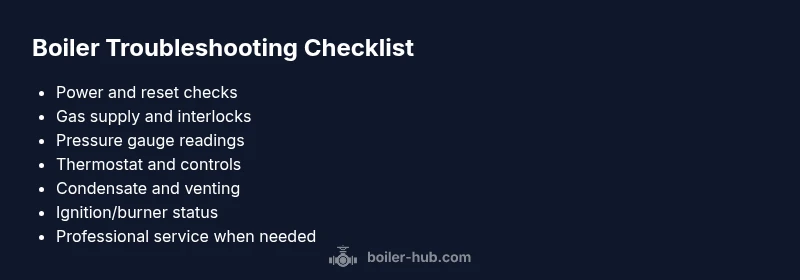
If your boiler is not working, start with a quick safety check and power/gas verification. Reset the unit, confirm boiler pressure, and inspect the thermostat settings. If heat doesn’t return after these simple steps, do not attempt risky repairs—consult a licensed technician.
Understanding the meaning of boiler not working and why it happens
When homeowners say the boiler is not working, it may mean anything from a complete no-heat outage to uneven temperatures in different rooms. According to Boiler Hub, many outages stem from simple causes that are easy to address safely, including power loss, gas supply interruptions, thermostat misconfigurations, or low system pressure. This guide keeps the focus on urgent, actionable steps and emphasizes safety first. If you’re dealing with a cold house in the dead of winter, time is critical, but never rush past essential checks. A quick, calm assessment can save you from unnecessary energy waste and reduce the risk of dangerous conditions. The keyword boiler is not working will recur as you work through these checks, but slow, deliberate steps will usually reveal the root cause.
Immediate safety checks you can perform (without tools)
Before you touch any boiler components, ensure your space is safe. If you smell gas, hear hissing, or notice dead controls, vacate and call the gas emergency number in your area. If there’s no immediate danger, try these quick checks while the boiler is off: confirm the power switch is on, verify the circuit breaker didn’t trip, and check for a reset button. Inspect the display for fault codes; these codes guide you toward the most probable issue. If the boiler is not working due to a lack of ignition, some models respond to a simple reset. PAUSE safety interlocks and never bypass safety devices. This is a critical step to prevent carbon monoxide exposure and other hazards. In many cases, a simple power or switch reset solves the problem, making this stage essential for every homeowner.
Common failure modes by symptoms (how to recognize them)
If you notice no heat, no flame, or inconsistent temperatures, you’re facing one of several common failures. A boiler that won’t turn on often has electrical or ignition faults, pressure issues, or interlock problems. Signs like a cold radiator network, a buzzing or clicking sound, or a strange smell can point to a specific cause. By documenting the symptoms, you’ll have a clearer path when you contact a pro. Remember, boiler problems are usually solvable with methodical checks and the right safety measures. The density of problems found in Boiler Hub analyses shows that most causes are not exotic; most are repairable with the right steps while respecting safety standards.
Electrical and control-system checks (the brain of the boiler)
Modern boilers rely on electronic controls and sensors. Verify that room thermostats are set correctly and that timers are not in a disable state. If there’s a digital display, note any fault codes and refer to the manual. A non-responsive control panel can be caused by a blown fuse, a tripped breaker, or a reset that didn’t complete. When the keypad returns, perform a controlled restart per model instructions. If the boiler is not working because of a control fault, you may need a service visit to update firmware or replace a failed sensor. Always avoid bypassing interlocks—their safety role is critical.
Fuel, gas, and venting considerations (safety and reliability)
Gas-fired boilers depend on a steady fuel supply and an unobstructed venting path. Ensure the gas supply is on and the gas shutoff valve is open. Interlocks should be satisfied so the boiler can ignite; never bypass safety interlocks. Blocked vents or a frozen condensate line can prevent ignition and heat, so inspect the condensate trap and drain for ice or debris. Venting issues might cause a boiler to shut down unexpectedly, presenting a fault code or a “no heat” symptom. If you suspect ignition problems, do not attempt to repair the burner yourself; this requires a licensed technician with gas Safe qualifications.
When to call a professional and how to prepare
If basic checks do not restore heat, or you smell gas, hear a loud hissing sound, or see a warning light, contact a licensed technician urgently. A pro can safely diagnose ignition faults, gas interlocks, or heat exchanger issues that require specialized tools. To help the technician, prepare: model and serial number, recent service history, details about the symptoms, and any fault codes observed. Boiler Hub emphasizes that routine maintenance reduces the likelihood of sudden outages, so scheduling annual service can add reliability and peace of mind. This section ends with a reminder: do not attempt risky repairs for gas, flame, or high-voltage components on your own.
Steps
Estimated time: 60-90 minutes
- 1
Power and safety check
Turn off the boiler, then verify the power at the outlet. Check the fuse box or circuit breaker and reset if needed. Turn the boiler back on and observe whether the display lights up or fault codes appear.
Tip: If the breaker trips again, there may be an electrical fault—don’t keep resetting without a professional check. - 2
Gas supply and interlock verification
Confirm the gas shutoff valve is fully open and the boiler’s safety interlocks aren’t tripped. Do not bypass interlocks; they protect you from carbon monoxide exposure. If you smell gas, leave the area and call emergency services.
Tip: When unsure, it’s safer to contact your gas supplier or a licensed technician. - 3
Check boiler pressure
Look at the pressure gauge on the boiler. Most residential systems run around 1-2 bar when cold. If pressure is too low, follow the manual’s procedure to top up using the filling loop, ensuring you don’t over-pressurize.
Tip: Only use the official filling loop and never force components beyond their design limits. - 4
Thermostat and timer review
Ensure the thermostat is on the correct temperature and the timer isn’t disabled. A mis-set or dead battery can prevent the boiler from firing when heat is required.
Tip: Replace thermostat batteries if applicable and double-check scheduling. - 5
Inspect ignition and burner (do not disassemble hazardous parts)
If you hear clicking but no flame, or if the flame fails to light after attempts, this points to ignition or burner issues.
Tip: Do not attempt to clean or repair burners without proper training. - 6
Attempt a controlled restart
With all basic checks complete, re-energize the system and attempt a restart according to the manual. Note any fault codes displayed for reference.
Tip: Document any codes for the technician to streamline diagnosis. - 7
Plan for professional service
If heat remains unavailable or if your boiler repeatedly faults, schedule a service with a qualified technician. Keep a record of symptoms and codes to share.
Tip: Maintenance visits are cheaper than emergency repairs and reduce risk of CO exposure. - 8
Post-repair safety check
After a professional service, verify the boiler returns to normal operation and that radiators heat evenly. Run a short heat cycle and monitor for unusual noises or leaks.
Tip: Ask the technician to show you how to perform a simple annual safety check.
Diagnosis: Boiler won't start or heat is inconsistent
Possible Causes
- highPower issue (no power, tripped breaker)
- highGas supply/interlock problem
- highLow boiler pressure
- mediumThermostat or control misconfiguration
- mediumIgnition/burner fault
- lowFrozen condensate or blocked vent
Fixes
- easyCheck outlet and reset boiler; verify circuit breaker is on
- easyEnsure gas supply is on and interlocks are satisfied
- easyCheck and top up boiler pressure to the manufacturer’s recommended range
- easyReview thermostat settings and reset to proper schedule
- mediumInspect ignition and burner for obstruction; call a pro if ignition does not occur
Questions & Answers
Why won't my boiler start even though the display is on?
Common causes include low boiler pressure, ignition faults, or thermostat misconfiguration. Check pressure, reset ignition, and verify thermostat settings before calling a pro.
If your boiler’s display is on but it won’t start, check pressure and thermostat settings, then reset if advised by the manual.
Is it safe to reset a boiler myself?
Resetting can be safe when done per the user manual. If the boiler keeps resetting, or you smell gas, stop and contact a licensed technician immediately.
Only reset as the manual instructs, and if you’re unsure, call a pro.
What does low boiler pressure mean and what should I do?
Low pressure usually means air in the system or water loss. Refill to the recommended range following the manual. If pressure drops again, leak checks may be needed.
Low pressure means the system needs a refill according to the manual; if it repeats, a leak or valve issue may be the cause.
When should I call a professional?
If basic checks don’t restore heat, if you smell gas, or if fault codes persist, call a licensed technician promptly.
Call a professional if basic steps don’t fix the issue or you detect gas-related problems.
Can a frozen condensate pipe cause no heat?
Yes. A frozen condensate pipe can stop a boiler from firing. Thaw the pipe safely or use a professional service to prevent damage.
A frozen condensate pipe can stop heat; thawing or service may be needed.
Can a faulty thermostat stop the boiler from heating?
Absolutely. A miscalibrated or faulty thermostat can prevent the boiler from firing. Check batteries, settings, and consider replacement if dead.
A bad thermostat can stop heat; check settings and battery, and replace if needed.
Key Points
- Troubleshoot safely with power, gas, pressure, and thermostat checks
- Do not bypass safety interlocks—gas risks are real
- Follow a step-by-step restart before calling a pro
- Keep fault codes handy for fast diagnosis