Why boiler not turning on: a step-by-step troubleshooting guide
Urgent, practical steps to diagnose and fix a boiler that won’t turn on. Learn safe checks, a diagnostic flow, and when to call a pro. Boiler Hub analysis guides homeowners and facility managers through systematic troubleshooting.


Most likely the boiler won’t turn on due to a simple power or safety issue rather than a faulty component. The quickest fix is to check the power supply and reset any tripped breakers, then verify the boiler’s pressure and thermostat settings. If the boiler still won’t ignite, proceed through a short diagnostic flow to rule out gas supply, pilot flame, and overheat protection.
Why the boiler not turning on: common culprits
If your boiler won’t turn on, you need fast, clear guidance. According to Boiler Hub, the majority of no-start issues come down to power, safety interlocks, or simple settings rather than an internal component failure. In many homes, the fix is found in the basics: power supply, switches, thermostat, and system pressure. This section breaks down the most common reasons a boiler fails to ignite and what you should inspect first, always prioritizing safety and methodical checks. Expect a calm, stepwise process that reduces risk while you locate the exact fault. Common culprits include a power outage or a tripped breaker, a boiler switch left off, an incorrect thermostat setting, low boiler pressure, a frost protection trigger, a locked-out ignition, or a blocked gas supply valve. Each issue is addressable with careful, safe inspection and the right sequence to prevent repeat problems. The aim is to restore ignition quickly without creating new hazards, so stay mindful of gas safety and electrical safety guidelines as you work.
Safety first: understand the risk and plan
Before you touch the boiler, know your limits. If you smell gas, hear hissing, or suspect a gas leak, leave the area immediately and call the gas emergency service. For electrical concerns, switch off at the main and avoid operating wet switches or outlets. When in doubt, pause and call a professional to avoid dangerous mistakes. Boiler Hub’s guidance emphasizes safety as the foundation of any troubleshooting: never bypass safety features, and always follow the manufacturer’s manual for your specific boiler model. With safety covered, you can proceed to the practical checks that identify the root cause of the no-start condition.
Common power and control issues
Power issues are by far the most common reason boilers fail to start. Check the wall outlet and extension leads (if used) for signs of wear, then verify the circuit breaker hasn’t tripped. Some boilers have a dedicated on/off switch on the unit itself; ensure it is in the ON position. If the unit has a fuse or reset button, use it according to the manual. A simple reset can clear transient faults, but if the display remains blank or the boiler doesn’t respond, there may be a more persistent electrical fault. Thermostat wiring or wireless controls can also be the culprit: ensure the thermostat is awake, connected, and set to a temperature that requires heat. A misconfigured thermostat can tell the boiler not to ignite even if everything else is ready.
Pressure and water level considerations
Low boiler pressure is a frequent reason for ignition failure. Look at the pressure gauge (usually around 1–2 bar when hot and cold; consult your manual for exact figures). If pressure is too low, you’ll need to repressurize the system following manufacturer guidelines. Air in the system can also prevent correct ignition; radiator bleeding and removing trapped air can help. If your system uses a filling loop, ensure it’s properly closed after repressurization. Never force pressure above the recommended range, as excessive pressure can damage components. Regular checks can prevent pressure-related no-start issues from recurring.
Ignition sequence: pilot vs electronic ignition
Older boilers rely on a standing pilot light, while newer models use electronic ignition. If the pilot flame is extinguished or the sensor can’t detect flame, ignition will fail. For standing pilots, ensure the gas valve is open and the pilot assembly is clean; for electronic ignition, listen for the ignition clicking sound or look for an error code on the display. If ignition attempts occur but misfire repeatedly, it can indicate a dirty flame sensor, faulty ignition electrode, or a gas supply issue. In all cases, do not attempt risky ignition attempts if you’re unsure of gas safety. Many ignition faults require professional inspection to avoid gas exposure or equipment damage.
Gas supply and safety interlocks
Gas supply interruptions, closed gas valves, or a blocked condensate trap can trigger safety interlocks that prevent ignition. Confirm the gas supply is on at the main valve and that the boiler’s gas valve is fully open. If your boiler shares a flue or has a condensate trap, clears any blockages that could trigger freeze protection or lockout. A blocked condensate trap can cause the boiler to lock out and refuse to fire until the blockage is cleared. If you’re unsure about gas work, contact a licensed gas engineer to diagnose and correct the issue safely.
When to call a professional and maintenance mindset
If troubleshooting doesn’t resolve the issue, or you detect gas odors, persistent lockouts, or unusual noises, stop and call a pro. Boilers involve high voltage and gas systems that can be dangerous to diagnose without proper training. The Boiler Hub team recommends scheduling a professional service when you encounter repeated ignition failures, a gas smell, or a persistent fault code that you cannot clear. As part of prevention, establish a routine maintenance schedule: annual safety checks, pressure tests, and cleanings to keep the ignition sequence reliable. Regular servicing reduces the likelihood of unexpected no-start situations and ensures safer operation.
Quick-start troubleshooting checklist you can print
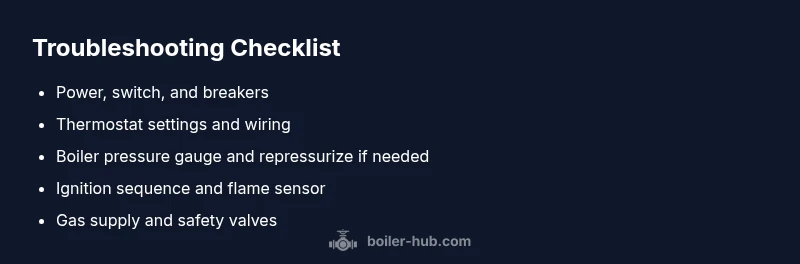
- Confirm power: outlet, switch, and reset button (if present)
- Check thermostat: battery, wiring, and correct temperature setting
- Inspect pressure gauge: ensure 1–2 bar when hot, repressurize if below range
- Look for error codes on the display and consult the manual
- Check gas supply valve and pilot light (or ignition coil) as applicable
- Bleed radiators and remove airlocks if you hear gurgling or cold spots
- If in doubt or if you smell gas, exit and call a professional immediately
Steps
Estimated time: 30-45 minutes
- 1
Check power supply and switches
Start by ensuring the boiler is connected to a live outlet and the main power switch is ON. If there is a reset button, use it according to the manual. A simple power reset can clear transient faults that prevent ignition.
Tip: Save the reset for confirmed issues; repeated resets may mask a deeper problem. - 2
Verify thermostat settings and controls
Check both room thermostat and any boiler-specific control panel. Ensure the thermostat is set above room temperature and that wireless remotes are paired and functioning. Replace batteries if needed and confirm no sleep/wake mode is preventing heat demand.
Tip: If you have TRV heads, ensure they aren’t stuck in cooling mode. - 3
Inspect boiler pressure and repressurize if needed
Read the pressure gauge; if it sits below the recommended range, use the filling loop to restore pressure to the advised level. Close the loop once the target is reached, then recheck for ignition readiness.
Tip: Avoid over-pressurizing; small, incremental adjustments are safer. - 4
Check ignition system and flame presence
Listen for ignition clicking or view for a flame when the boiler attempts to start. A dirty flame sensor or faulty ignition electrode can prevent ignition. Clean or replace as required per the manufacturer’s guidance.
Tip: Do not touch ignition parts while power is live. - 5
Assess gas supply and safety valves
Ensure gas valve is fully open and there are no external gas smells. If you suspect a gas issue, evacuate and call the gas emergency number. Gas systems are hazardous and require licensed professionals for repair.
Tip: Never bypass gas shutoffs or attempt DIY gas work. - 6
Attempt a controlled reset and test ignition again
Use the boiler’s reset function if available and reattempt ignition. If the ignition sequence still fails, record any error codes displayed and consult the manual or a professional.
Tip: Document fault codes for faster diagnosis. - 7
Call a professional if problems persist
If ignition remains elusive, heat output is inconsistent, or there are gas smells, contact a licensed boiler technician. Regular maintenance can prevent recurring failures and ensure safety.
Tip: Schedule annual service to reduce future no-start events.
Diagnosis: Boiler won't turn on
Possible Causes
- highNo power to boiler or tripped breaker
- mediumThermostat mis-set or faulty wiring
- mediumLow boiler pressure or air in system
- lowSafety lockout from overheat or flame sensor fault
Fixes
- easyCheck outlet and circuit breaker; reset if tripped; ensure the boiler switch is ON
- easyVerify thermostat settings and wiring; replace batteries if remote controls are used
- easyInspect boiler pressure; repressurize according to the manual if below the recommended level
- mediumReset lockouts following the manufacturer procedure; if the fault recurs, seek professional service
- mediumInspect flame sensor and ignition components for signs of dirt or damage; replace if necessary
Questions & Answers
What is the first thing to check when a boiler won't turn on?
Begin with the power supply, breaker status, and main boiler switch. If power is present, verify thermostat settings and pressure. These basics resolve most no-start issues.
Start with power, breaker, and thermostat, then check the pressure to see if ignition is blocked by a simple safety issue.
Can a low boiler pressure stop ignition?
Yes. If pressure is below the recommended range, the boiler may lock out or fail to ignite. Repressurize following the manual and re-test ignition.
Low pressure can prevent ignition. Repressurize as directed and try again.
Is it safe to reset a boiler's lockout?
Resetting can clear transient faults, but if the fault recurs, stop and call a professional. Repeated lockouts indicate a deeper issue that needs inspection.
You can reset once, but if it keeps happening, call a pro.
When should I definitely call a professional?
Call a professional if you smell gas, hear unusual noises, see error codes you can't clear, or have repeated ignition failures despite basic checks.
Call a pro if you smell gas or the issue repeats after standard troubleshooting.
Can maintenance prevent boiler not turning on?
Yes. Regular servicing, cleaning ignition components, and checking pressures reduce no-start events and extend boiler life.
Regular maintenance prevents most start-up problems.
Watch Video
Key Points
- Start with power, thermostat, and pressure checks
- Know when to reset and when to call a pro
- Safety first: gas and electrical hazards require caution
- Regular maintenance prevents no-start problems