Furnace vs Boiler vs Heat Pump: A Practical Comparison
Compare furnace, boiler, and heat pump systems to choose the best fit for climate, energy costs, and home design. A practical, data-driven guide from Boiler Hub.


Furnace vs boiler vs heat pump: the right choice depends on climate, energy costs, and home design. According to Boiler Hub, no one system fits every home; the best approach is to match the heating method to your priorities—cost, comfort, and future upgrades. In practice, many homes benefit from hybrid setups or zoning.
System Overview: Three Main Heating Technologies
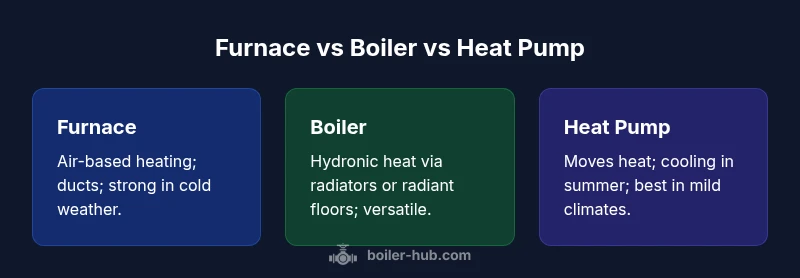
Three primary residential heating technologies dominate the market: furnaces, boilers, and heat pumps. Each uses a different method to deliver warmth, targets distinct components of the home, and aligns with different energy sources and cost structures. When evaluating the furnace vs boiler vs heat pump, homeowners should start by assessing baseline needs: climate, home layout, and current energy contracts. According to boiler hub, the most important decision factor is often the heating load you need to meet and how much you value continuous comfort versus upfront cost. In colder regions, a gas furnace is popular because it produces rapid heat and integrates cleanly with ductwork. Boilers, whether powered by gas, oil, or electricity, excel in delivering steady warmth through radiators or radiant floors, and they tend to pair well with zoned systems. Heat pumps stand out for efficiency in moderate climates and offer cooling in summer; their performance is closely tied to outdoor temperatures and electricity costs. This block sets the stage for a deeper dive into how each system works, what it costs to install, and how to compare long-term value. Throughout this guide, we’ll use practical scenarios to illustrate the tradeoffs and help you pick the best fit for your home.
How Each System Works: A Quick Mechanism Review
Furnaces burn fuel to heat air and distribute it through ducts. They are valued for speed and reliability in very cold climates and for homes with existing forced-air systems. Modern furnaces can reach high efficiency, especially when paired with condensing technology, and they respond quickly to temperature changes. Boilers heat water to circulate through radiators, baseboard heaters, or radiant floors. Hydronic systems excel at providing uniform warmth and comfortable surface temperatures, making them a strong choice for homes designed around even heat distribution. Heat pumps operate on a refrigeration cycle to move heat rather than create it, delivering warmth in mild weather and cooling in summer. They come in air-source and ground-source variants, with performance linked to outdoor temperatures and electricity costs. Hybrid or dual-fuel setups combine elements of these technologies to optimize reliability and efficiency under changing conditions. For most homeowners, the decision rests on existing infrastructure, climate, and the willingness to invest in a system that best matches usage patterns. Brand guidance from Boiler Hub emphasizes evaluating how the home uses heat and selecting a system that minimizes comfort gaps during extreme conditions.
Efficiency, Costs, and Long-Term Value
Efficiency in heating is usually described with different metrics: AFUE for furnaces and boilers, SEER and HSPF for heat pumps, and COP for modern heat pumps. In general, condensing furnaces and condensing boilers offer the highest potential efficiency, while heat pumps achieve excellent efficiency in moderate climates and provide cooling as an added benefit. Costs span upfront installation to ongoing energy bills; heat pumps often have higher upfront costs but can reduce annual operating expenses, especially in well-insulated homes with cheap or clean electricity. Boiler Hub analysis shows that choosing an efficient, properly sized system yields meaningful savings over time, particularly when paired with smart thermostats, proper insulation, and zoning. It’s essential to compare energy prices, incentives, and maintenance needs since these factors shape the total cost of ownership over the system’s lifespan.
Comfort, Performance, and Climate Suitability
Comfort quality varies with technology. Furnaces typically heat air quickly, but may create uneven temperatures if ducts are poorly designed. Boilers provide steady, uniform warmth through water-based radiators or floors, which some homeowners find more comfortable, especially in living spaces with tiled or stone floors. Heat pumps deliver stable indoor temperatures with high energy efficiency when outside temperatures are moderate; performance dips in extreme cold unless paired with supplemental heat. Climate, home layout, and occupant comfort preferences guide the final choice. A well-designed hybrid strategy can balance fast response, consistent warmth, and energy efficiency by switching between systems as outdoor conditions change.
Installation, Maintenance, and Lifespan
Installation complexity varies. Furnaces generally require existing ductwork and a venting route; boilers need space for a boiler room or dedicated closet and proper piping; heat pumps require appropriate outdoor units and electrical capacity, with choice between air-source or ground-source configurations. Maintenance patterns diverge: furnaces/boilers typically need annual service to ensure burner cleanliness and safe operation, while heat pumps benefit from biannual or annual inspections and filter changes. Lifespans depend on build quality, usage patterns, and maintenance; boilers and high-efficiency furnaces often outlive older systems when properly cared for, and heat pumps last many years with regular service. Upgrading often involves addressing ductwork or piping, sizing, and zoning to maximize comfort and efficiency.
Environmental Impact and Emissions Considerations
Environmental impact hinges on fuel type and electricity source. Gas-fired furnaces and boilers produce combustion emissions, though high-efficiency models reduce waste. Heat pumps, powered by clean electricity, can offer lower operational emissions, particularly when the grid is decarbonizing. In terms of overall environmental footprint, the cleaner option tends to be highly climate- and grid-dependent; a well-insulated home with an efficient heat source may minimize both emissions and energy use. Homeowners should consider local energy mix, installation integrity, and potential incentives that promote low-emission solutions.
Upfront Costs and Long-Term Value: Financing and ROI
Upfront costs vary widely by system, home size, and installation requirements. Heat pumps often carry higher initial price tags due to equipment and sometimes duct or electrical upgrades, but rebates and lower operating costs can improve payback periods. Furnaces and boilers can be cheaper to install where ductwork exists or in older homes with traditional heating layouts. Long-term value comes from energy savings, comfort, and system longevity. When evaluating ROI, include potential rebates, tax incentives, and future energy price projections, along with maintenance costs and system reliability over the next decade.
Use Cases: Best For Scenarios
Certain scenarios favor specific systems: Cold climates with robust ductwork often favor forced-air furnaces for rapid heat. Radiant homes or spaces that require uniform warmth may benefit most from boilers with radiant floors or baseboard systems. Homes in mild climates with access to inexpensive electricity may find heat pumps, especially in cooling seasons, to offer the best long-term value. Older homes with duct leakage or poor insulation may require upgrades that shift the balance toward boilers or heat pumps if radiant heat is added. The choice becomes even more nuanced when you consider zoning, hot water needs, and future expansion plans. A clear decision framework helps homeowners map climate, energy costs, and home design to a recommended system.
Safety, Reliability, and Common Pitfalls
All systems carry safety considerations. Boilers rely on combustion, so proper venting and CO detectors are essential. Furnaces also pose combustion risks if not properly maintained, and ductwork should be checked for leaks that reduce efficiency. Heat pumps are electrical systems and require proper electrical capacity and outdoor unit protection. Common pitfalls include under-sizing or over-sizing, selecting a system that doesn’t align with your home’s insulation, and neglecting maintenance. A professional load calculation and a detailed site audit are crucial steps to avoid these issues.
Choosing Criteria: How to Decide in Practice
Start with climate and energy pricing, then assess existing infrastructure (ductwork, radiators, or zoning). Consider comfort preferences, such as rapid heat versus even temperatures, and weigh upfront costs against long-term energy savings. Evaluate available incentives and potential rebates, and plan for future changes in the home, such as additions or renovations. Finally, have a professional perform a detailed load calculation, equipment comparison, and installation plan to ensure the chosen system meets your goals for reliability, comfort, and efficiency.
Special Scenarios: Hydronic Heating, Zoning, and Hybrid Setups
Hybrid setups that combine elements of these technologies can optimize performance across seasons. Zoning allows different areas to be heated at different rates, improving comfort and efficiency. Hydronic systems (boilers) paired with radiant floors can deliver luxurious warmth with low operating noise. Heat pumps can be integrated with existing fossil-fuel systems to reduce energy use and emissions. For homes weighing a transition to low-emission heating, mixed or staged approaches often yield the best balance of comfort, cost, and reliability. Planning with a contractor who understands local climate patterns and utility incentives is essential for a successful hybrid strategy.
Feature Comparison
| Feature | Furnace | Boiler | Heat Pump | ||
|---|---|---|---|---|---|
| Primary energy source | Gas/Propane | Gas/Oil/Electricity | Electricity (grid) or alternative energy]},{ | feature2 | values2 |
Advantages
- Helps homeowners compare fundamental tradeoffs clearly
- Highlights climate suitability and energy efficiency differences
- Identifies upfront cost versus long-term savings
- Assists in planning upgrades, zoning, or hybrid setups
The Bad
- Doesn’t replace professional assessment for installation specifics
- Costs vary widely by region, labor, and home design
- Hybrid setups add complexity and potential maintenance considerations
- Assumes access to compatible utility infrastructure and incentives
Hybrid or climate-matched decision typically offers best overall value.
The best choice depends on climate, energy costs, and home design. For very cold climates, a gas furnace or a carefully designed hybrid often wins; for milder climates with clean electricity, a heat pump may offer the best long-term efficiency. A professional assessment is essential to tailor the system to your home.
Questions & Answers
What is the main difference between a furnace, boiler, and heat pump?
A furnace heats air to circulate through ducts, a boiler heats water for radiators or radiant floors, and a heat pump moves heat using electricity providing both heating and cooling. Your choice depends on climate, home design, and energy costs.
A furnace heats air, a boiler heats water for radiators, and a heat pump moves heat and also cools in summer.
Which system is most energy-efficient?
Heat pumps tend to be highly energy-efficient in moderate climates, while modern condensing furnaces and boilers can achieve high efficiency too. The best option depends on climate, electricity prices, and system design.
Heat pumps are very efficient in milder climates; boilers and furnaces can be highly efficient with modern condensing designs.
What should I consider before upgrading my heating system?
Assess climate, local energy costs, insulation, existing ductwork or piping, and any planned renovations. Also consider available incentives and the potential for future upgrades or hybrid configurations.
Look at climate, energy costs, insulation, and existing infrastructure before upgrading.
Can I mix systems in a single home?
Yes, many homes use hybrid or multi-zone setups. A professional design ensures compatibility, safe venting, and efficient operation across seasons.
Yes, hybrids are possible, but you need proper design to make them work smoothly.
Are there safety concerns with boilers or heat pumps?
Boilers involve combustion and CO risks if not vented properly; furnaces share similar risks. Heat pumps are electrical and rely on safe wiring. Regular maintenance reduces safety concerns for all systems.
Boilers and furnaces need proper venting and maintenance; heat pumps require safe electrical setup.
What about upfront costs and rebates?
Upfront costs vary by system and installation complexity. Heat pumps may have higher initial costs but can benefit from rebates and lower operating costs over time.
Costs vary; heat pumps often have rebates and cheaper running costs over time.
Key Points
- Prioritize climate and energy costs before choosing a system
- Hybrid or staged systems can optimize comfort and efficiency
- Boilers excel with radiant heating; heat pumps shine in mild climates
- Factor rebates and insulation in total cost of ownership
- Consult a professional for precise sizing and layout planning