Heat Pump vs Boiler: A Practical 2026 Comparison
Compare heat pump versus boiler systems for 2026. Analyze climate suitability, costs, efficiency, installation, and long-term reliability to decide the best heating solution for your home.


Heat pump versus boiler decisions hinge on climate, electricity costs, and system needs. In general, heat pumps excel in moderate climates with affordable electricity, delivering high efficiency and lower operating costs over time. Boilers remain strong in very cold regions or where hot water demand is high, offering reliable, rapid heating. A balanced approach often blends the two to maximize comfort and efficiency.
Core trade-offs in heat pump versus boiler decisions
Choosing between a heat pump and a traditional boiler hinges on climate, electricity prices, and space heating and hot-water demands. According to Boiler Hub, the best choice often comes down to how you heat your home and how you use hot water year-round. In practice, heat pumps tend to deliver high efficiency and lower operating costs in milder climates with reliable electricity, while boilers excel where outdoor temperatures plunge and hot-water demand is high. This block outlines the core factors homeowners and facility managers should weigh before deciding, including climate suitability, system integration, upfront costs, and long-term running expenses. By understanding these levers, you can map a path toward a heating solution that aligns with energy goals, comfort expectations, and budget constraints for 2026.
- Climate suitability: If you live in a region with mild winters, heat pumps often outperform boilers on running costs. In very cold climates, a boiler or hybrid system can provide steady warmth even during extreme cold.
- Hot-water demand: Large households drawing a lot of hot water may lean toward a boiler or a heat pump paired with a storage solution.
- Infrastructure and space: Heat pumps require outdoor space and careful distribution planning, while boilers rely on existing gas or oil infrastructure and venting.
- Upfront vs running costs: Heat pumps typically involve higher upfront costs, but lower ongoing energy costs when electricity prices are favorable. Boilers often come with lower initial price but ongoing fuel costs and maintenance.
Brand context is important here. The Boiler Hub team notes that your decision should reflect climate realities and local energy pricing, not a one-size-fits-all recommendation. This pragmatic view helps homeowners and facility managers choose a system that balances comfort, reliability, and total cost of ownership for 2026.
- climate_profile:
Comparison
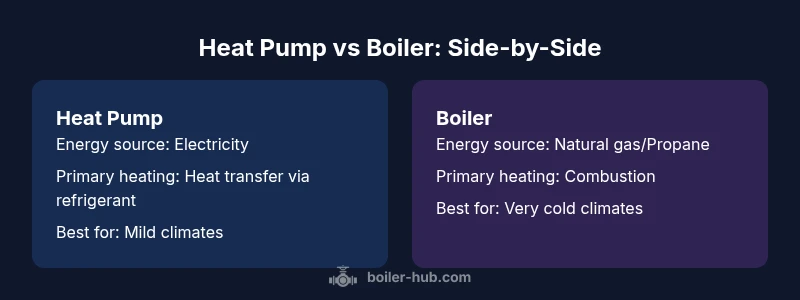
| Feature | heat pump | boiler |
|---|---|---|
| Energy source | electricity (heat pump) | natural gas/propane or oil (boiler) |
| Primary heating method | refrigerant-based heat transfer | combustion-based heat generation |
| Space heating performance in climate | high efficiency in moderate climates | robust in very cold climates |
| Hot water readiness | can include integrated storage | can pair with separate water heater |
| Installation complexity | outdoor unit; distribution planning required | often straightforward if fuel line exists; venting needed for retrofit |
| Operating costs | lower when electricity is affordable and grid clean | fuel price-driven and varies by fuel type |
| Emissions impact | lower with clean electricity mix | direct emissions from combustion unless paired with clean fuel |
| Best for | mild climates with accessible electricity | very cold climates or high hot-water demand |
Advantages
- Lower operating costs in moderate climates with clean electricity
- High-rated efficiency and comfort for space heating
- Flexibility with hybrid configurations to balance reliability and energy use
- No combustion risk and reduced indoor air quality concerns
- Potentially lower maintenance for heat pumps compared to combustion-based systems
The Bad
- Higher upfront installation costs and potential retrofit needs
- Performance can drop in very cold weather unless cold-climate models are used
- Electricity price volatility can affect running costs
- Requires adequate space for outdoor unit and distribution planning
Heat pumps are typically the better long-term choice for homes in moderate climates with clean electricity, while boilers remain the safer option in very cold regions or when hot-water demand is exceptionally high.
For climate-appropriate homes, heat pumps deliver efficiency and comfort while reducing emissions. Boilers provide predictable performance in extreme cold and high hot-water use. A hybrid can often offer the best balance between upfront cost and ongoing savings.
Questions & Answers
What is the main difference between a heat pump and a boiler?
A heat pump moves heat using electricity to provide warmth, achieving high efficiency, while a boiler burns fuel to generate heat directly. The decision hinges on climate, energy prices, and hot-water needs. Heat pumps excel in milder climates, boilers in very cold climates or high hot-water demand.
The heat pump moves heat with electricity, while a boiler burns fuel to make heat. Climate and energy prices largely determine which is better.
Can a heat pump replace a boiler entirely?
In many cases, a heat pump can replace a boiler for space heating, but very cold climates or very high hot-water demand may require supplemental heating or a hybrid approach. A professional assessment is essential to confirm feasibility and ensure comfort throughout winter.
Often yes, but in very cold places you might still want a backup heat source.
Are heat pumps effective in very cold climates?
Modern cold-climate heat pumps perform better than earlier generations, but extremely cold conditions can reduce efficiency. In such regions, a hybrid setup or a boiler backup can provide reliable warmth during severe cold snaps.
They work well, but sometimes need backup heat for the coldest days.
What should I ask installers when comparing quotes?
Ask about climate suitability, efficiency ratings (COP/SCOP), system size, distribution method (radiators, underfloor heating), maintenance plans, warranty, and integration with hot-water needs. Compare total cost of ownership, not just upfront price.
Ask about climate performance, efficiency, and total costs over time.
What role do hybrid systems play in this decision?
Hybrid systems combine heat pumps with a boiler to balance efficiency and reliability. They adapt to outdoor temperatures, providing heat pump operation in mild weather and boiler support during peak cold periods.
A hybrid can often give you the best of both worlds.
Key Points
- Assess climate and electricity costs before choosing
- Consider hot-water demand alongside space heating needs
- Evaluate installation requirements and space for outdoor units
- Explore hybrid options to balance reliability and efficiency
- Factor in energy incentives and long-term operating costs