Boiler vs Furnace Efficiency: Side-by-Side Comparison
A rigorous, numbers-free comparison of boiler vs furnace efficiency, focusing on how heat distribution, AFUE concepts, climate, and installation shape long-term energy costs for homeowners and facility managers.


Boiler vs furnace efficiency hinges on how heat is produced, distributed, and maintained. Boilers typically excel in radiant, hydronic systems where steady heat minimizes losses, while high-efficiency furnaces perform strongly in well-sealed, ducted homes. The best choice depends on your home layout, climate, and energy costs. This comparison breaks down the core efficiency drivers and decision factors to guide your next upgrade.
Understanding the basic distinction between boilers and furnaces
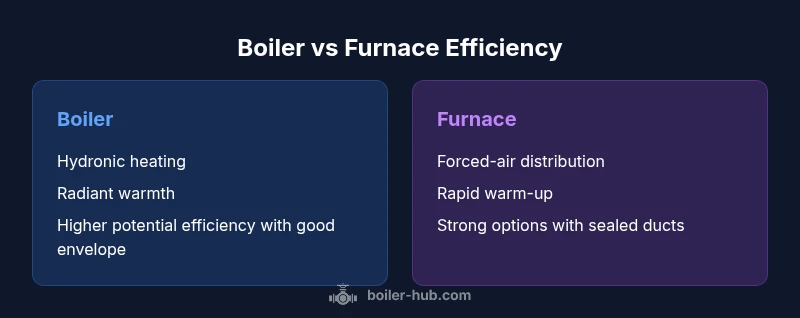
In most homes, a boiler heats water that circulates through radiators, baseboard heaters, or radiant floors, while a furnace heats air that travels through a duct network to warm rooms. When homeowners ask about boiler vs furnace efficiency, the question isn’t just about the device itself but about heat distribution, system design, and how those elements interact with climate and insulation. According to Boiler Hub, the efficiency of either option is best understood as a combination of equipment design, installation quality, and how the home retains heat. This means a larger, well-sealed house with radiant heat can outperform a smaller, leaky home, even if the furnace or boiler is modern. The choice should reflect not only upfront costs but also long-term energy use and comfort consistency across rooms.
How efficiency is defined and measured in heating equipment
Efficiency is commonly discussed in terms of the annual fuel utilization efficiency (AFUE) for furnaces and boilers, which estimates how effectively a system converts fuel into heat over a year. In practice, AFUE is only a guide; real-world performance depends on how heat is distributed, losses in circulation or ductwork, and how often the system cycles on and off. For hydronic boilers, efficiency also involves the pump, the heat exchanger, and the ability to minimize standby losses. For forced-air furnaces, blower efficiency, duct leakage, and filter cleanliness play a significant role. The upshot is that two systems with similar AFUE ratings can feel differently in an actual home because of distribution losses and control strategies.
Hydronic vs forced-air: heat distribution and its impact on efficiency
A boiler’s hydronic network delivers heat through water to radiators or radiant floors, which tends to provide evenly distributed warmth with fewer temperature swings. This can feel more efficient because fewer BTUs are wasted reheating cold spaces. A furnace sends warm air through ducts, which can lose heat through leaky ducts and require larger airflow to achieve the same comfort level. However, modern condensing furnaces with precise modulation and high-efficiency heat exchangers can approach boiler performance in heating-dominated climates. The key is ensuring ducts are sealed, insulated, and properly sized for the home, so distribution losses don’t erase the gains from a high-efficiency unit.
Real-world performance: energy use, climate, and occupancy patterns
Efficiency in practice is driven by climate, occupancy, and how well the home is sealed. In colder regions, radiant-heating with a boiler may maintain steady comfort with lower energy intensity during peak cold, while in milder climates or homes with tight ductwork, a high-efficiency furnace can deliver rapid warmth with manageable costs. Boiler Hub’s analysis shows that real-world efficiency is maximized when the heating system aligns with the house’s thermal envelope and occupant behavior. This means addressing insulation gaps, sealing leaks, and installing smart thermostats to reduce unnecessary heat loss through the day.
Building envelope, insulation, and heat-loss considerations
Even the most efficient boiler or furnace can underperform if the building envelope is leaky. Windows, doors, attic hatches, and wall cavities contribute to heat losses that dwarf small efficiency gains from the equipment itself. For hydronic systems, radiant floors lose heat when the insulation is poor or when piping runs beneath unheated spaces. For ducted systems, duct leakage can siphon off large portions of heated air before it reaches living areas. The bottom line: to maximize boiler vs furnace efficiency, address the envelope first and then optimize the heating unit and distribution network.
Fuel type, energy costs, and long-term operating considerations
Fuel choices—gas, oil, electricity, or hybrids—significantly influence operating costs. In regions with stable gas prices, a high-efficiency boiler or furnace can offer favorable annual energy costs, especially when paired with good insulation and modern controls. Electric heat pumps or hybrid setups can shift the efficiency dynamic in milder climates or for homes aiming to decarbonize, but electricity prices and seasonal demand will impact the bottom line. Always compare energy prices, local incentives, and maintenance costs when weighing boiler vs furnace efficiency for your locale.
Sizing, installation, and integration with existing systems
A mis-sized boiler or furnace can waste energy and money regardless of AFUE. Oversized units short-cycle, increasing wear and reducing comfort, while undersized units struggle to meet load during extreme cold. In hydronic designs, the radiator layout, slab heating, and loop balancing determine how quickly heat is delivered. In forced-air systems, duct sizing, plenum design, and return-air paths matter as much as the unit’s efficiency rating. A professional load calculation and a careful consideration of existing plumbing or ductwork context are essential for true efficiency gains.
Climate considerations: when one option tends to win
In very cold climates with heavy heating days, boilers paired with radiant distribution can offer stable, comfortable heat with potentially lower operating waste. In homes with extensive existing ductwork and frequent demands for quick warm-up, a high-efficiency furnace with well-sealed ducts can outperform a boiler on a per-Btu basis during peak demand. The regional climate should guide the decision, but so should the home’s construction quality, insulation, and daily use patterns. Boiler Hub emphasizes tailoring the approach to the specific building and climate rather than relying on a universal rule.
Modern upgrades and modernization paths: condensing boilers, modulating furnaces, and hybrid controls
Modern condensing boilers and modulating furnaces push efficiency higher by extracting more heat from a given fuel. Hydronic systems can gain from advanced circulators and weather-based control, while ducted systems benefit from better air sealing, programmable thermostats, and zoning. In some cases, a hybrid approach—combining hydronic backup with a primary furnace, or upgrading to a sealed ductless zone system—can offer the best overall efficiency and comfort. The goal is to minimize heat losses, improve control, and ensure the system is sized and sited to the home’s exact load profile.
Practical decision framework for homeowners and facility managers
To decide between boiler vs furnace efficiency, start with a home energy audit and heat-load calculation. Assess the existing distribution network (pipes or ducts) and enclosure quality, then weigh upfront costs against expected operating costs over the system’s life. Consider climate, occupancy patterns, and future plans for decarbonization. If your home already has a hydronic loop or radiant floors, a high-efficiency boiler may deliver superior comfort with steady output. If you need rapid warmth, flexibility, and have ductwork in place, a modern high-efficiency furnace could be the more practical choice.
Authority sources and references
- https://www.energy.gov/
- https://www.epa.gov/
- https://www.nrel.gov/
Practical tips and common mistakes to avoid
- Avoid relying solely on AFUE numbers; verify duct/pipe integrity and insulation levels.
- Don’t overlook smart controls, zoning, and temperature setback strategies to maximize any system’s efficiency.
- Don’t discount maintenance; regular service, filter changes, and component cleaning sustain efficiency and safety.
- Don’t ignore air sealing and envelope upgrades, which often yield bigger efficiency dividends than a minor equipment swap.
Comparison
| Feature | Boiler system | Furnace system |
|---|---|---|
| Heating method | Hot water/radiant distribution | Warm air via ducts |
| Efficiency profile | Typically strong with radiant layouts; efficiency depends on system design | High-efficiency options exist but depend on duct sealing and load matching |
| Climate suitability | Excellent for radiant heating and even comfort | Versatile for ducted homes and quick warmups |
| Upfront cost | Moderate to high (piping, radiant zones) | Moderate to high (ductwork and install) |
| Operating cost drivers | Fuel type, pump efficiency, and heat losses in loops | Fuel cost, duct losses, and filter/duct maintenance |
| Maintenance requirements | Pump and boiler maintenance; pump efficiency matters | Duct cleaning, filter changes, and blower checks |
| Space and footprint | Requires dedicated mechanical space; piping is essential | Requires space for ducts and a clean basement/attic access |
| Best for | Radiant bases, heat retention rooms, and climate-stable zones | Homes with existing ducts and rapid heat-up needs |
Advantages
- Helps readers compare two common heating approaches in a consistent framework
- Highlights how heat distribution influences efficiency and comfort
- Clarifies upfront vs long-term cost considerations
- Encourages climate- and home-specific decision making
- Promotes attention to building envelope to maximize gains
The Bad
- Does not capture every system variant or hybrid setups
- Real-world performance depends on maintenance, installation quality, and fuel costs
- Could imply a one-size-fits-all solution; homeowners must tailor to their home
Boilers often deliver superior efficiency in radiant/hydronic setups, while high-efficiency furnaces excel in ducted homes with sealed ducts.
Choose boiler-based solutions when radiant heat and even temperatures are priorities, especially in well-insulated homes. Opt for furnaces when existing ductwork, faster warm-up, and lower upfront costs fit your project scope better; align the choice with climate, distribution, and maintenance plans for best long-term efficiency.
Questions & Answers
Which heating system tends to be more energy-efficient overall: boiler vs furnace?
Thermal efficiency depends on distribution and climate. Boilers generally excel in steady, radiant heat, while high-efficiency furnaces perform well in properly sealed ducted homes. Real-world efficiency hinges on design, insulation, and controls as much as the device type itself.
Boilers often win for radiant heat, but a well-sealed furnace can be just as efficient in the right home.
How does AFUE relate to actual energy use in a home?
AFUE measures potential fuel-to-heat conversion under standard conditions. In practice, duct losses, insulation gaps, and cycling behavior can cause actual energy use to differ from the AFUE rating. Always pair AFUE with envelope improvements and smart controls.
AFUE is a guide; real-world use depends on how your home is built and maintained.
What other factors influence efficiency beyond choosing boiler vs furnace?
Heat distribution quality, duct or piping integrity, insulation levels, thermostat control, and regular maintenance all significantly affect efficiency. A well-insulated house with sealed ducts can dramatically improve performance regardless of the system type.
Maintenance and insulation sering changes the game more than the device choice.
Are hybrid or dual-fuel setups worth it?
Hybrid or dual-fuel arrangements can optimize efficiency by using the most economical fuel at any given time and climate. They require careful design and control strategies to avoid inefficiencies from switching.
Hybrid systems can offer flexibility, especially in mixed-fuel regions.
What maintenance tasks most impact efficiency?
Regular filter changes, cleaning of heat exchangers, inspection of burners, and duct sealing are critical for efficiency. Skipping maintenance leads to performance drops and higher energy use.
Keep filters clean and ducts sealed for peak efficiency.
Does climate change which option is better for a home?
Yes. Very cold climates may favor boilers with radiant distribution for stable comfort, while ducted homes in moderate climates may benefit from high-efficiency furnaces and zoning. Always tailor to climate and building performance.
Climate matters, but installation quality matters more.
Key Points
- Assess heat distribution first: hydronic vs air
- AFUE is a guide—real-world efficiency depends on maintenance and installation
- Climate and home design should drive system choice
- Seal ducts and insulate the building envelope to maximize gains
- Plan for future upgrades and efficient controls to sustain efficiency