Why Would a Boiler Short Cycle? Troubleshooting Guide
Urgent troubleshooting guide to diagnose why a boiler short cycles. Learn common causes, quick checks, and when to call Boiler Hub for safe, reliable fixes.


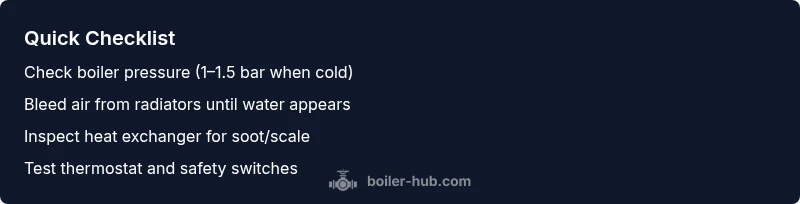
Most boilers short cycle because the safety limit or thermostat trips when the unit overheats or loses prime. Common culprits include low water pressure, trapped air, a dirty heat exchanger, or a malfunctioning thermostat. Start by checking boiler pressure (usually 1–1.5 bar when cold), bleeding air from radiators, and ensuring vents are clear. If cycles continue, call a pro—Boiler Hub recommends professional service.
why would a boiler short cycle
Short cycling is when the boiler fires for a brief period and then shuts off, only to restart moments later. You might hear the burner click and then a quick silence before it lights again. This pattern wastes energy, reduces comfort, and can shorten the life of components. According to Boiler Hub, a boiler short cycle is often a signal that something in the system is imbalanced or not operating correctly. In homes and facilities, the most common triggers are pressure problems, trapped air, dirty heat exchange surfaces, and faulty thermostats. Understanding these causes helps you act quickly and safely. Start with the simplest checks before calling a professional, and always prioritize safety when dealing with gas and high-temperature equipment.
Common Causes of Short Cycling in Boilers
There are several root causes that commonly lead to short cycling. Low boiler pressure is one of the most frequent triggers, especially after a winter lull when a system hasn’t been exercised. Air trapped in the radiant loop or boiler itself can form pockets that heat unevenly, triggering the safety limit prematurely. A dirty heat exchanger or burner can impede efficient heat transfer, causing the boiler to overheat and shut off. A faulty thermostat or faulty safety switch can also misread temperature, initiating a shutoff even when heat is still needed. Finally, incorrect venting or a failing expansion tank can disrupt the water balance. If you’re asking "why would a boiler short cycle?", these are the issues you should inspect first. Boiler Hub’s guidance emphasizes a methodical approach: start with the easiest fixes and progress to more involved checks. If you notice gas smells, flaky wiring, or you’re uncomfortable with any step, call a licensed professional immediately.
Quick Home Checks You Can Do Right Now
Before diving into complex diagnostics, perform a few safe, quick checks. Verify boiler pressure on the gauge—most residential boilers aim for about 1–1.5 bar when cold; if it’s low, you may need to top up the system using the filling loop. Bleed radiators to release any trapped air, starting with the highest floors and finishing at the lowest. Inspect visible piping for leaks and ensure vents and flues are unobstructed. Check that thermostats are set correctly and that the user interface shows a steady reading rather than rapid fluctuations. If the boiler remains short cycling after these checks, you’ve narrowed down the likely causes and should consider a professional assessment. This is especially true for gas-fired models where safety is paramount.
Diagnostic Flow: Symptoms to Diagnosis to Fixes
A structured diagnostic approach helps you avoid trial-and-error. Start with symptoms: a boiler that starts, runs briefly, and shuts off repeatedly. Possible causes include low pressure, air blockages, or a faulty thermostat. If pressure is low, the fix is to restore it. If air, bleed until water runs clear. If the problem persists after these steps, the situation may be more complex, such as a dirty heat exchanger or an aging safety switch. According to Boiler Hub analysis, aligning checks with the system’s design pressures and flow paths yields faster resolution. When diagnosing, document readings and steps to share with a technician. This discipline minimizes unnecessary service visits and reduces downtime.
Step-by-Step Fixes for the Most Likely Causes
Below is a practical sequence to address the most common short-cycle causes while staying within safe parameters. Step 1 focuses on pressure. Step 2 tackles air. Step 3 covers heat transfer surfaces, Step 4 tests controls, Step 5 validates the expansion system, and Step 6 ensures you know when to call a pro. Follow the order to avoid chasing symptoms. Safety first—if you smell gas, shut down and call emergency services or a licensed technician immediately.
Safety, Warnings, and When to Call a Pro
Short cycling can indicate serious issues that require professional attention, especially on gas boilers, pressure vessels, or older equipment. Always prioritize shut-off procedures before inspections if you detect unusual noises, gas odors, or visible leaks. Do not bypass safety devices or attempt to disassemble burners or heat exchangers without proper training. Regular maintenance is your best defense against short cycling. If you’re unsure about any step or if the boiler remains unstable after checks, contact Boiler Hub for guidance and arrange a professional service appointment.
Steps
Estimated time: 60-90 minutes
- 1
Check boiler pressure and top up if needed
Locate the pressure gauge and confirm it sits near 1–1.5 bar when cold. If below this range, use the filling loop to restore pressure to the recommended level. Once pressure is correct, run the boiler briefly to see if cycling behavior improves.
Tip: Always close the filling loop slowly and monitor pressure; rapid changes can damage the system. - 2
Bleed air from radiators
With the boiler off, use a radiator key to crack the bleed valve on the highest radiator first. Let air escape until a steady stream of water appears, then close the valve. Recheck boiler pressure after bleeding.
Tip: Have an old rag ready for water spray; avoid burning yourself on hot fins. - 3
Inspect heat exchanger and burner
Shut off power and gas supply following safety guidelines. Inspect the visible surfaces for soot or scale and clean as instructed by the manufacturer. Reassemble and test the unit for a longer cycling interval.
Tip: If you’re not comfortable handling burner components, skip this step and call a pro. - 4
Check thermostat and controls
Verify the thermostat is functioning and reading accurately. Test a manual reset, and ensure wiring connections are secure. If readings are erratic, consider replacement or professional inspection.
Tip: Avoid placing the thermostat near drafts, radiators, or direct sunlight to prevent false readings. - 5
Evaluate expansion tank integrity
Check for signs of a waterlogged expansion tank or loss of pre-charge pressure. If the tank doesn’t hold air or water, replacement is often necessary. This step helps stabilize system pressure and prevent short cycling.
Tip: A technician may need to verify the tank using the correct pre-charge pressure specification. - 6
Call a professional if cycles persist
If the boiler continues to short cycle after these steps, the issue is likely more complex or safety-critical. Schedule a service with a licensed HVAC technician who can diagnose internal components or gas safety concerns.
Tip: Document readings and steps already taken to speed up the service call.
Diagnosis: Boiler short cycles (fires briefly, then shuts off repeatedly)
Possible Causes
- highLow water pressure
- highAir trapped in system
- mediumDirty heat exchanger or burner
- mediumFaulty thermostat or limit switch
- lowExpansion tank issues
Fixes
- easyCheck and adjust boiler pressure to the recommended range (usually 1–1.5 bar cold); refill if needed
- easyBleed radiators to remove trapped air; recheck pressure after bleeding
- mediumInspect heat exchanger and burner for soot or scale; clean following manufacturer instructions
- mediumTest thermostat and safety limit switches; replace faulty components
- hardAssess expansion tank pre-charge and water-logged tank; replace if needed
Questions & Answers
What is short cycling in a boiler?
Short cycling is when the boiler fires briefly and then shuts off, then restarts soon after. It reduces efficiency and can stress components. Identifying the cause quickly helps restore proper operation.
Short cycling means your boiler turns on and off rapidly, which wastes energy. Find the cause and fix it fast.
Can low boiler pressure cause short cycling?
Yes, low pressure is a common trigger. Refill to the recommended range and re-check cycles after balancing the system.
Low pressure often causes short cycling; restore pressure and test again.
Is it safe to bleed air from radiators myself?
Bleeding air is generally safe if you follow proper steps and wear protective gloves. Stop if you smell gas or notice leaks around fittings.
Bleeding air is usually safe if you follow the steps and stay cautious.
When should I replace the thermostat?
If the thermostat reads inaccurately, causes erratic temperatures, or is old, replacement is a practical fix. Verify compatibility with your boiler model.
Replace if it’s unreliable or outdated and you see temperature swings.
Can a dirty heat exchanger cause short cycling?
Yes, a sooted or scaled exchanger impedes heat transfer, causing overheating and premature shutoff. Cleaning or replacement may be required.
A dirty exchanger can trigger short cycling by causing overheating.
When is professional service required?
If troubleshooting doesn’t resolve the issue, or there are signs of gas leaks, unusual smells, or complex internal faults, contact a licensed technician immediately.
Call a pro if the problem persists or if gas safety is involved.
Watch Video
Key Points
- Bleed air and verify pressure first
- Low pressure and air pockets are top culprits
- If recurring, safety-first—call a pro
- Maintenance prevents future short cycles
- Document readings for technicians