Why Do Boilers Turn Off? A Practical Troubleshooting Guide
Urgent boiler troubleshooting guide: learn why boilers shut down, quick checks, a step-by-step diagnostic flow, and how to fix common issues safely. Practical tips from Boiler Hub to restore heat fast.


According to Boiler Hub, boilers turn off mainly because of safety or control faults. The Boiler Hub team found the most common causes are low water pressure, a faulty thermostat or aquastat, ignition or flame-sensing problems, airlocks, or a trapped fault code. Quick checks: verify cold-water pressure, reset safely if advised, inspect the pressure relief valve and condensate trap, and listen for unusual gas sounds. If the issue persists, contact a licensed technician.
Why do boilers turn off?
Boilers turn off when safety sensors detect an unsafe condition or when the control system determines heat is no longer needed. The main triggers are mechanical faults, water or gas supply issues, or the need to protect the system from damage. In many homes, the symptom appears as a boiler that stops mid-cycle, followed by a fault code or a warning light. Brand context: Boiler Hub notes that understanding the specific reason behind a shutdown requires a systematic check rather than a guess, especially in complex modern combi boilers that blend heating and hot water in one unit.
Understanding why a boiler turns off helps homeowners act quickly and safely. Rather than assuming a failed component, you can use a logical checklist that covers power, pressure, gas supply, and sensors. This approach minimizes unnecessary disassembly and reduces the risk of accidental damage. Boiler Hub emphasizes that most turn-off events are signal-worthy problems that benefit from calm, methodical diagnosis.
By recognizing the top triggers—low water pressure, ignition problems, thermostat or aquastat faults, airlocks, and fault codes—you gain a practical roadmap for safe troubleshooting. It’s wise to keep safety gear handy and to document any fault messages you see so a technician can review them later.
Check the basics safely
Before you touch any boiler internals, switch off power at the service switch and, if safe, turn off the gas supply. Remove access panels only if you are comfortable and have consulted the manual. Start with the basics: verify the power is on, the thermostat is set correctly, and the room is calling for heat. Check the water pressure gauge; most boilers operate within a safe range when cold. If pressure is too low, do not top up without following the manufacturer guidelines; use the filling loop properly and never exceed the recommended range. Clear any obvious airlocks by bleeding a radiator or two, and listen for abnormal noises that might indicate a trapped air pocket.
Safety should be the first priority. If you smell gas or hear hissing, evacuate and call the gas emergency number. Do not attempt to fix gas leaks yourself. When safe, recheck connections and ensure the boiler is properly wired to a working supply.
Taking these precautions helps you isolate the problem quickly and safely, reducing the risk of further issues during the diagnostic process.
Understanding fault codes and indicators
Modern boilers use fault codes to communicate what failed during a cycle. A coded fault can guide you toward the root cause, but codes vary by brand. In general, codes relate to water pressure, ignition, flame sensing, or sensor faults. If you see a flashing LED or a fault message, make a note of the code and consult the manual or Boiler Hub's troubleshooting resources. Do not ignore fault codes; they are designed to protect you from unsafe conditions such as gas leaks or overheating. If you cannot interpret the code, call a qualified technician who can read the system’s error log and perform a safe diagnostic.
A well-documented fault code can speed up service calls. Keep a small notebook or a photo log of codes, the boiler’s model, and the date of the incident. This habit helps technicians pinpoint wear patterns or recurring faults across seasons.
Diagnostic flow: from symptom to solution
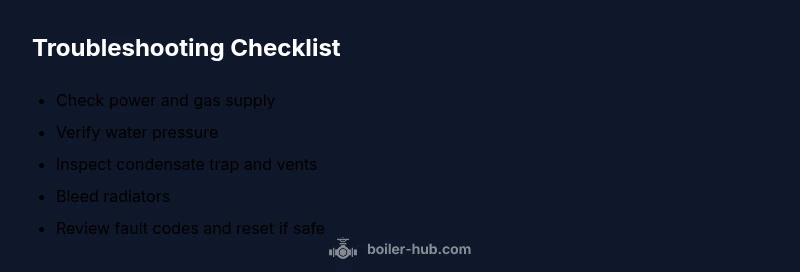
When your boiler turns off, follow a logical sequence to identify the cause. Start with the most common, easily fixed issues (power, gas supply, pressure) and move toward the more complex sensors and flame-related faults. Create a simple decision tree: Is the unit powered? Is the pressure in range? Is there a flame or ignition fault? Are there recurring fault codes? For each positive check, implement the corresponding fix and re-test. If a test fails, re-check the previous steps to ensure you did not miss a simple cause. This method minimizes unnecessary disassembly and keeps you safe.
Document results as you go. If you reach a point where the fix requires disassembly beyond your comfort level, stop and call a professional. This keeps you safe and protects the warranty where applicable.
The most common cause: low water pressure
Low water pressure is the single most frequent reason a boiler shuts down during a heating cycle. If the pressure is below the recommended range when the system is cold, the boiler will not be able to maintain safe operation and will shut down to prevent damage. To verify, locate the pressure gauge, compare to the scale on the boiler manual, and look for a stable reading near 1 bar (or the recommended value for your model). If it is low, follow the fill procedure described in the manual, ensuring you do not exceed the maximum. After bringing pressure up, reset the boiler and observe the system as it re-ignites. If pressure rises quickly or drops again, you may have a leak that requires professional assessment.
Persistent low pressure suggests a leak or faulty feed valve. Schedule a diagnostic if the pressure cannot be stabilized within safe limits. A single low reading may be a transient issue, but repeated drops are a sign of a leak or valve problem that needs expert attention.
Another contributing factor is a poorly seated valve or a faulty pressure sensor. These faults often mimic genuine pressure loss but require differing interventions. A skilled technician can test the circuit for leaks and replace defective components to restore stable operation.
Step-by-step: Fixing low-pressure conditions (practical guide)
Step 1: Turn off heating and isolate power and gas, if safe; wait for components to cool. Step 2: Locate the filling loop and prepare to top up the pressure according to your manual. Step 3: Slowly open the valves until the pressure gauge stabilizes in the middle of the safe range. Step 4: Close the loop and bleed a radiator to remove any air that entered during top-up. Step 5: Recheck the gauge after cycling the boiler on. Step 6: If the reading does not stay steady or you see signs of a leak, shut down and call a professional. Tip: keep a small pressure gauge nearby to monitor fluctuations over time.
If you notice corrosion, damp patches, or a hissing sound near the pressure vessel, stop and call a pro. Replacing a faulty filling loop or pressure sensor is best left to an engineer to avoid gas-related hazards. Regular checks prevent pressure woes from turning into a full shutdown.
When ignition or flame sensing fails
If the flame fails to ignite or the flame sensor is dirty or misaligned, the boiler will shut down to avoid unburned gas buildup. Visual checks are limited for safety reasons; you should never peer into gas burners with live gas. Indicators include no flame, repeated ignition attempts, or a fault code related to flame sensing. Cleaning the flame sensor with a dry cloth (while power is off) can help if you are confident and the service manual approves. If ignition continues to fail, a professional service is required to test gas pressure, gas valve operation, and the sensor alignment.
Ignition problems may also stem from a faulty control board or sensor wiring. Do not replace parts on a hunch; a qualified technician should test electrical connections and safety interlocks to prevent dangerous gas buildup. The fix may involve recalibration, sensor replacement, or valve adjustment.
If you smell gas or detect persistent ignition failures, evacuate and call the utility emergency line. Do not attempt to restart the unit until it has been inspected.
Safety, warnings, and when to call a professional
Gas boilers carry risks such as gas leaks and carbon monoxide. If you smell gas, hear hissing, or suspect gas is present, evacuate and call emergency services, then the gas supplier. Do not bypass safety devices or disable alarms to force a heat call. For non-emergency shutdowns, if the above checks are inconclusive, contact a licensed heating engineer. Annual servicing can prevent many shutdowns by catching wear or buildup before it becomes a problem. Always adhere to local regulations regarding boiler servicing, venting, and safety devices.
Remember: ongoing safety monitoring is easier than reactive fixes. If in doubt, pause and seek professional help rather than risking injury or property damage.
Prevention: keeping your boiler reliable year-round
Regular maintenance reduces the chance of unexpected shutdowns. Schedule an annual service, replace worn parts, bleed radiators, check for leaks, and ensure expansion tanks and pressure relief valves are functioning. Keep a simple boiler log noting fault codes, pressure readings, and service dates. Use high-quality replacement parts and follow the manufacturer’s instructions for your model. A boiler that is well-maintained is safer, quieter, and more reliable, and reduces the risk of a sudden shutdown during cold snaps.
Steps
Estimated time: 30-60 minutes
- 1
Check power and gas supply
Ensure the boiler is connected to a live power outlet and that the service switch is ON. Confirm the gas valve is fully open and the boiler’s isolation switch is engaged. If you have a smart switch, verify it’s communicating correctly with the boiler.
Tip: If you smell gas, leave the area and call the gas emergency number immediately. - 2
Assess water pressure
Find the pressure gauge on the boiler. Record the reading when cold and compare with the model’s recommended range (commonly around 1 bar). If low, prepare to top up using the filling loop as per the manual, ensuring you do not exceed the max Safe pressure.
Tip: Do not force the loop; move valves slowly and pause if you notice leaks. - 3
Top up pressure safely
Open the filling loop valves slowly until the gauge reaches the mid-range, close the valves, and recheck. After restoring pressure, power the boiler back on and watch for a stable ignition cycle.
Tip: If you hear a hiss or see water around fittings, stop and call a pro. - 4
Bleed radiators to remove air
Vent radiators starting with those closest to the boiler. Use a radiator key and listen for a rush of air and a steady stream of water. Close the bleed valve as soon as water appears.
Tip: Always have a cloth ready to catch water and prevent scalding. - 5
Reset the boiler safely
Follow the manufacturer’s reset procedure to clear faults and restart a normal heating cycle. If the fault code returns, record it and continue with further checks.
Tip: Don’t repeatedly reset a persistent fault without diagnosing the underlying cause. - 6
Test the system
Re-pressurize, re-test ignition, and observe for a complete heating cycle. Listen for unusual noises that might indicate air pockets or valve issues and re-check pressure if necessary.
Tip: Keep a log of readings and any codes for future reference. - 7
Know when to call a professional
If the boiler fails to maintain pressure, shows recurrent fault codes, or there’s any gas risk, stop DIY fixes and call a licensed heating engineer. Complex ignition faults require professional testing and safe handling of gas components.
Tip: Professional help protects your home and your warranty.
Diagnosis: Boiler is shutting off unexpectedly
Possible Causes
- highPower issue
- highLow water pressure
- mediumThermostat or aquastat fault
- mediumIgnition or flame sensing fault
- lowAirlock or condensate trap fault
Fixes
- easyCheck power at the main switch and circuit breakers; reset if applicable
- easyVerify boiler pressure and top up safely if required
- mediumInspect thermostat/aquastat wiring and sensor; replace if faulty
- hardTest ignition and flame sensor; clean/realign as needed (professional may be required)
Questions & Answers
What are the most common reasons a boiler turns off unexpectedly?
Low water pressure, ignition or flame-sensing faults, thermostat problems, airlocks, or fault codes are the usual culprits. A systematic check helps pinpoint the cause.
Most shutoffs are due to low pressure, ignition faults, thermostat problems, airlocks, or fault codes. A methodical diagnosis helps identify the root cause.
How do I check the boiler’s water pressure safely?
Locate the pressure gauge when the boiler is cold and compare to the model’s recommended range. If it’s low, follow the manual to top up and avoid over-pressurizing.
Look at the pressure gauge with the boiler cold and ensure it’s within the safe range; top up slowly if needed.
Is it safe to reset the boiler myself?
Resetting can clear temporary faults, but if the fault recurs, do not keep resetting. Repeated resets can hide or worsen underlying problems.
You can reset once to clear a temporary fault, but don’t keep doing it if the problem comes back.
When should I call a professional?
If you smell gas, hear hissing, or the fault code suggests flame or sensor issues, contact a licensed technician immediately.
Call a pro if you suspect gas leaks or ignition faults, or if fault codes persist after checks.
Can airlocks cause shutdowns?
Yes. Air pockets in radiators or the system can cause instability and trigger shutdowns. Bleed radiators to remove air.
Air pockets can make the boiler shut down; bleed the radiators to fix it.
What maintenance reduces shutdown risk?
Regular annual service, checking pressure, cleaning flame sensors, and clearing traps can greatly reduce shutdown risks.
Regular servicing and maintenance help prevent unexpected shutdowns.
Watch Video
Key Points
- Identify the most common causes first (pressure, ignition, thermostat).
- Use a safe, stepwise diagnostic flow instead of random fixes.
- Record fault codes to speed up professional service.
- Regular maintenance reduces the likelihood of unexpected shutdowns.