Why Does My Boiler Keep Turning Off? A Troubleshooting Guide
A urgent, step-by-step troubleshooting guide to stop a boiler that keeps turning off. Learn common causes, quick fixes, diagnostic flow, and when to call a pro to keep your home warm and safe in 2026.


Most likely, a boiler turns off due to a safety or efficiency issue such as low water pressure, a faulty thermostat, a dirty flame sensor, or overheating. Start by checking the water pressure gauge, thermostat settings, and the flame sensor. If it still shuts down after a quick reset, power cycle the unit and call a licensed technician if the problem recurs.
Common Causes When the Boiler Keeps Turning Off
When homeowners ask, "why does boiler keep turning off," the answer often lies in a few predictable categories. Most shutdowns stem from a safety limit being reached or an efficiency fault, not from a simple malfunction. In Boiler Hub's experience (Boiler Hub Analysis, 2026), the most frequent culprits are low water pressure, a dirty or failing flame sensor, and overheating that trips the safety limit. Understanding these core causes helps you prioritize checks and avoid costly service calls. You’ll find that many shutdowns resolve after a quick sensor clean, a pressure check, or a reset. As you work through the steps, keep in mind that persistent cycling deserves professional attention to prevent equipment damage and ensure safe operation.
In addition to the above, the term "why does boiler keep turning off" often reflects control issues, venting problems, or aging components. If your boiler is older or poorly vented, cycles can become more frequent. Use this guide to assess whether simple fixes will restore heating or if a licensed technician is needed for a deeper inspection. Boiler Hub emphasizes safety first; if you smell gas, hear odd banging, or see signs of water leakage, evacuate and call emergency services immediately.
Check the Simple Fixes First
Before diving into complex diagnostics, verify the most common quick fixes. Ensure the power supply is stable, the boiler switch is on, and the reset button (if provided) has been pressed. Check that the gas supply is uninterrupted and there are no tripped safety switches at the main panel. If you notice the boiler immediately powers off after ignition, examine the flame sensor surface for soot or buildup and wipe gently with a soft cloth. A lot of "why does boiler keep turning off" questions resolve with a clean sensor and a firm reset. If the issue persists, perform a controlled power cycle by turning off the boiler, waiting 60 seconds, and turning it back on. If the unit continues to shut off, it’s time to move to pressure and flow checks and evaluate the controls.
Safety note: never bypass safety devices or forcibly restart a boiler. If you’re unsure, contact a professional. Boiler Hub recommends documenting each shutdown event to help a technician identify patterns and intervene more effectively.
Inspect Water Pressure and Boiler Water Level
Most boilers rely on adequate water pressure to stay fired. If the pressure is too low, the boiler may shut down as a safety precaution. Locate the pressure gauge and verify it shows a normal range; if it's low, follow manufacturer steps to repressurize. Do not force fittings or manipulate pressure relief valves. If the boiler continues to shut down after pressure adjustments, a fault across the feed water or expansion system could be involved. Regularly check for a steady water level in the expansion tank and confirm that the automatic fill valve is functioning correctly. If you observe frequent drops in pressure, there could be a small leak or a corrosion issue that warrants professional assessment.
Tip: Some models have an integrated pressure relief valve; if you hear hissing or see coolant, shut off power and call a technician immediately.
Thermostat, Controls, and Scheduling
Thermostats control when the boiler fires. A misreading, loose wiring, or outdated programming can cause frequent cycling. Check the thermostat location (avoid drafts or heat sources), verify the settings, and inspect the wiring for corrosion or loose terminals. If the thermostat is legacy or unresponsive, replacing it with a modern, properly configured model can eliminate many instances of the shutdowns. Also review the boiler’s internal controls, high-limit switches, and outdoor reset settings; even small misconfigurations can trigger repeated cycling. Keep an eye out for error codes on the boiler’s display and consult the manual to decode them.
If the problem seems linked to scheduling, consider a constant, user-friendly thermostat and a professional calibration for your system to prevent future occurrences of "why does boiler keep turning off."
Gas Supply and Combustion Safety
In gas boilers, any disruption in the gas supply or improper combustion can trigger safety shutdowns. Confirm the gas valve is fully open, listen for a consistent burner hum, and look for error codes on the control panel. If you suspect the burner is not igniting consistently or the flame is yellow instead of blue, shut off power and call a licensed gas technician immediately. A dirty burner, improper air-to-fuel ratio, or a misaligned gas jet can lead to torque on the burner and sudden cycling. Combustion safety requires careful inspection of the burner assembly and venturi, as well as the venting system.
Important safety reminder: never attempt gas repairs yourself unless you are qualified. If you notice a gas smell, evacuate and call emergency services.
Venting, Air, and Fluids
Air trapped in the system can cause the boiler to cycle off due to improper circulation. Bleed radiators to remove air, ensure circulator pumps run smoothly, and verify there is no blockage in vents or condensate lines. Clean any sediment from filters and confirm that condensate discharge is clear. When air is present, you may see incomplete combustion or short cycles. Regular vent checks and clear condensate lines reduce the risk of repeated shutdowns. If you notice kettling or banging sounds, there may be air pockets that require a purge by a qualified technician.
If you are replacing pumps or bleeders, ensure the power is off and you follow the manufacturer’s instructions to avoid accidental electric shock.
Overheating and Heat Exchanger Issues
Overheating triggers the boiler's safety limit. Build-up in the heat exchanger, restricted flow, or a malfunctioning outdoor reset can cause the unit to shut down to prevent damage. Look for scorching, unusual smells, or water leaks around the boiler. If overheating is suspected, avoid touching hot components and contact a professional to inspect heat exchanger integrity and flue condition. A clogged heat exchanger or blocked vent often requires professional cleaning or component replacement. Improper water chemistry can also contribute to scaling that reduces heat transfer, so empty or clearing the system may be necessary to restore safe operation.
Boiler Hub emphasizes that overheating is not something to ignore; persistent heat issues can lead to expensive repairs if left unchecked.
When to Reset and When to Call a Pro
Resetting a boiler can resolve simple cycles but repeated resets signal underlying problems. If you notice persistent cycling, a stubborn error code, or audible banging, stop resetting and call a technician. For gas-fired boilers, never override safety features. For electric boilers, check circuit breakers and fuses. If a professional inspection reveals a failing heat exchanger, pump, or control board, expect a longer repair horizon and a clear cost estimate. Regular maintenance can prevent many of these scenarios from reoccurring.
Prevention: Routine Maintenance to Stop Recurrent Shutdowns
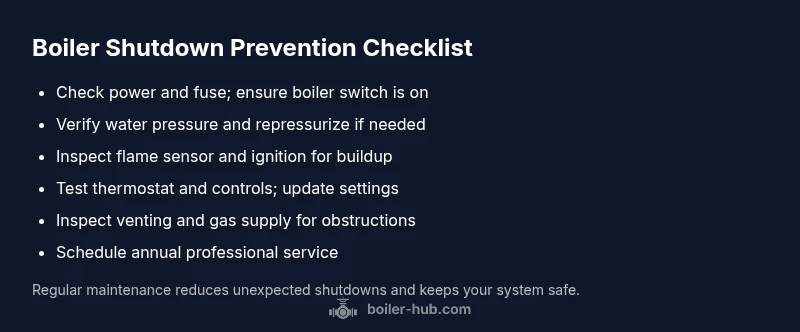
Prevention is better than cure. Schedule annual professional maintenance to inspect safety devices, clean flame sensors, calibrate thermostats, and verify pressure and expansion tanks. Keep the boiler area clear of clutter, ensure venting is unobstructed, and replace worn gaskets or seals before leaks appear. Regular servicing reduces the chance of sudden shutdowns and extends boiler life. In addition, maintain a simple audit trail of any shutdowns, noting the time, error codes, and weather conditions, which helps technicians pinpoint intermittent failures quickly.
Steps
Estimated time: 60-90 minutes
- 1
Power down safely
Before touching the boiler, switch off the power at the disconnect and close the gas valve if accessible. Allow the unit to cool. Inspect the area for any signs of leakage or corrosion. This safety-first approach protects you and prepares the unit for inspection.
Tip: Always wear protective gloves and eye protection when handling boiler components. - 2
Check for visible indicators
Turn the power back on and observe the display for error codes or blinking lights. Note any error codes and refer to the manual to decode them. If a code indicates a flame sensor or ignition problem, proceed to the cleaning and inspection in the next steps.
Tip: Document codes with dates to help a technician diagnose patterns. - 3
Test water pressure
Locate the pressure gauge and compare the reading to the manufacturer’s recommended range. If the pressure is low, repressurize the system using the filling loop according to the manual. Do not exceed the recommended pressure as it can trigger other safety shutoffs.
Tip: Never force valves or fittings; make small adjustments and re-check the gauge. - 4
Inspect thermostat and wiring
Check the thermostat settings and location. Ensure there are no drafts, and verify wires are secure and free from corrosion. If you suspect a faulty thermostat, replace it with a compatible model and re-test the system.
Tip: Keep a spare thermostat on hand for quick replacement if needed. - 5
Clean flame sensor and ignition
If the boiler lights but shuts off soon after, inspect the flame sensor for soot and clean gently with a soft brush or cloth. Ensure the ignition electrode is clean and properly aligned. Re-test the burner operation after cleaning.
Tip: Avoid using abrasive cleaners that can scratch sensor surfaces. - 6
Run a controlled reset and test
After completing the above steps, perform a controlled reset following the manufacturer’s instructions. Observe whether the boiler remains on. If cycling continues, record the behavior and prepare for a professional inspection.
Tip: If you hear unusual noises, power off and call a technician rather than continuing to test. - 7
Evaluate gas and venting safety
For gas boilers, confirm the gas valve is fully open and the flame remains blue. Inspect venting for obstructions and ensure the flue is clear. If you detect gas odor, evacuate immediately and contact emergency services.
Tip: Gas safety is critical—professionals should handle gas line and vent inspections. - 8
If needed, call a professional
If the boiler still turns off after the steps above, a professional evaluation is required. A licensed technician can check heat exchangers, sensors, and the control board with diagnostic tools and provide an accurate repair plan.
Tip: Ask for a written estimate and a parts warranty before approving repairs.
Diagnosis: Boiler shuts off unexpectedly during operation
Possible Causes
- highLow water pressure
- mediumDirty or faulty flame sensor
- mediumOverheating / restricted flow
- lowThermostat or control fault
Fixes
- easyCheck water pressure and repressurize if needed following manufacturer steps
- easyGently clean the flame sensor and ensure ignition is clean; replace sensor if faulty
- mediumInspect venting, heating circuit, and heat exchanger for blockages; purge air or flush as needed
- mediumTest and replace faulty thermostat or control module
- hardIf issues persist, call a licensed boiler technician for a comprehensive diagnostic
Questions & Answers
Why does my boiler keep turning off after running for a few minutes?
Frequent shutdowns after startup often point to low water pressure, a dirty flame sensor, or overheating. Other causes include thermostat issues or blocked vents. A systematic check of pressure, sensors, and controls usually reveals the culprit.
Frequent shutdowns usually come from low pressure, a dirty flame sensor, or overheating. Check those areas first and call a pro if it persists.
Can I fix a boiler that keeps shutting off myself?
Some quick checks are safe for DIY, like cleaning a flame sensor or resetting the unit. However, many issues require professional service, especially gas-related problems, vent obstructions, or heat exchanger concerns. If in doubt, contact a licensed technician.
You can do simple checks like cleaning a sensor, but for gas or vent issues, call a qualified technician.
What should I do if I smell gas near the boiler?
If you smell gas, evacuate the area immediately and call the gas emergency line or your local emergency services. Do not operate switches or power sources. Get to safety first, then seek professional assistance.
If you smell gas, leave the area and call emergency services right away.
Is it safe to reset a boiler that keeps turning off?
Resetting can solve some cycling problems, but persistent resets indicate a deeper issue. Do not bypass safety features, and observe for repeating codes or abnormal sounds. If cycling continues, contact a professional.
Resetting helps sometimes, but don’t ignore ongoing cycling—get a professional check.
How often should I service my boiler?
Annual professional service is typically recommended for boilers to ensure safe operation, proper ignition, and efficient heat transfer. If the boiler is older or has recurring issues, more frequent checks may be advised by your technician.
Have yearly service to keep your boiler reliable, especially if it’s older.
What are common signs of a failing flame sensor?
A failing flame sensor can cause intermittent ignition or shutting down after ignition. You may notice repeated ignition attempts or no flame despite a programmed call for heat. A technician typically cleans or replaces the sensor.
If ignition keeps failing, the flame sensor could be the culprit and may need cleaning or replacement.
Watch Video
Key Points
- Identify the root cause with a methodical flow
- Prioritize safety and professional help when needed
- Keep up with routine maintenance to prevent shutdowns
- Use a diagnostic log to aid future fixes
- Never bypass safety features or venting checks