Boiler Leaks: Quick Troubleshooting Guide
Urgent guide to diagnose and fix a boiler leaking water. Step-by-step troubleshooting, safety tips, and when to call a pro. Boiler Hub provides practical, homeowner-friendly instructions for fast, safe resolution.


If you notice the boiler is leaking water, shut off power and the water supply immediately, then locate the visible leak. The most common causes are a loose fitting, a worn gasket, or a faulty pressure-relief valve. If the leak persists, or you smell gas, contact a professional right away.
What to do if the boiler is leaking water
If you notice the boiler is leaking water, act quickly but safely to limit damage and prevent dangerous conditions. According to Boiler Hub, leaks are most often caused by simple issues that homeowners can address, such as loose joints, worn gaskets, or a faulty pressure relief valve. The Boiler Hub team emphasizes that shutting off power and the water supply and assessing the visible leaks is the first step to a safe, effective resolution. This guide walks you through a methodical troubleshooting process that helps you identify the source and decide when a professional is required. Safety comes first, so if you smell gas, hear banging, or see steam rising, leave the area and call for help immediately.
Common leak sources in residential boilers
Leaks in home boilers usually originate from a few predictable places. Loose pipe fittings or connections at the supply lines are a frequent culprit. The pressure relief valve can leak after a buildup of pressure, especially if the expansion tank is faulty or water has overheated. Gaskets and seals around the pump, burner, or heat exchanger may degrade over time, creating small drips that worsen if not addressed. In some cases, a crack in the heat exchanger or a corroded boiler jacket can lead to persistent leaks. Identifying the source is essential because the fix and the risk profile vary from a simple tightening to a full component replacement. Regular inspection of visible joints, valves, and the condensate drain helps you catch issues before they escalate.
Safety first before you touch the boiler
Working on a boiler while it is energized can be dangerous. Before any inspection, shut off electrical power at the breaker and close the upstream water valve if accessible. If your system uses natural gas, ensure you do not perform any actions that could ignite a gas leak; if you suspect a gas issue, leave the area and contact the gas emergency line. Use personal protective equipment such as gloves and eye protection, and never work on a hot, pressurized boiler. Keep children and pets away, and place towels or a bucket to catch minor drips so you can assess without making a bigger mess. Finally, document leaks with a photo log so you can show a technician exactly where the issue is.
Diagnostic steps you can perform safely
Start with visible checks. Look for dripping at joints, valve connections, and the condensate drain line. If the leak is coming from a valve, try tightening by a small amount with the correct wrench, ensuring you do not cross thread. Check the system pressure gauge; note if the needle sits in a normal range for your boiler. Inspect the expansion tank for rust or water around the cap. If you are comfortable, you can temporarily seal minor leaks with appropriate sealant products rated for boilers, but remove and replace them with proper parts later. If a leak persists or is behind panels or near the heat exchanger, stop and contact a professional.
Step-by-step fixes for the most common leak sources
Step 1 Identify source and dry area to confirm leak. Step 2 Tighten loose connections or replace a worn gasket with manufacturer parts. Step 3 Inspect the pressure relief valve and replace if dripping occurs outside normal relief conditions. Step 4 Check the condensate drain for blockages and clear if needed. Step 5 If the leak is from the heat exchanger or the expansion tank, these are advanced repairs that usually require a professional, as improper handling can cause more damage. Step 6 After any fix, test the system by slowly re-pressurizing and watching for new leaks. Pro tip: Always power down before re-engaging the boiler.
When to call a professional and what to expect
If you cannot locate the source, the leak is severe, or the boiler continues to drip after a basic tightening, contact a licensed technician. Professionals will depressurize the system, pressure test, and replace faulty parts with appropriate equipment. Expect a safety inspection for gas lines, venting, and the expansion tank. A pro can assess whether a leak has caused corrosion or if the heat exchanger or burner assembly needs replacement. Timelines vary, but addressing leaks early saves money and reduces risk.
Prevention tips to minimize future leaks
Schedule regular boiler maintenance with a qualified tech. Have seals and gaskets inspected during service calls, and replace worn rings before leaks appear. Keep the expansion tank and pressure relief valve clean and free of mineral buildup. Monitor the system pressure and address changes quickly, since fluctuations often signal underlying issues. Finally, install and maintain working carbon monoxide detectors and ensure proper venting, so leaks do not lead to dangerous conditions.
Quick safety and leak reference checklist
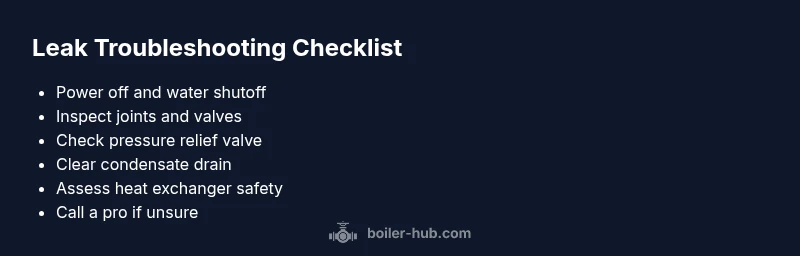
- Shut off power and water if a leak is detected
- Inspect joints and valves for obvious signs of trouble
- Do not force fittings or ignore gurgling or hissing sounds
- Record the leak with photos for a technician
- Call a pro if you feel unsure about any step
What to do next and how to stay safer
After addressing immediate leaks, create a plan for ongoing maintenance. Schedule a boiler service, replace worn components, and verify venting and CO detectors are working. Boiler Hub's approach emphasizes proactive checks, proper part replacement, and keeping emergency contacts handy.
Steps
Estimated time: 60-90 minutes
- 1
Shut off power and water supply
Turn off electricity at the breaker and close the cold water feed if accessible. This minimizes further water loss and reduces risk. Do not bypass safety features.
Tip: Verify the boiler display shows no active fault codes after shutdown. - 2
Locate the leak source
Dry the area around joints and gently inspect obvious connections for dripping. Use a flashlight and wipe away mineral deposits to spot the exact source.
Tip: Take photos to document the issue for a technician. - 3
Check the pressure relief valve and gauges
Observe the relief valve for continuous dripping and inspect the pressure gauge. Do not force the valve open; if it leaks outside normal relief, plan replacement.
Tip: If you are unsure, avoid testing the valve further. - 4
Tighten minor fittings or replace gaskets
If a minor, accessible leak is at a joint or gasket, carefully tighten or replace the gasket using manufacturer parts. Do not over-tighten.
Tip: Use the correct tools and avoid cross-threading. - 5
Inspect the condensate drain and expansion tank
Ensure the condensate line is not blocked and the expansion tank is not waterlogged. Clear blockages and reseal connections as needed.
Tip: A clogged condensate drain can cause leaks and poor boiler efficiency. - 6
Test after repair and monitor
Slowly re-pressurize the system and observe for any new leaks or changes in performance. Restore power and water supply only after confirming no active leaks.
Tip: Keep a bucket handy during testing.
Diagnosis: Boiler is leaking water
Possible Causes
- highLoose fittings or valve connections
- highFaulty pressure relief valve
- mediumCracked heat exchanger
- mediumBlocked condensate drain or venting
- lowExpansion tank failure
Fixes
- easyTighten loose fittings and valve connections where safe
- easyReplace worn gaskets and seals with manufacturer parts
- mediumReplace the pressure relief valve or expansion tank if required
- mediumClear condensate drain and ensure proper venting
- hardProfessional replacement for heat exchanger or major components
Questions & Answers
What should I do first if my boiler is leaking water?
Shut off power and water supply to stop the leak and prevent damage. Then inspect visible joints for obvious causes.
First, switch off power and water, then inspect obvious joints for leaks.
Is a small drip from the relief valve dangerous?
A small, persistent drip from the relief valve can indicate pressure problems. If it continues after basic checks, contact a pro.
A persistent drip from the relief valve can signal pressure issues; call a pro if it continues.
Can I fix leaks myself?
Some minor leaks at accessible joints can be handled with proper tools and parts. More complex issues, especially near the heat exchanger, require a licensed professional.
Some small, accessible leaks can be fixed by you, but complex issues require a pro.
How can I prevent boiler leaks in the future?
Regular maintenance, timely gasket replacements, and checks on valves and expansion tanks reduce leak risk and prolong boiler life.
Regular maintenance and timely gasket replacements help prevent future leaks.
When should I replace the boiler instead of repairing it?
If leaks recur after repairs, or the boiler is old and inefficient, replacement may be more cost-effective and safer long-term.
If leaks keep coming back or the boiler is old, replacement might be best.
What safety checks should follow a fix?
After any fix, verify venting is clear, CO detectors work, and there is no gas smell. If unsure, schedule a professional check.
Ensure venting is clear, CO detectors work, and there is no gas smell after fixes.
Key Points
- Identify the leak source before repairing.
- Power down safety first to reduce risk.
- Tighten or replace small components if you can safely.
- Call a pro for heat exchanger or major component leaks.
- Maintain regular boiler service to prevent leaks.