Why is My Boiler Leaking Water? Urgent Troubleshooting Guide
Learn fast, actionable steps to diagnose and fix a boiler leaking water. Safety first, identify common leak sources, and know when to call a pro.


A boiler leak is most often caused by a failing expansion vessel, a faulty pressure relief valve, or worn seals/leaks at joints. Start by turning off power and the water supply, then check the boiler pressure gauge and visually inspect for drips. If the leak continues or you smell gas, contact a professional immediately.
What causes a boiler leak? Understanding the problem
If you’ve ever asked yourself, “why is my boiler leaking water,” you’re not alone. Leaks are a telltale sign that something is not sealing correctly or that pressure in the system is not being managed properly. According to Boiler Hub, the majority of leaks stem from two common culprits: a failing expansion vessel (which stores extra water under pressure) and worn or corroded seals and joints that allow dampness to escape. Other frequent sources include the pressure relief valve, loose pipe connections, and, in older units, a cracked heat exchanger. The visible symptoms can range from a small bead forming on a fitting to a steady stream of water from the boiler cabinet. Quick recognition helps prevent water damage and lowers the risk of overheating or unwanted pressure buildup in the system.
Pro tip: Don’t ignore even small drips—today’s leak can become tomorrow’s bigger problem, especially in homes with gas boilers where venting and CO safety are concerns.
Steps
Estimated time: 60-90 minutes
- 1
Power off and secure utilities
First, switch off the boiler at the switch and shut off the water supply to prevent further leakage. If your unit is connected to gas, do not attempt repairs yourself; evacuate the area if you smell gas and contact emergency services.
Tip: If the area is damp, dry your hands and wear gloves before touching any fittings. - 2
Check pressure and basic sources
Read the boiler pressure gauge when the system is cold. Note if the pressure is above the normal range and inspect visible joints and fittings for a drip or sheen.
Tip: Document the gauge reading with a photo for reference when you call a pro. - 3
Relieve excess pressure safely
If you identify high pressure, bleed radiators to release some of the pressure. Do not vent aggressively; do a small, controlled release and recheck the gauge.
Tip: Always do this with cold boiler water to avoid scalding. - 4
Inspect expansion vessel and valves
Look for an empty or hard-to-fill expansion vessel or a valve showing signs of leakage. If you’re comfortable, check the air charge in the expansion vessel using a tire pump gauge.
Tip: An improper air charge is a common cause of leaks and pressure fluctuation. - 5
Decide on the next step
If the source is obvious (loose nut, visible drip from a fitting) you may be able to tighten or reseal. If the source appears internal (expansion vessel, relief valve, heat exchanger), plan a professional service.
Tip: When in doubt, prioritize safety and call a licensed technician. - 6
Schedule professional service
For gas boilers or persistent leaks, schedule a professional inspection promptly. A technician can confirm the source, pressure settings, and recommended repairs or replacement.
Tip: Prepare notes on symptoms, times of day, and any prior incidents for the technician.
Diagnosis: Visible water around the boiler, damp patches on the floor, or a drop in system pressure.
Possible Causes
- highFaulty expansion vessel or air charge loss
- highOverpressure in the system (too high boiler pressure)
- mediumLeaking pressure relief valve
- mediumLoose or corroded pipe joints or seals
- lowCracked heat exchanger (less common)
Fixes
- easyCheck boiler pressure when the system is cold and repressurize to the manufacturer’s spec, then bleed radiators to remove excess pressure if needed
- mediumInspect the expansion vessel for proper air charge or replace the vessel if the charge cannot be held
- easyTighten or replace leaking fittings and joints; use suitable sealant only where recommended by the manufacturer
- hardTest and potentially replace the pressure relief valve—this should be done by a qualified technician
- hardIf the heat exchanger is cracked, replace the boiler or the affected component; professional service is required
Questions & Answers
What should I do immediately if I see water leaking from my boiler?
Turn off the boiler’s power and water supply, then check for the source of the leak. If you can’t identify a safe fix, contact a licensed technician right away.
Turn off power and water first. If you can’t identify a safe fix, call a licensed professional immediately.
Is a boiler leak dangerous?
Yes—leaks can cause scalding and, in gas boilers, potential carbon monoxide or unsafe venting. Do not ignore a persistent leak.
Yes, leaks can be dangerous. Don’t ignore a persistent drip; get a professional check soon.
Why is my boiler leaking water after adding pressure?
Pressure issues often point to a faulty expansion vessel or misbehaving pressure relief valve. Inspect these components or have them tested.
Often the expansion vessel or relief valve is the culprit when pressure rises and water leaks occur.
Can I fix a boiler leak myself?
Only if the leak is a simple, accessible joint you’re confident sealing. Most leaks require a licensed technician, especially on gas boilers.
Some simple leaks may be DIY, but most require a pro, especially for gas boilers.
When should I replace my boiler due to leaks?
If leaks recur after repairs or the boiler is old and inefficient, replacement with a more reliable model may be cost-effective. Consult a pro for options.
If leaks keep coming back and the boiler is old, replacement might be the best option.
Watch Video
Key Points
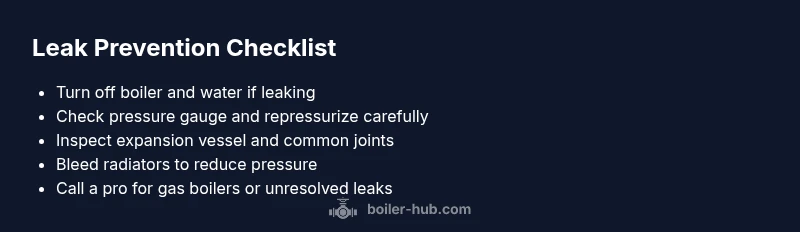
- Shut off power and water if you notice a leak.
- Check pressure first—this often reveals the culprit.
- Expansion vessel and relief valve are the most common leak sources.
- Call a professional if gas is involved or leaks persist after basic fixes.