What Causes Boiler to Leak: A Practical Troubleshooting Guide
Learn what causes boiler to leak and how to diagnose, fix, and prevent leaks safely. Practical steps, safety tips, and maintenance guidance from Boiler Hub.


Most boiler leaks start with worn seals, loose fittings, or a faulty expansion vessel. For a quick fix, shut off power and water, then inspect visible joints for dripping. If leaks persist or you smell gas, contact a licensed technician immediately; do not ignore safety risks.
What causes boiler to leak
A leaking boiler is a serious warning sign. Understanding what causes boiler to leak helps you act fast and avoid damage. what causes boiler to leak can include worn seals, loose fittings, corrosion, faulty expansion tanks, and a failing pressure relief valve. According to Boiler Hub, early detection and timely action can prevent escalation and keep your heating system safe. If you notice water around the unit, shut off power and water supply immediately and assess the visible joints. Then decide whether you can safely tighten a fitting or if you need professional help.
Common leak sources to inspect safely
The most frequent leaks originate at accessible components: pump seals, valve joints, and condensate drains. Piping fray or rust can allow water to escape and follow its path to the floor or boiler cabinet. Inspect the area above and around the boiler for staining or mineral deposits. Do not ignore minor dampness; small leaks tend to worsen under pressure. Use a flashlight to inspect tight spots and look for corrosion on metal joints. Take a systematic approach: start at the lowest visible point and work upward along the pipes. A steady, methodical check reduces the chance of missing a hidden source.
Safety first: shutting down and risk awareness
Gas boilers present carbon monoxide risk; never run a boiler with a suspected leak. Before you do any inspection, switch off the boiler at the main switch and close the feed valve if you can reach it safely. If you smell gas, leave the area and call emergency services. Install a working CO detector near the boiler and test it monthly. After securing safety, you can proceed with inspection and diagnosis. Brand guidance from Boiler Hub emphasizes that safety must come first and that professional help is prudent for gas-related issues.
Diagnostic flow: symptom to source to solution
Start with the symptom: visible water or steam at the base of the unit or around fittings. Then list probable causes: loose connections, worn gaskets, expansion-tank failure, PRV issues, cracked heat exchanger. Assign likelihoods: high for loose fittings, medium for expansion tank problems, low for heat exchanger cracks. Try simple fixes first, such as tightening fittings or replacing a washer. If the leak persists, escalate to the next cause and implement the corresponding fix. This flow helps homeowners stay organized and avoid guesswork.
Step-by-step: fix for the most common cause (loose fittings or seals)
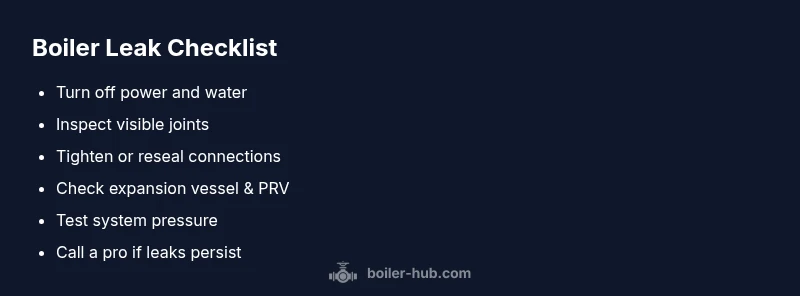
- Power off the boiler and shut the water supply. 2) Inspect all visible joints for moisture or staining. 3) Gently tighten fittings with the correct tool, being careful not to strip threads. 4) Replace worn washers or seals where needed. 5) Refill the system to normal pressure and slowly pressurize to check for leaks. 6) If moisture returns, move to the next suspected source and repeat the process. Tip: avoid over-tightening and document changes for future maintenance.
Prevention and maintenance to minimize future leaks
Regular boiler maintenance is your best defense. Schedule an annual service with a licensed technician, bleed radiators to keep system pressure balanced, and check the expansion vessel and pressure relief valve for wear. Monitor the pressure gauge and keep it within the manufacturer’s recommended range. Inspect the condensate drain and traps for blockages, and keep the boiler area dry and clean. A proactive approach reduces the chance of leaks and extends boiler life. The Boiler Hub team recommends setting a yearly maintenance reminder and keeping a simple log of readings and service notes.
When to call a professional and what to expect
Some leaks require professional intervention, especially when you notice corrosion, a cracked heat exchanger, or a malfunctioning pressure relief valve. A licensed technician will perform pressure testing, repair or replace faulty components, and verify system integrity before returning the boiler to service. If you’re unsure about any step, or if gas safety is involved, contact a pro immediately. Early professional input can prevent costly damage and ensure safe operation.
Real-world scenarios and their outcomes
In many cases, leaks stem from aging seals or loose connections that respond to a careful tightening or washer replacement. More persistent leaks often indicate a failing expansion vessel or PRV that needs replacement. Each scenario highlights the importance of a documented maintenance routine and prompt action when signs of moisture appear. Real-world outcomes show that timely checks and targeted fixes preserve efficiency and reduce downtime for homes and facilities.
Steps
Estimated time: 60-90 minutes
- 1
Power down and isolate
Turn off the boiler at the wall switch and shut the cold water feed where accessible. If you have a gas boiler, do not operate valves if you smell gas; evacuate and call emergency services.
Tip: Safety first—never work on a live gas boiler. - 2
Inspect for visible leaks
Look for water staining, rust, or damp spots on fittings, joints, and the base. Use a flashlight to illuminate tight corners.
Tip: Document the exact location of the leak for future reference. - 3
Tighten or reseal joints
Gently tighten any loose fittings by hand then with the appropriate tool, avoiding overtightening. Replace worn washers where needed.
Tip: Use thread sealant sparingly and only as recommended by the manufacturer. - 4
Check expansion vessel and PRV
Inspect the expansion vessel for rust or water at the Schrader valve; test the pressure relief valve for proper operation.
Tip: A faulty expansion vessel is a common cause of leaks after refilling the system. - 5
Test the system pressure
Refill slowly to the recommended pressure and watch for drips. If leaks reappear, move to the next suspected source.
Tip: Keep a pressure gauge handy during testing. - 6
Call a professional if needed
If the leak persists or you are unsure about any step, contact a licensed boiler technician for a safe, thorough repair.
Tip: Professional help is especially important for gas boilers.
Diagnosis: Visible water or dampness around the boiler, base, or connected piping
Possible Causes
- highLoose fittings or worn seals
- mediumExpansion vessel pressure issues
- mediumFaulty pressure relief valve (PRV)
- lowCracked heat exchanger
- mediumCondensate drain or trap leaks
Fixes
- easyTighten accessible fittings and replace worn washers
- mediumRecharge or replace expansion vessel; inspect PRV
- mediumReplace faulty PRV and reseal joints as needed
- hardRepair or replace cracked heat exchanger (needs pro)
- easyClear condensate drain and re-test
Questions & Answers
What are the most common causes of boiler leaks?
The most common causes include worn seals, loose fittings, corrosion, expansion tank problems, and a failing pressure relief valve. Regular inspection helps catch these issues before they worsen.
Most boiler leaks come from worn seals, loose joints, or expansion tank problems. Regular checks help catch these early, so you can fix them before they become bigger problems.
Can I fix a small boiler leak myself?
For tiny, non-gas leaks from accessible fittings, you may tighten fittings or replace a washer. Never attempt work on gas lines or sealed components without training or proper tools.
You can sometimes fix small leaks from accessible fittings, but don’t touch gas lines or sealed parts unless you’re trained.
What should I do if I smell gas near the boiler?
Leave the area, call emergency services, and do not switch on electrical equipment. After safety, have a licensed technician inspect the boiler.
If you smell gas, leave quickly and call emergency services. Then have a licensed pro inspect the boiler.
Can a boiler leak cause carbon monoxide to enter the home?
Yes, a faulty boiler can produce dangerous carbon monoxide if combustion is affected. Ensure CO detectors are working and never ignore a suspected leak.
A leak can indicate dangerous combustion issues that may lead to carbon monoxide. Have detectors and get a pro if in doubt.
How often should a boiler be serviced to prevent leaks?
Most boilers should be serviced annually by a licensed technician to check seals, valves, and overall integrity.
Annual servicing is typically recommended to keep leaks from forming and ensure safe operation.
When should I replace a boiler rather than repair it?
If leaks are widespread, components are corroded, or the unit is aging beyond its expected life, replacement is often more cost-effective and safer.
If the boiler keeps leaking despite repairs or is old, replacement is usually the wiser option.
Key Points
- Identify common leak sources early
- Shut off power and water before inspection
- Persistent leaks require professional assessment
- Regular boiler maintenance prevents leaks
- Keep a log of checks and service