Why Is My Water Boiler Leaking? A Practical Troubleshooting Guide
Identify the most common causes of a leaking water boiler and follow a step-by-step troubleshooting guide from Boiler Hub to stop leaks and prevent damage.


Most water boiler leaks start at loose fittings, a failing pressure-relief valve, or a cracked condensate line. Quick fix: safely shut off power and water, inspect visible joints, tighten loose connections, and replace any worn seals. According to Boiler Hub, address leaks promptly to prevent damage and fuel inefficiency. If in doubt, contact a licensed technician.
Why is my water boiler leaking? Common causes and quick checks
Leaks in residential boilers are often caused by wear at joints, degraded seals, or corrosion inside components. If you're wondering why is my water boiler leaking, inspect the most accessible points first: valve connections, pump seals, and drain lines. The Boiler Hub Team notes that many leaks begin as small drips that grow if ignored. Look for moisture at the pressure relief valve, valve nuts, and around the boiler jacket. Tightening loose fittings or replacing a worn gasket can stop some leaks, but others signal aging equipment that needs professional evaluation. Keep the area dry, avoid contact with electrical parts, and document the drip with photos for reference. By acting promptly you protect your home from water damage and maintain efficiency.
Common leak types and what they mean
There are several leak patterns to recognize. A dripping condensate line or trap usually means condensate issues and minor wear that can be addressed without replacing the boiler. A steady drip or spray at joints points to loose fittings or worn gaskets. A leak from the pressure relief valve often signals overpressure or a failing valve that should be replaced. A wet area at the base of the unit can indicate a failing seal or, in rare cases, corrosion in the heat exchanger. The Boiler Hub Team emphasizes differentiating a cosmetic drip from a core failure; if the leak is near electrical components, power down and call a pro. Regular maintenance reduces many of these risks.
Safety first: what to do now
If you notice a leak, your first step is safety. Shut off the boiler power at the switch and shut the water supply if accessible. Do not touch hot surfaces or attempt repairs with wet hands. Keep children and pets away from the area and avoid using electrical outlets near the boiler. If you suspect gas, leave the area immediately and call emergency services. After securing the area, document the leak and contact a licensed technician for a thorough assessment.
Diagnostic flow: symptom to solution workflow
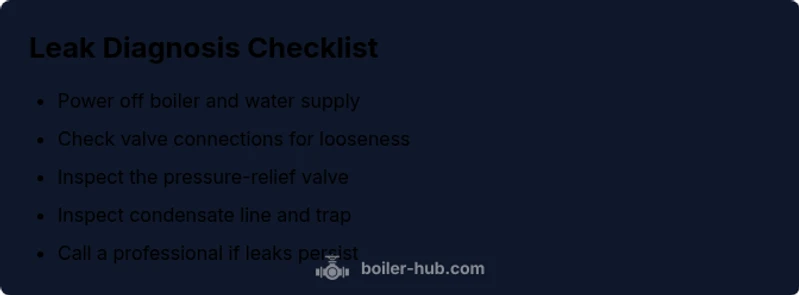
Use this practical flow to diagnose and address leaks efficiently. Symptom: water dripping from a valve, pipe, or boiler body. Next, check obvious causes: loose fittings, worn seals, or a faulty pressure-relief valve. If the drip continues, test the condensate line and trap. Based on what you find, apply the appropriate fix or escalate to a professional. This flow helps homeowners stay organized and reduces the chance of missed steps.
Prevention and maintenance to reduce future leaks
Prevention is better than cure when dealing with a boiler leak. Schedule annual professional servicing to catch worn parts and corrosion early. Regularly inspect the pressure-relief valve and expansion tank, bleed air from radiators, and replace worn gaskets promptly. Use clean, softened water if your system is sensitive to mineral buildup, and ensure that the area around the boiler stays dry and well-ventilated. Keeping a simple maintenance log makes future leaks less likely.
When to call a professional and what to expect
Not all leaks are DIY-friendly. If you notice persistent dripping after basic checks, or if the leak involves the heat exchanger, gas line, or the boiler's electric components, call a licensed technician promptly. A professional will perform pressure tests, valve replacements, and system diagnostics, and they can advise on whether a repair or replacement is needed. Boiler Hub recommends scheduling an inspection after a major leak to restore safety and efficiency.
Steps
Estimated time: 60-90 minutes
- 1
Power and water shutoff
Shut off the boiler at the switch and circuit breaker. If you have a gas boiler, close the gas valve; then close the water supply if accessible. This prevents further water damage.
Tip: Keep a dry path to the unit and avoid touching metal parts with wet hands. - 2
Locate the leak source
Inspect for drips and trace where water escapes. Follow the path to valve joints, the condensate line, or the boiler body.
Tip: Use a flashlight and place paper towels to track dampness. - 3
Tighten simple fittings or reseal gaskets
If the leak comes from a valve or joint, tighten fittings cautiously. Replace worn gaskets rather than forcing a seal.
Tip: Only tighten parts designed to be tightened; avoid over-torque. - 4
Check the pressure-relief valve and discharge line
Inspect the discharge outlet. If dripping, the valve may be worn or the system over-pressurized; avoid tampering with the valve body.
Tip: Do not block the discharge outlet during inspection. - 5
Inspect condensate line and trap
Look for cracks or blockages in the condensate line; clear or replace damaged sections as needed.
Tip: Ensure proper slope and venting per the manufacturer's guidelines. - 6
Test and monitor the system
Restore power and water gradually; watch for new leaks and dampness over the next hours.
Tip: Document results with photos for your records.
Diagnosis: Water is leaking from boiler cabinet or around the boiler
Possible Causes
- highLoose fittings or connections
- mediumWorn or failed pressure-relief valve
- lowCracked heat exchanger or boiler jacket
- lowDamaged condensate line or trap
Fixes
- easyTighten accessible fittings after turning off power and water supply
- mediumReplace the pressure-relief valve if it's leaking or replace faulty seals
- hardIf the heat exchanger is cracked, replace the boiler or call a pro; do not attempt repair
- mediumRepair or replace condensate line/trap as needed
Questions & Answers
Is a leaking boiler dangerous?
Yes; leaks can cause water damage, electrical hazards, or gas risks. Shut off power and water immediately and contact a professional if the leak persists.
A leaking boiler can be dangerous; shut it off and call a pro.
Can I fix a leak myself?
Some minor leaks from fittings can be addressed with care, but avoid major repairs or valve replacements beyond your experience. When in doubt, consult a pro.
You might fix minor leaks, but avoid bigger repairs yourself.
What are signs the pressure-relief valve is failing?
Frequent dripping, steam, or discharge odors can indicate a faulty PRV. Replace the valve if defective and ensure system pressure is within the recommended range.
If the relief valve keeps dripping, have it checked.
Should I shut off the boiler if I smell gas?
Yes. Leave the area immediately, avoid using switches, and call emergency services. Do not attempt to operate any equipment until the area is declared safe.
If you smell gas, leave now and call for help.
How often should I service my boiler to prevent leaks?
Annual professional service is recommended; regular maintenance reduces the odds of leaks and prolongs boiler life.
Have a pro inspect your boiler every year.
Watch Video
Key Points
- Turn off power and water at first sign of a leak.
- Identify the source before attempting repairs.
- Tighten simple fittings and replace worn gaskets early.
- Call a professional if leaks persist or involve gas or heat exchanger.