Leak Boiler Troubleshooting Guide
Urgent, step-by-step guide to diagnose and fix a leaking boiler safely. Learn common causes, practical fixes, and prevention tips with expert guidance from Boiler Hub.


A boiler leak is most often caused by a worn seal, loose pipe fittings, or a corroded component. Shut off power and water to stop the leak, then assess if you can tighten fittings or replace a gasket. If the source isn’t obvious or the leak persists, contact a licensed boiler technician immediately.
What leak boiler means and why it happens
A leak boiler signals that your boiler system’s integrity has been compromised. In most homes, a leak appears as damp patches on the boiler cabinet, pooling water near pipes, or a steady drip from joints. The distinction between a small, slow seep and a true leak matters: a seep may indicate a valve that isn’t seating properly, while a leak points to a more serious failure like corrosion or a damaged gasket. When you notice evidence of a leak, treat it as urgent. Boiler Hub, 2026 analysis notes that even small leaks can lead to significant water damage, mold, and higher energy bills if left unaddressed. The root causes vary, but common culprits include worn-out seals, loose fittings, corroded heat exchangers, or a faulty pressure relief valve. In gas boilers, a cracked heat exchanger poses safety risks beyond water damage, including potential carbon monoxide leakage. Regardless of source, shutting off the boiler to stop further water loss is essential. Then, identify whether the leak originates from external piping, connections to radiators, or the boiler body itself. This will guide you to the simplest fix or a call to a professional. Often, a quick tightening of a loose joint or replacing a worn gasket resolves the issue without major work. If the leak persists after basic steps, escalate to a licensed technician without delay.
Immediate safety steps you should take
First, switch off power to the boiler at the thermostat or fuse box, then shut off the cold water supply feeding the boiler if accessible. If your boiler runs on gas, close the gas valve or shut off the gas supply as a precaution. Do not operate electrical switches near pooled water, and keep children and pets away from the area. Ventilate the space if you can do so safely; accumulated steam can irritate eyes and lungs. If you notice a strong smell of gas, hear hissing near pipes, or see active flame, evacuate immediately and call emergency services. After you have stopped the ongoing flow, document visible signs (leak location, color of water, any corrosion) for the technician. Do not attempt to drain or bypass safety devices; these are in place to prevent a dangerous situation. Boiler Hub emphasizes safety first; once you have secured the area, plan your next steps: basic inspection or professional service, depending on the age of the boiler and the severity of the leak.
Common causes of boiler leaks
Leaks can originate from several predictable points in a boiler system. Loose or damaged pipe connections are a frequent source and can often be corrected with a simple tightening or seal replacement. Worn gaskets or seals around valves and fittings wear out over time and can start a seep or drip. Corrosion and rust inside the boiler or at joints can create pinhole leaks that gradually worsen. A faulty pressure relief valve may discharge water to relieve excessive pressure, which can mimic a leak around the valve area. A cracked heat exchanger is a more serious failure that typically requires full replacement or professional repair. The condensate trap can become blocked or damaged, allowing water to back up into the system. Regular maintenance helps catch these issues before they escalate. If you’re unsure about the source, treat any leak seriously and contact a licensed boiler technician for a thorough assessment.
Diagnostic flow: symptoms to diagnosis
Symptoms guide diagnosis. If you see water pooling at the base of the boiler or along a pipe, start by checking visible connections for looseness or damage. If the leak appears near the pressure relief valve, it may be due to high system pressure or valve malfunction. A damp cabinet around heat exchangers can indicate corrosion or a crack in the exchanger. Leaks at joints suggest worn gaskets or fittings. A leak that only appears after the boiler runs for a while may indicate a condensate issue or thermal expansion problems. Measure the system pressure using the gauge; a typical safe range is around 1-1.5 bar when cold. If pressure is consistently high, do not ignore it; it often signals a valve or expansion tank problem. For any uncertain source, especially if you notice corrosion, metal flakes in the water, or gas smells, call a professional immediately.
How to fix common leaks: step-by-step
Most homeowners can handle simple fixes with caution. Begin by turning off power and water to the boiler, then assess for obvious sources. If a loose connection is the culprit, tighten the fitting with the correct tool and inspect for any new leaks. For worn gaskets, replace with a compatible gasket—don’t reuse old material. If the issue involves the pressure relief valve, replace it if you have the correct parts and follow the manual. Do not attempt to repair a cracked heat exchanger yourself; this usually requires boiler replacement or professional repair. After any fix, refill the system slowly, bleed radiators to remove air, and recheck for leaks. If a leak persists, escalate to a licensed technician or call your boiler manufacturer’s service line.
Preventing boiler leaks and maintenance tips
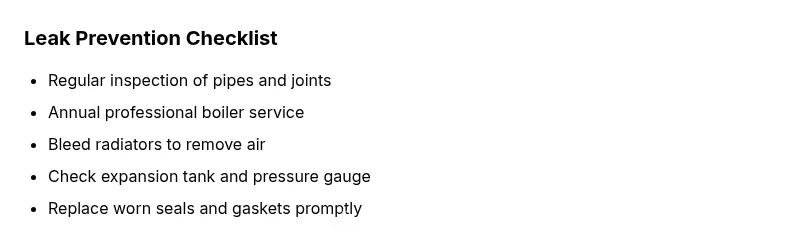
Prevention starts with proactive maintenance. Schedule annual professional servicing to inspect seals, valves, and heat exchangers. Regularly check the pressure gauge and expansion tank to keep pressure within safe limits. Bleed radiators and remove air from the system to prevent uneven pressure. Inspect visible piping for corrosion or signs of wear, and replace aging components before failures occur. Use high-quality sealing compounds only when recommended by the manufacturer, and never bypass safety devices. Keep a log of maintenance, replace worn parts promptly, and address any signs of moisture or corrosion immediately. Consistent maintenance reduces the likelihood of leaks and keeps your boiler operating efficiently.
When to replace vs repair and legal considerations
Not every leak can be repaired affordably. If the heat exchanger is cracked, if corrosion is widespread, or if repeated leaks occur, replacement may be more cost-effective in the long run. Consider the boiler’s age, warranty status, and energy efficiency when deciding between repair and replacement. Always verify that repairs comply with local safety codes and regulations, and use a licensed professional for gas boilers or high-risk fixes. Routine maintenance is often required to keep warranties valid and ensure safe operation.
Steps
Estimated time: 60-90 minutes
- 1
Power down and isolate
Shut off power to the boiler at the main switch or circuit breaker. If safe, close the cold water supply to the boiler to stop any ongoing water flow. This step minimizes risk and prevents further leaks while you assess the situation.
Tip: Take photos of the leak source before you touch anything. - 2
Identify the source
Carefully inspect joints, valves, and exterior piping. Look for obvious drips at fittings and around gaskets. A leak at a joint often means a simple fix like tightening or gasket replacement.
Tip: Use a flashlight and a dry cloth to pinpoint moisture. - 3
Tighten or replace simple components
If you find a loose fitting or worn gasket, tighten with the appropriate tool or replace the gasket. Ensure you use parts that match your boiler model. Re-check for leaks after re-pressurizing slowly.
Tip: Do not overtighten; it can damage seals. - 4
Check the pressure relief valve
Inspect the relief valve for signs of corrosion or discharge. If the valve is leaking, replace it with a compatible unit per the manufacturer’s instructions. This can resolve leaks caused by overpressure but must be done correctly.
Tip: Carefully depressurize before removing the valve and avoid hot surfaces. - 5
Refill, bleed, and test
Refill the boiler slowly, bleed air from radiators until steady steam-free water flows. Re-check the system pressure to ensure it returns to the safe range and observe for any new leaks after a test run.
Tip: Bleed in small increments to prevent over-pressurizing. - 6
Know when to call a professional
If the leak persists after basic fixes or involves a cracked heat exchanger, gas lines, or structural corrosion, contact a licensed boiler technician immediately. Complex fixes require professional expertise to avoid danger.
Tip: If you smell gas, evacuate and call emergency services right away.
Diagnosis: Visible water pooling, damp areas around the boiler, or a steady drip from joints
Possible Causes
- highLoose or damaged pipe connections
- highWorn gaskets or seals
- mediumCorrosion or a pinhole in the boiler body
- mediumFaulty pressure relief valve discharging water
- lowCracked heat exchanger
Fixes
- easyTighten leaking connections or replace worn gaskets
- easyReplace gaskets/seals with manufacturer-approved parts
- mediumInspect pressure relief valve; replace if faulty
- hardDo not attempt to repair a cracked heat exchanger; replace boiler or consult pro
- easyClear condensate traps; ensure proper drainage
Questions & Answers
What qualifies as a boiler leak?
A boiler leak is any unwanted water escaping from the boiler or its connections. It can be a small seep or a rapid drip. If you see water pooling or hear water running, treat it as a leak and investigate or contact a pro.
A boiler leak is any water escaping from the boiler or its connections. If you see pooling or hear water, treat it as urgent and get it checked.
Can a small drip be safe to ignore?
Even a small drip can worsen and cause water damage over time. It should be inspected promptly to identify source and prevent bigger problems.
Even a small drip can become a bigger problem. Have it checked soon.
Should I shut off the boiler if I smell gas?
Yes. If you smell gas or hear hissing, evacuate immediately and call emergency services. Do not operate switches or use electrical devices near the area.
If you smell gas, leave the area and call emergency services right away.
Is it safe to fix a boiler leak by myself?
For minor leaks from fittings or gaskets, basic upgrades may be attempted with caution and the right parts. Major issues, especially heat exchanger damage or gas-related leaks, require a licensed professional.
Simple fixes can be done safely, but major problems need a pro.
How can I tell if a heat exchanger is cracked?
Cracks may manifest as persistent leaking, white mineral deposits, or corrosion around joints. A professional inspection is usually required to confirm a crack and determine replacement needs.
Cracks show up as persistent leaks and corrosion—get a pro to inspect.
When should I call a professional?
If leaks persist after basic fixes, if you suspect a cracked heat exchanger, or if gas lines are involved, contact a licensed boiler technician promptly. Regular maintenance could prevent future emergencies.
Call a licensed boiler technician if leaks continue or gas is involved.
Watch Video
Key Points
- Shut off power and water at first sign of a leak
- Identify the leak source before attempting repairs
- Tighten fittings or replace gaskets for quick fixes
- Do not repair a cracked heat exchanger yourself
- Schedule maintenance to prevent future leaks