Why Your Boiler Is Leaking: Urgent Troubleshooting Guide
A practical, urgent troubleshooting guide to diagnose and fix a leaking boiler. Learn common causes, safety steps, diagnostic flow, step-by-step fixes, and when to call a professional. Boiler Hub-backed guidance for homeowners and facility managers.


Understanding why boiler is leaking
According to Boiler Hub, a leak in a boiler is a sign that the system is under stress and could pose safety risks. The keyword why boiler is leaking often points to worn seals, corroded joints, a failing pressure relief valve, or internal corrosion in heat exchangers. Leaks can originate from seasonal corrosion, poor installation, or vibration over time. Recognizing the difference between a small drip and a steady stream helps you decide how quickly to act. In any case, addressing leaks early reduces the risk of major damage and expensive repairs. Regular boiler maintenance is essential to minimize recurring leaks and extend the life of the unit.
Common leak sources and how they present
Leaks typically emerge at valve connections, drain taps, or the expansion tank. A dripping valve may indicate a loose nut or worn washer, while a steady stream from joints suggests a gasket failure or improper sealing. Corrosion inside the heat exchanger can produce a slow seep that worsens with pressure cycles. External leaks around the base can result from a cracked pan, corroded cabinet, or a worn gasket on the casing. The most important clue is the location: leaks from the cold-water inlet are different from leaks from the pressure relief valve or from the boiler’s internal connections. By mapping the leak to its origin, you can prioritize the correct fix and avoid unnecessary part replacements.
Safety first: what to do immediately
If you detect a boiler leak, safety is the top priority. If you smell gas, evacuate the space and call emergency services. If the area is safe, shut off power to the boiler and close the gas supply valve if you know how to do so safely. Do not attempt to operate or fix high-pressure components while the system is hot. Use a bucket or towels to catch drips, but avoid contact with hot surfaces. A CO detector should be near the boiler, and if it alarms, leave the area and call authorities. After power is off, contact a licensed technician for a thorough inspection and repair plan.
How to inspect without tools: basic checks you can do
Begin with visible inspection around pipes, joints, and the expansion tank. Check for obvious drips, rust stains, or mineral buildup. Look at the pressure gauge; a reading outside the manufacturer's safe range (usually around 1-2 bar when cold, higher when hot) indicates an issue that needs adjustment or component replacement. Inspect the relief valve discharge pipe for signs of past releases. Do not tamper with the relief valve unless you are trained—misuse can create a dangerous situation. Document the leak’s location and pattern so a technician can diagnose more quickly.
Diagnosing the source: pattern, temperature, and timing
Patterns matter: a leak only when the boiler is hot points to a gasket, seal, or expansion-tank issue, while a leak that occurs when the system is cold may indicate a pressure problem or a loose fitting. Temperature can reveal leaks: hot-water leaks near supply lines often come from valves or fittings, while corrosion-induced leaks can appear around the heat exchanger. Note when leaks occur (on startup, during cycling, or after a failed heating cycle). These details help a technician determine whether the fix is a simple tightening, a washer replacement, or a more extensive component replacement.
What the fixes typically involve and when to escalate
Minor leaks from valves or fittings often require tightening or replacing washers and gaskets. More serious leaks from the heat exchanger or pressure vessel usually require professional repair or a boiler replacement, as internal components are under high pressure. If the leak is ongoing, if you notice a rapid drop in system pressure, or if the boiler unit is older and emitting unusual noises or rust, escalation to a licensed technician is necessary. Always prioritize safety and do not attempt to seal leaks with sealants without professional guidance. Regular maintenance after repairs helps prevent recurrence.
Prevention tips to avoid future leaks
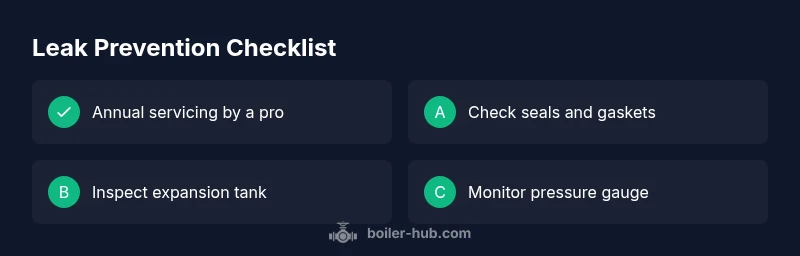
Schedule annual servicing with a qualified technician to inspect seals, valves, and the expansion tank. Replace worn gaskets and worn-out valves promptly, and ensure the system pressure is within recommended limits. Install and maintain a working CO detector and ensure proper clearance around the boiler for safe operation. Keep a consistent maintenance log with dates and parts replaced to help track the boiler’s health over time. These proactive steps reduce the chance of unexpected leaks and extend boiler life.