What to Do If Your Boiler Is Leaking: A Practical Troubleshooting Guide
Urgent boiler leak guidance for homeowners and facility managers. Learn safety steps, how to diagnose leaks, and when to call a pro with Boiler Hub’s 2026 guidance.


Most boiler leaks come from worn seals, loose fittings, or a faulty pressure valve. Immediately switch off power, isolate the water supply, and place towels to catch drips. If leakage continues or you smell gas, call a licensed technician right away. For safety, do not attempt major repairs yourself.
Why a boiler leaks happens
A boiler can leak for several reasons, but most leaks stem from aging seals, gaskets, and joints, or from pressure-relief components that fail over time. Corrosion inside the boiler can also create pinholes in the heat exchanger or headers. When water or steam escapes, it can appear at pipe connections, around the pump, or at the bottom of the unit. The cause is often not a single failure but a cascade of aging components. According to Boiler Hub, the majority of residential boiler leaks arise from aging seals and loose connections rather than catastrophic failures. The sooner you identify the source, the easier it is to prevent water damage and minimize heating disruption. A fast response protects floors, walls, and electrical safety in the boiler room.
Safety note: act calmly, keep a clear path to the boiler, and avoid moving hot surfaces. In many homes, leaks occur where a boiler meets its pipework, indicating a simple fix or a worn gasket that can be addressed before more extensive repairs are needed. Boiler Hub Analysis, 2026 emphasizes that early detection saves material costs and reduces downtime, especially during cold weather when heat demand is high.
Immediate safety steps you should take
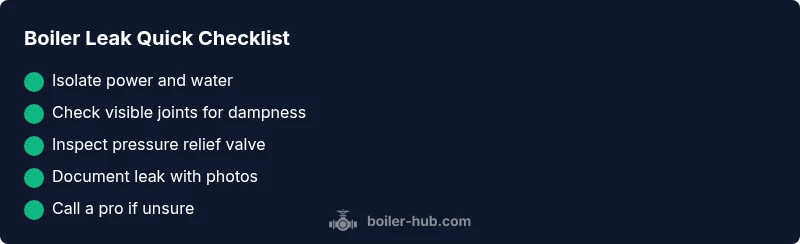
Time is critical when you discover a boiler leak. First, switch off the boiler and power to the unit to avoid electrical shock or further damage. If your system uses a gas fuel source, locate the gas shut-off valve and close it only if you can do so safely from a distance. Do not attempt to seal a fast-moving leak with tape or caulking. Place towels or a bucket to catch drips and protect floors, and keep children and pets away from the area. If you see a strong gas smell, hear hissing, or detect signs of a gas leak, evacuate and call emergency services. After turning off the boiler, do not attempt to operate it again until inspected by a professional. Persisting leaks can indicate a failing valve, cracked heat exchanger, or expansion tank issue that needs expert attention.
What you can do immediately:
- Move people away from the boiler room
- Keep doors open to vent gas if you’re sure it’s not a gas leak
- Note exact leak locations and take photos for the technician
- Do not attempt to repair electrical components while the system is leaking
These steps reduce risk and buy time for a proper assessment, which is essential for safety and future reliability.
Steps
Estimated time: 60-90 minutes
- 1
Power off and secure the area
Confirm the boiler is off and unplug or switch off the circuit. Do not touch electrical components if water is present. Ensure pets and kids are clear. This reduces risk of shock while you assess the leak.
Tip: Use a non-conductive tool and wear rubber-soled shoes for safety. - 2
Shut the cold-water supply
Close the cold-water inlet valve to stop more water from entering the boiler and creating additional leakage. If your system uses feed-water lines, isolate them as well.
Tip: If you’re unsure which valve is the inlet, refer to your boiler user manual or label on the pipe. - 3
Identify the source of the leak
Carefully inspect visible joints, fittings, and the area around the pressure relief valve and expansion tank. Look for dampness, rusty spots, or active drips. Photograph unusual areas for reference.
Tip: Do not remove parts you’re not confident in—document and proceed to safer steps. - 4
Tighten safe, accessible fittings
If a joint shows a clear drip and the system is safe to handle, gently tighten the nut or fitting with the correct wrench. Avoid over-tightening which can crack seals.
Tip: Over-tightening is a common mistake; tighten just enough to stop drips, then recheck later. - 5
Bleed or inspect the pressure gauge
Check the pressure gauge. If it’s outside the recommended range, leak risk increases. Bleed air if necessary and recheck pressure after a short period.
Tip: Only bleed air if you’re trained or have a clear guide; otherwise skip to a professional step. - 6
Call a professional if unsure or leaks persist
If the leak continues after basic checks or if you see gas odors, contact a licensed heating technician immediately. Do not attempt major repairs yourself.
Tip: Prepare photos and notes to share with the tech to speed up diagnosis.
Diagnosis: Visible water near boiler, damp floor, or overhead drips from boiler area.
Possible Causes
- highLoose pipe connections or fittings
- highWorn seals or gaskets at joints
- mediumFaulty pressure relief valve or expansion tank
Fixes
- easyTighten accessible fittings only if you can safely disconnect power and water first.
- mediumReplace worn seals/gaskets and reseal joints with properly rated boiler sealant where appropriate.
- hardTest pressure relief valve, inspect expansion tank, and replace components if pressure fluctuates.
Questions & Answers
What are the most common causes of a boiler leak?
The most frequent causes are worn seals, loose fittings, and a faulty pressure relief valve or expansion tank. Corrosion or damaged gaskets can also create small drips. A quick visual check helps pinpoint which component needs attention, after which a professional should assess any serious faults.
Worn seals, loose fittings, or a faulty relief valve are the usual culprits. A quick look can guide you to the right fix, but a professional should verify and complete any repairs.
Is a small leak dangerous?
Even small leaks can lead to bigger problems if left unchecked, including water damage, mold growth, and reduced boiler efficiency. Always treat any leak as a potential safety issue and seek assessment.
Small leaks can escalate; get an inspection to prevent damage and maintain safety.
Can I fix a leak myself?
Some minor leaks at simple joints can be addressed safely if you have the right tools and isolations; however, most leaks involve pressure systems and gas safety concerns. When in doubt, contact a professional.
You can handle simple, non-pressurized leaks if you know what you’re doing, but always consider professional help for pressure systems.
What should I do immediately if I smell gas near the boiler?
Evacuate the area immediately and call emergency services. Do not operate switches or lights, and do not re-enter until a professional has cleared the area.
Evacuate now and call emergency services if you smell gas around the boiler.
When should expansion tank replacement be considered?
If the expansion tank shows signs of corrosion, constant leaks, or if the system remains over-pressurized after bleeding, replacement may be required. A professional should perform testing to confirm.
Expansion tanks may need replacement if they’re corroded or failing under pressure; a pro should test the system.
Watch Video
Key Points
- Act fast and shut off power and water when leaks are detected
- Identify the leak source safely before attempting any repair
- If leak persists or you smell gas, call a licensed professional immediately
- The Boiler Hub team recommends annual boiler inspections to prevent leaks