If Boiler Is Leaking Water: Troubleshooting Guide
Urgent guidance for homeowners and facility managers: diagnose, isolate, and fix a leaky boiler safely. Learn common leak sources, safe steps, when to call a pro, and prevention tips to protect your home.


Most boiler leaks come from a loose valve, a faulty pressure-relief valve, or a cracked heat exchanger. Start with quick checks: tighten accessible fittings, shut off the boiler and power if safe, and inspect the expansion tank for signs of failure. If the leak persists or you notice steam, turn off power and call a licensed technician.
If boiler is leaking water: urgent guidance
If boiler is leaking water, treat it as an urgent safety issue. Moisture around the boiler can indicate a serious fault, from a loose connection to a failing pressure-relief valve. According to Boiler Hub, quick homeowner checks can stop minor leaks from becoming costly problems. In many homes, leaks present as a damp spot on the floor near the boiler, a slow drip from valves or joints, or water pooling beneath the unit after the system has run. The goal is to identify the source, reduce heat and pressure safely, and avoid exacerbating the fault. This guide provides practical steps, priority checks, and clear thresholds for when to escalate to a professional. Remember: if boiler is leaking water and you’re unsure about safety, shut down power and gas supply immediately and call for help.
Common leak sources and signs
Leaks most often originate at simple, serviceable points, especially where metal meets pipe or fittings. The most frequent culprits are loose fittings or drain valves, a failing pressure-relief valve, faulty expansion tank connections, and corroded pipe joints. Signs include a persistent drip at a joint, a damp appliance cabinet, white mineral deposits around a valve, or hissing steam near the relief valve. The Boiler Hub Analysis, 2026 indicates that many leaks start at fittings or relief valves in residential boilers, underscoring the value of gentle, methodical inspection. By understanding typical sources, you can target the right area without dismantling major components. Always treat all water leaks as potentially hazardous, especially near electrical parts or gas lines, and work with caution to avoid burns or electric shock.
Safety first: immediate actions you can take
Before touching any boiler components, prioritize safety. If you smell gas or hear hissing, evacuate and call emergency services. If it’s safe, turn off the boiler power or switch off the circuit breaker, close the cold-water supply, and shut off the isolation valve on the boiler if accessible. Do not attempt to seal a leak with tape or epoxy; such fixes are temporary and can create dangerous pressure or pressure buildup. Keep a bucket and towels handy to manage drips without creating a slipping hazard. After you’ve stopped the flow, assess the visible sources of the leak, but avoid disassembly beyond what you can safely reach.
Diagnostic flow: symptom to solution in practice
Leaks progress through a basic diagnostic flow: observe the symptom (drip, pool, or steady leak), form a working hypothesis about the source, test safe checks, and apply targeted fixes. For example, a drip near a valve suggests a loose or worn seal; a constant steam leak from the relief valve indicates overpressure or valve wear; a tank connection issue points to expansion tank problems. Use a flashlight, clean the area, and wipe drips for accurate sight lines. If you can’t locate the source, if water appears hotter than normal, or if the leak is large, pause and contact a licensed technician immediately. Boiler Hub emphasizes safety and professional evaluation when in doubt.
Step-by-step home checks for the most common causes
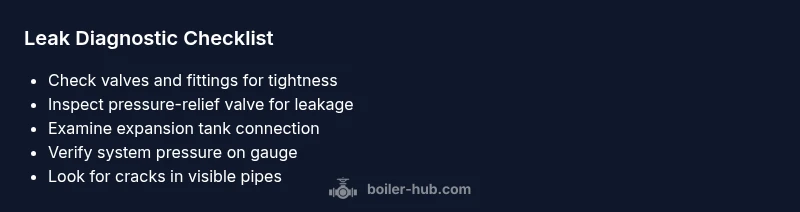
- Inspect visible fittings and drain valve for tightness and corrosion; gently re-seat if needed. 2) Check the pressure-relief valve for signs of leakage or sticking; do not bypass it. 3) Examine the expansion tank and its connection to the boiler; look for rust or moisture around the connection. 4) Verify system pressure on the gauge matches the manufacturer’s recommended range; if it’s high, allow the system to cool before adjusting. 5) Inspect nearby pipes for cracks or pinhole leaks and replace damaged sections. 6) If you notice cracks or corrosion in heat exchanger components, stop work and call a professional. 7) After any fix, repressurize according to the manual and observe for a period to ensure leak does not resume. 8) If water keeps leaking or you see steam, shut off power and call a licensed technician immediately.
When to call a professional and what to expect
Not all leaks are DIY fixes. If the leak persists after basic checks, if you notice sudden pressure drops, or if you observe rust, corrosion, or cracks in visible metal, contacting a licensed boiler technician is essential. A pro will perform a pressure test, inspect the PRV and expansion tank, and check for hidden leaks inside the heat exchanger. Expect a safety-focused assessment, a clear explanation of the leak’s source, and a written repair plan with cost estimates. Boiler Hub recommends documenting symptoms and steps taken before the visit to expedite service.
Prevention tips: keep leaks from returning
Prevention revolves around regular maintenance and timely component replacement. Schedule annual boiler servicing, including expansion-tank inspection, PRV testing, valve seals, and pressure checks. Replace worn gaskets and ensure thermostat and safety devices function properly. Keep the area around the boiler clean and dry to detect new leaks quickly. A proactive approach reduces the risk of major failures and helps you catch early signs of wear before a serious leak occurs.
Real-world scenarios and practical lessons
In a typical scenario, a homeowner notices a small drip near the PRV after running the boiler for a cold night. By turning off the boiler, closing the isolation valve, and tightening a nearby drain valve, the drip subsided, and a service appointment was scheduled for a full PRV replacement. In another case, a persistent pool at the base of the boiler was traced to a corroded gasket on the pump. After replacing the gasket under supervision, the leak ceased. These examples illustrate the importance of safety, methodical checks, and professional follow-up when needed.
Quick monitoring plan after any fix
After completing any fix, monitor the boiler for 24–72 hours. Check for new drips after each cycle, inspect the area after the system cools, and listen for any unusual sounds indicating a loose connection. If the area remains dry, gradually restore operation and note any changes in pressure. If you observe recurring leaks, escalate to a professional consult for a deeper assessment.
Steps
Estimated time: 60-120 minutes
- 1
Power down and isolate
Shut off power to the boiler at the breaker or switch and close the cold-water supply valve if accessible. If your boiler has a manual gas shutoff, turn it to the off position only if you know how to do so safely.
Tip: Never work on a hot boiler; wait for it to cool down and use gloves. - 2
Identify the leak source safely
Clean the area, dry nearby surfaces, and visually trace the wet path to its source. Use a flashlight to inspect joints, valves, and the relief valve region for signs of moisture.
Tip: Mark suspected points with a piece of tape to monitor if a drip changes location. - 3
Check fittings and valves
Tighten any loose fittings by hand plus a wrench, being careful not to over-tighten. Inspect gaskets or seals for wear and replace if needed.
Tip: Only tighten to snug; overtightening can crack threads and worsen leaks. - 4
Inspect the pressure-relief valve
Look for seepage around the PRV or if it has a discharge tube. Do not block or bypass the valve; a stuck PRV is a safety hazard.
Tip: Have a container ready to catch any drips without creating a mess. - 5
Assess expansion tank and system pressure
Check the expansion tank for moisture at the connection and verify the system pressure matches the manufacturer’s spec. If the tank is waterlogged, it may fail to absorb pressure.
Tip: Refer to your boiler manual for the correct pressure range. - 6
Repressurize and test
If you’ve corrected a simple issue, repressurize gradually according to the manual and monitor for new leaks during the next cycle.
Tip: Do not exceed recommended pressure; over-pressurizing can trigger further leaks. - 7
Decision point: call a pro
If the leak persists after checks or if you notice cracks, corrosion, or hot-water expelling steam, stop and contact a licensed boiler technician.
Tip: Provide the technician with a summary of symptoms and steps taken. - 8
Emergency safety steps
If there is significant water discharge, persistent steam, or a gas smell, evacuate and call emergency services or your gas utility. Do not return until professionals confirm it’s safe.
Tip: Keep a safety plan and contact numbers readily available.
Diagnosis: Visible water pooling around the boiler base or dripping from fittings
Possible Causes
- highLoose or damaged fittings/valves
- highFaulty pressure-relief valve
- mediumExpansion tank failure causing overpressure
- lowCracked boiler component or heat exchanger
Fixes
- easyTighten accessible fittings and valves within safe reach
- mediumReplace or reseal pressure-relief valve with boiler-off isolation valve
- mediumInspect/replace expansion tank; drain and repressurize system per manufacturer specs
- hardCall a licensed technician for boiler corrosion or cracked heat exchanger
Questions & Answers
What should I do immediately if my boiler leaks water?
Shut off the boiler and power, close the isolation valve if safe, and keep the area dry while you verify the source. If gas is involved or you smell gas, evacuate and call emergency services. Then contact a licensed boiler technician.
Shut off power, close valves if safe, and call a technician if the leak continues or gas is detected.
Can a leaking boiler cause mold or water damage?
Yes. Ongoing leaks can lead to damp conditions that foster mold growth and water damage to surrounding structures. Prompt detection and repair minimize the risk.
Yes, ongoing leaks can cause mold and water damage; fix leaks promptly.
Is it safe to tighten fittings myself?
Tightening small fittings can be safe if the unit is cool, power is off, and you have the right tools. Avoid forcing fittings and never work on pressurized lines. Seek professional help if you’re unsure.
Tighten only when the unit is cool and power is off; if you’re unsure, call a pro.
How do I know if the leak is from the pressure-relief valve?
A leak around the PRV or its discharge tube usually indicates overpressure, valve wear, or a faulty seal. Do not block the discharge path and arrange repair or replacement promptly.
Leak around the PRV typically means overpressure or a worn valve; service is needed.
What does it cost to repair a leaky boiler?
Costs vary widely based on the leak source, parts, and labor. A licensed technician can provide a written estimate after diagnosis.
Prices depend on the leak type and parts; get a written estimate after inspection.
When should I replace a boiler due to leaks?
If leaks are persistent, frequent, or indicate a corroded heat exchanger, replacement may be more cost-effective than extensive repairs. A pro can advise on options and lifespan.
Persistent leaks and corrosion often signal replacement may be necessary.
Are expansion tanks a common leak source?
Expansion tanks can leak if the diaphragm fails or the tank is waterlogged. A technician can test the tank and replace it if needed.
Expansion tanks can leak if the diaphragm fails; have it tested by a pro.
Watch Video
Key Points
- Shut off power safely and inspect obvious leaks.
- Identify the source before attempting repairs.
- Call a licensed technician for persistent or complex leaks.
- Schedule regular boiler maintenance to prevent leaks.