What to Do When Your Boiler Is Leaking: A Boiler Hub Troubleshooting Guide
Urgent, practical guide for homeowners and facility managers on what to do boiler leaking, safety steps, diagnosing the source, and when to call a professional. Includes prevention tips and a printable checklist.


Immediate steps for what to do boiler leaking: shut off the boiler and power, isolate the water supply, and place a bucket under the drip. If the leak is near the gas line or you smell gas, evacuate and call emergency services. Do not ignore a boiler leak—address it safely and quickly.
What a boiler leak means and immediate safety actions
When you notice water pooling around or dripping from your boiler, it’s a clear signal that something in the system is not sealed properly. This is especially urgent if the leak is near electrical components, the gas line, or the condensate drain. According to Boiler Hub, treating a boiler leak as an emergency can prevent extensive water damage, scarred flooring, and even hazardous conditions. The first priority is safety: turn off power to the boiler at the switch or breaker, and if you have a gas boiler, shut off the gas supply only if you can do so safely from a nearby valve. Then shut off the water feed to reduce further leakage and alarms. Do not attempt to operate the boiler again until the source of the leak is identified and repaired by a qualified technician. Use a bucket or towels to contain the water, but avoid contact with hot surfaces and steam. If there is a strong gas odor or hissing near connections, evacuate and call emergency services immediately. small leaks can become large leaks if ignored, so timely action is essential.
Quick safety and containment: what you can safely do right now
A leaking boiler demands calm, methodical steps. First, ensure personal safety: avoid touching hot surfaces, and keep children and pets away from the area. Next, shut off the boiler’s power and, if possible, close the water isolation valve to limit water loss. Place absorbent towels or a shallow pan under the leak to minimize water damage, and document the situation with photos for your service call. If you’re unsure whether the gas line is involved, do not tamper with gas fittings; evacuate and contact the utility or gas emergency line. Remember, a leak isn’t just a nuisance—it can indicate pressure problems or component failure that could escalate quickly.
Diagnosing the leak source safely: a step-by-step approach
Start by inspecting obvious points: the pressure relief valve discharge pipe, pipe joints, and the heat exchanger edges. A small, steady drip from a joint often signals a loose connection or worn gasket, while a stronger spray can indicate a compromised valve or cracked component. Check the boiler’s pressure gauge; if it’s high, it could push water out through the PRV as a safety measure. Trace the path of the leak to see where it originates: do not assume the leak originates from the closest visible spot, since gravity can carry water away from the source. If the leak is intermittent or only appears when the boiler cycles on, this can point to a valve, pump seal, or condensate line issue. If you identify an obvious damaged component and you are comfortable, you can attempt a careful reseal of accessible joints after cooling the unit and turning off power; otherwise, proceed to professional service.
Common causes of boiler leaks and how to approach fixes
Boiler leaks arise from several recurring culprits. The most frequent is a faulty pressure relief valve or a PRV discharge due to system overpressure. Another common cause is worn seals or gaskets at joints and connections. Corroded pipes or a cracked heat exchanger, though less common, can also lead to leaks. For homeowners attempting temporary fixes, replacing a PRV or reseating a gasket may seem straightforward, but many repairs require depressurizing the system and special tools. Boiler Hub advises against DIY repairs on gas boilers beyond basic safety checks. If the source is the expansion tank or condensate drain, these parts can sometimes be replaced or reset by a competent DIYer, provided the boiler is fully shut down and the system is depressurized.
When to call a professional and what to expect during service
If the leak is persistent, originates near the gas line, involves the heat exchanger, or you cannot safely depressurize the system, contact a licensed boiler technician immediately. A pro will typically perform a controlled depressurization, leak localization tests, and a pressure test to confirm the leak source. They may replace the faulty valve, re-seal joints, repair or replace sections of pipe, or in some cases, recommend a boiler replacement if the unit is old or severely corroded. Expect a service visit to include a safety assessment, shut-down procedures, valve or seal replacements, and warranty guidance. Document the work and retain any parts for future reference. If the boiler is under warranty, confirm coverage before authorizing any replacement parts.
Prevention tips to reduce future leaks and extend boiler life
Regular maintenance is your best defense against leaks. Schedule annual boiler service with a qualified technician to inspect seals, valves, pressure settings, and corrosion risk. Check the expansion tank’s condition and ensure the system pressure operates within the manufacturer’s recommended range. Inspect the condensate drain line for clogs and test the safety relief valve periodically (only a qualified technician should perform PRV testing). Keep the boiler room dry and clean to spot leaks early, and replace worn pipe fittings before they fail. Installing a drip tray and a secondary containment plan can help you manage accidental leaks without extensive damage. Following these practices reduces the likelihood of future leaks and keeps your system running efficiently.
Steps
Estimated time: 2-6 hours
- 1
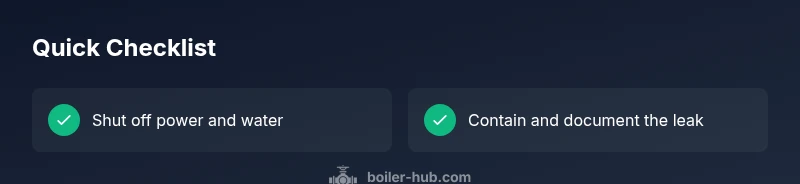
Shut off power and water
Power down the boiler at the switch or breaker. If your system has a dedicated isolation valve for the water feed, close it to stop more water from entering the boiler. Do this only when you can do so safely; if you smell gas or suspect a gas line issue, evacuate and call emergency services immediately.
Tip: Only touch valves you can reach without stepping on wet surfaces. - 2
Contain the leak
Place towels or a shallow tray under the leak to prevent water damage. If you have a condensate pump or drain, position containers to catch drips. Avoid electrical contact with water and keep pets and children away from the area.
Tip: Have a bucket ready for quick collection and a camera for reference. - 3
Identify the leak source safely
Inspect accessible joints, the PRV discharge pipe, and visible piping. Note whether water is coming from a valve, pipe joint, or the unit itself. Do not remove components if they appear stressed or hot; wait for the boiler to cool.
Tip: If the leak changes with boiler cycling, note timing to discuss with a tech. - 4
Isolate the problem component
If you can locate a loose connection or gasket and the boiler is cool, you may attempt resealing or tightening accessible parts. Do not attempt to repair a gas line or a corroded heat exchanger without professional training.
Tip: Use manufacturer-approved sealant where applicable and avoid over-tightening. - 5
Decide on next steps
If the leak persists after basic checks, or if it involves the PRV, heat exchanger, or gas line, call a licensed technician. Provide photos, serial numbers, and a timeline of symptoms to help the technician diagnose quickly.
Tip: Do not run the boiler until a professional confirms safe operation. - 6
Document and schedule follow-up
Record what you observed, actions taken, and any parts replaced. Schedule a formal service visit even if the leak stops temporarily; recurring leaks require inspection for deeper corrosion or hidden damage.
Tip: Keep service receipts for warranty and future maintenance.
Diagnosis: Visible water leak around boiler, dripping from pipes, or damp area on boiler cabinet
Possible Causes
- highFaulty pressure relief valve or PRV discharge due to overpressure
- mediumWorn seals or gaskets on connections
- lowCorroded pipes or heat exchanger cracks
Fixes
- easyShut off boiler and water supply, catch leak, and call professional if PRV leaks or gas supply involved
- easyTighten loose joints and replace seals where safe to do so (boiler cold and power off)
- mediumReplace PRV or damaged component after professional assessment
Questions & Answers
What should I do first if I notice a boiler leak?
First, turn off power to the boiler and isolate the water supply if safe. Contain the leak and ensure the area is safe before inspecting further or calling a professional. If gas is involved, evacuate and call emergency services.
First step is to shut off power and water, contain the leak, and call a professional if the gas line is involved.
Can a boiler leak be dangerous?
Yes. Leaks can indicate high pressure, failed valves, or corroded components. Leaks near gas lines pose immediate hazards. Seek professional assessment promptly to prevent injury or property damage.
Yes, boiler leaks can be dangerous, especially near gas lines; get a professional assessment promptly.
Should I try to fix a leak myself?
Only perform safe, non-technical checks with the boiler cold and powered down. Do not attempt repairs on gas lines, heat exchangers, or PRVs unless you are trained. Hire a licensed technician for most leaks.
DIY is not recommended for most boiler leaks, especially gas-related or interior components.
Is a leak from the pressure relief valve normal?
A small PRV discharge can occur during pressure spikes, but persistent leaks indicate a problem. Have the system checked by a professional to adjust pressure settings and inspect valves.
PRV leaks aren’t normal long-term; have a pro check the pressure and valve condition.
How long does a typical leak repair take?
Repair duration varies by source: seals or valves can take a few hours, while heat exchanger issues may require replacement parts and longer service time. Your technician will provide a more precise estimate after inspection.
Repair time depends on the leak source; expect a few hours for seals, longer for major components.
How can I prevent boiler leaks in the future?
Schedule annual maintenance, monitor pressure, replace aging valves, and ensure proper expansion tank function. Keep the area clean and inspect piping for corrosion. Prevention reduces unexpected leaks and extends boiler life.
Regular maintenance and checks reduce leak risk and extend boiler life.
What should I tell the technician when they arrive?
Describe the leak timing, color and flow of water, locations, whether it changes with boiler cycling, and any sounds or smells. Share photos and any previous maintenance or warranty details.
Be ready to describe the leak’s behavior and show photos to help the tech diagnose quickly.
Watch Video
Key Points
- Act quickly and safely to minimize damage.
- Identify the leak source before attempting DIY fixes.
- Professional service is essential for gas boilers and major components.
- Regular maintenance reduces future leaks.
- Document findings for warranty and future repairs.