What If Boiler Is Leaking? Urgent Troubleshooting Guide
Urgent troubleshooting for boiler leaks: safety steps, quick checks, and when to call a pro. Learn how to handle leaks now and prevent future failures with Boiler Hub guidance.


Most leaks originate from worn seals, loose fittings, or a failing pressure relief valve. Immediately shut off the boiler’s power and water supply if safe, and place a pan to catch drips. Do not ignore active leaks or signs of gas, smoke, or a burning odor. If the leak continues, or you smell gas, call a licensed technician right away.
What to do immediately if your boiler is leaking
If you ask, what if boiler is leaking, the fastest path to safety is straightforward: shut off power, shut off the water supply, and stop operating the boiler if it’s safe to do so. Use a bucket or towels to catch drips and protect floors from water damage. If you’re dealing with a gas boiler or detect a gas odor, leave the area and call emergency services. According to Boiler Hub, addressing a leak promptly helps minimize water damage and boiler stress. In homes, leaks most often come from worn seals, loose fittings, or a failing pressure relief valve. Document the visible signs (wet spots, damp cabinets, hissing sounds) so a technician can assess quickly when you call.
Why leaks happen: common sources and symptoms
Boiler leaks have identifiable patterns. Common sources include worn gaskets or seals around connections, loose unions, a failing pressure relief valve, and corrosion at joints or the heat exchanger. Sometimes leaks stem from improper installation or aging components. Look for damp spots on pipes, rust on fittings, white mineral deposits near valves, or active steam near the vent. Smell can also hint at specific problems, but never rely on smell alone. Boiler Hub analysis shows that seals and fittings are the most frequent leak sources in homes; addressing these areas early often prevents larger problems down the line. Recognizing symptoms such as puddles beneath the boiler, continuous dripping, or low boiler pressure can help you decide when to seek professional help.
Immediate safety steps you can take now
Safety comes first. If you notice water pooling around the boiler, power down the unit at the switch or breaker. For gas boilers, shut off the gas supply only if you can do so safely. Do not operate with exposed wiring or if you see scorching marks. Place a waterproof tray or bucket under the drip and lay down towels to minimize damage. Keep children and pets away from the area. If you smell gas, evacuate and call the gas emergency number from a safe location. If the leak is minor and you feel confident, you can perform a quick visual inspection of accessible joints, but do not attempt to disassemble components. In all cases, inform household members and log the event for your service technician.
How to inspect a leaking boiler: quick checks
Next steps are about identifying the most plausible source without taking dangerous risks. Start by checking visible joints and hose connections for moisture or corrosion. Inspect the pressure relief valve and its discharge pipe for signs of seepage. Examine the expansion tank and its fittings, and check the boiler’s pressure gauge; unusually high or low readings can indicate a fault that causes leaks. Confirm that the shut-off valves—water and gas (if applicable)—are fully open or closed according to the current safety protocol. If you’re comfortable, take clear photos from multiple angles and note the date and readings. This information helps a technician diagnose faster and may support warranty claims if applicable.
Common scenarios and what they mean (overview)
Leak scenarios vary in severity and required response. A small, persistent drip at a seal or joint is often fixable with tightening or gasket replacement. A larger pool of water around the boiler may indicate a failed valve or cracked component and warrants professional assessment. A sudden surge of steam or hissing can suggest a relief valve or vent issue and is a high-priority safety concern. Always consider shut-off as soon as you detect a problem and avoid running the boiler until the source is identified. Boiler Hub’s guidance emphasizes prompt action and professional evaluation for anything beyond a minor seep.
Professional assessment: when to call Boiler Hub or a technician
Not all leaks are equally dangerous, but most warrant a professional opinion. If the leak persists after basic tightening or you cannot locate the source, schedule a service visit. If you notice gas odor, unusual flames around the burner, or if the unit is losing pressure rapidly, stop using the boiler and call a licensed technician immediately. For insurance and warranty purposes, preserve photos and notes of pressure readings, dates, and actions taken. Boiling liquids, chemical cleaners, or makeshift repairs should be avoided. Boiler Hub analysis shows that timely professional intervention reduces the risk of water damage and system failure.
Prevention: maintenance and habits to minimize leaks
Prevention is better than repair. Schedule annual inspections and follow a simple maintenance routine. Check the boiler pressure and ensure the expansion tank is functioning properly. Replace worn gaskets and faulty valves during routine service. Keep area around the boiler clean and dry, and fix any signs of corrosion early. Use a compatible anti-corrosion treatment if recommended by your manufacturer. Maintain a log of service dates, readings, and observed symptoms to catch issues early. Boiler Hub recommends proactive maintenance as a core safety practice.
What to expect after a repair: safety, warranties, and follow-up
After a repair, expect a thorough test to verify leak-free operation and proper pressure. Ask your technician to run a system diagnostic, check the relief valve discharge, and confirm piping integrity. Request a written estimate covering parts, labor, and any follow-up visits, and discuss warranty coverage on repairs or replacement components. If the boiler is older, consider a replacement with resilience features such as improved seals or corrosion resistance. The Boiler Hub team recommends documenting every service visit and scheduling a follow-up check within 12 months to maintain performance and safety.
Steps
Estimated time: 45-60 minutes
- 1
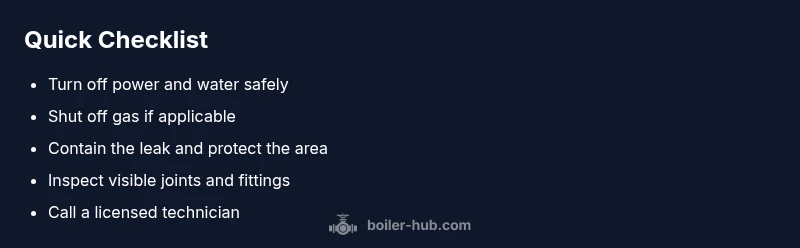
Shut off power and water safely
Locate the boiler switch or breaker and turn it off. If it is a gas boiler, shut off the gas supply only if you can do so safely. Do not proceed if there is exposed wiring or strong heat near the leak.
Tip: If you are unsure about gas, err on the side of safety and evacuate. - 2
Contain the leak and protect the area
Place a bucket and towels under the drip to limit water damage. Keep pets and children away from the area and avoid touching hot surfaces.
Tip: Have a flashlight handy to inspect damp spots. - 3
Identify likely source
Check visible joints, seals, and the discharge pipe from the pressure relief valve. Take photos and note readings on the boiler pressure gauge for reference.
Tip: Document the source before you call for service. - 4
Call a professional and plan the next steps
If you cannot locate the leak or if it persists after basic steps, contact a licensed technician. If you detect gas or a strong odor, evacuate immediately and call emergency services.
Tip: Request a written assessment and a parts/labor estimate.
Diagnosis: Visible water leaking from boiler or around its base
Possible Causes
- highWorn or damaged gasket/seal
- highLoose or corroded pipe fittings
- mediumFailed pressure relief valve
- lowCracked heat exchanger or piping
Fixes
- easyTighten or replace loose fittings and seals
- easyReplace damaged gaskets or seals
- mediumReplace pressure relief valve if faulty
- hardProfessional assessment for heat exchanger or cracked parts
Questions & Answers
What are the most common causes of boiler leaks?
Most boiler leaks come from worn seals, loose fittings, or a failing pressure relief valve. Look for damp spots and unusual discharge around joints. A professional should inspect any persistent leak to prevent water damage.
Most boiler leaks come from seals, fittings, or relief valves. If it's persistent, have a professional inspect it.
Is a leaking boiler dangerous?
Leaks can be a safety risk, especially if they involve gas or high pressure. Shut off power and gas if safe, evacuate if you smell gas, and call emergency services if needed. A professional assessment is essential.
Yes, leaks can be dangerous—shut off power and gas if safe and call a pro.
Can I fix a boiler leak myself?
You can address minor external leaks by tightening fittings or replacing simple gaskets if you’re confident and safe. Do not attempt complex repairs or disassemble components beyond your comfort level. When in doubt, call a licensed technician.
DIY fixes are risky for most boiler leaks. If you’re unsure, call a professional.
What should I do if I smell gas near the boiler?
Leave the area immediately and call the gas emergency number from a safe location. Do not operate electrical switches or create sparks. Once safe, contact a professional for inspection.
If you smell gas, leave and call emergency services right away.
How long does a boiler leak repair take?
Repair time varies by source and repair type. Minor leaks may be resolved quickly, while major components may require replacement and testing. Your technician can provide a realistic timeline after diagnosis.
Repair time depends on the source and parts; your tech will estimate after diagnosing.
How can I prevent boiler leaks in the future?
Schedule regular maintenance, check pressures, and replace worn gaskets and valves during service. Keep the area dry and inspect piping for corrosion. A proactive maintenance plan minimizes leakage risks.
Regular maintenance and early replacement of worn parts prevent leaks.
Watch Video
Key Points
- Shut off power and water safely during a leak.
- Identify the likely source before calling for service.
- Call a licensed technician for persistent leaks or gas smells.
- Schedule annual boiler maintenance to prevent future leaks.