What Causes a Boiler to Leak Water? A Practical Troubleshooting Guide
Discover the common causes of boiler water leaks and follow a structured troubleshooting flow to diagnose and fix safely. Learn how to identify leaks from relief valves, seals, heat exchangers, and more with Boiler Hub.


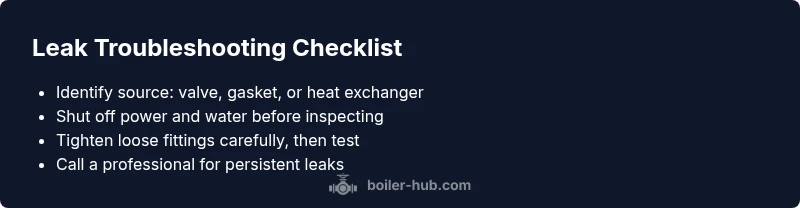
Most boiler water leaks stem from aging seals, a faulty pressure relief valve, or corrosion inside the heat exchanger. Start with the simplest fixes: tighten loose drain connections, check the expansion tank, and inspect the relief valve for dripping. If the leak persists, shut off power and water, then call a licensed technician. Boiler Hub recommends addressing leaks promptly to prevent costly damage.
What causes boiler to leak water? Common sources and root causes
Understanding what causes boiler to leak water is the first step toward a quick fix. Most leaks arise from wear and tear on seals, a malfunctioning pressure relief valve, or corrosion inside the heat exchanger. This is rarely a single cause; a single leak can reveal multiple issues at once. According to Boiler Hub, many leaks originate from aging gaskets and seals that dry out and fail with use. A faulty pressure relief valve can leak if it has degraded or if the boiler experiences overpressure. Corrosion on metal surfaces, especially in older boilers, weakens joints and can create slow seepage that becomes a leak over time. By identifying the category of the problem—seal, valve, or corrosion—you set yourself up for the correct repair path and safer operation. The key is not to ignore the sign of water near the boiler, which can indicate a leak that may worsen without intervention.
The simplest checks you can perform safely are often enough to stop a minor leak
Before you panic, perform a quick safety check. Always start by turning off the boiler and the water supply to prevent further leakage. Look for damp spots around the relief valve, drain valve, and any visible pipe joints. If you see a slow drip from the pressure relief valve, do not try to seal it yourself; note the pressure gauge reading and plan a professional inspection if the drip continues after resetting the system. Check the expansion tank for signs of moisture or a heavily corroded or waterlogged tank. A waterlogged expansion tank can cause overpressure and lead to a leak at the relief valve. Finally, inspect accessible pipe connections for looseness; snugging non-soldered joints can sometimes stop a minor leak.
Identifying the leak source: valves, seals, and pipes
Leaks often originate at specific components. The pressure relief valve is a frequent culprit when the boiler is overpressurized. Seals and gaskets around the boiler doors, burners, and heat exchanger flanges can fail with heat cycles and age, producing slow seepage. Condensate pipes and drain valves may corrode or loosen, allowing water to escape. In some cases, a cracked heat exchanger or a corroded boiler shell may leak; these are more serious and typically require professional intervention. By tracing water to its origin—valve body, gasket, or pipe—you narrow down the fix to a feasible repair or replacement.
Safety first: avoid risky DIY fixes and when to call a pro
Boiler systems involve gas or electricity and pressurized water. If you feel uncertain at any point, stop work and call a qualified technician. Never bypass a relief valve, cut pipes, or attempt internal repairs without proper training. If you smell gas, hear hissing, or notice a rapid leak near the boiler, evacuate and call emergency services. Protect floors and furniture with towels or a bucket while you assess the situation, but do not leave the area unattended. A licensed professional can perform a pressure test, identify the exact leak source, and determine the safest, code-compliant fix.
Diagnostic flow: how we approach leaks in a methodical way
A methodical approach helps prevent unnecessary replacements. Start with visible checks: dampness around the unit, valve dripping, and obvious looseness. Then verify system pressure on the gauge; if the reading is above the recommended range, this points to overpressure as a likely cause. Inspect the expansion tank: a waterlogged tank often leads to leaks. If the source remains unclear, perform a controlled reset and test after re-pressurizing. Finally, document findings and plan a targeted repair with a professional if the leak persists after you’ve addressed simple fixes.
Prevention and maintenance to reduce future leaks
The best defense against leaks is regular maintenance. Schedule annual servicing with a qualified technician who can inspect seals, valves, heat exchangers, and the expansion tank. Replace aging gaskets and worn seals before they fail completely. Ensure venting and condensate drainage are clear. Maintain proper water chemistry and pressure to minimize corrosion and stress on joints. By keeping the boiler in good shape, you drastically lower the chance of sudden leaks and costly water damage.
Quick summary of lead indicators and first steps
Look for damp spots, dripping, and corrosion around the relief valve and drain connections. Test system pressure and expand tanks regularly. If a leak is suspected to originate from the heat exchanger or shell, treat it as a priority repair and arrange professional service promptly. Regular checks save money by preventing major failures and extending boiler life.
Steps
Estimated time: 45-90 minutes
- 1
Power off and isolate
Shut off the boiler and the cold water supply to stop any ongoing flow. If your unit is gas-fired, ensure the area is well-ventilated and there are no ignition sources nearby. Disconnect electrical power to prevent shocks while inspecting exterior components.
Tip: Use the main switch or circuit breaker; verify with a multimeter if you’re unsure about power status. - 2
Locate the source
Carefully inspect the relief valve, drain valve, and exposed pipe joints for signs of dripping or wetness. Check near the expansion tank and along the condensate line. A flashlight and a mirror can help you see hard-to-reach spots.
Tip: Keep a damp cloth handy to wipe away mineral build-up that hides minor drips. - 3
Tighten and reseat connections
If you find a loose connector or a damp joint, gently tighten it by hand or with the appropriate wrench. Do not overtighten, as metal threads can be damaged. After tightening, clean the area and observe for new leaks.
Tip: Document any fittings you touched in case a professional needs to review them later. - 4
Check the expansion tank
Inspect the expansion tank for signs of waterlogging or internal damage. If the tank is waterlogged, it loses its ability to absorb pressure fluctuations and can cause the relief valve to drip. If you’re comfortable, drain and re-pressurize the tank as per the manufacturer’s guidelines.
Tip: If you don’t have a pressure gauge or air pump, skip this and proceed to professional help. - 5
Test system pressure and function
Re-pressurize the boiler to the recommended range shown on the boiler’s manual or pressure gauge. Refill slowly to avoid over-pressurizing. Restore power and monitor for recurrence of leakage over the next few hours.
Tip: Record the final pressure reading for your technician’s reference. - 6
Plan professional assessment if needed
If leaks persist after these steps, or if you detect corrosion, molten metal sounds, or a significant crack, schedule a professional inspection promptly. A licensed technician can perform a pressure test, identify hidden leaks, and safely replace faulty components.
Tip: Never attempt internal boiler repairs without proper training and certification.
Diagnosis: Visible water around the boiler, damp spots on the floor, or a consistent drip from components
Possible Causes
- highAging or damaged seals/gaskets
- highFaulty or overworked pressure relief valve
- mediumWaterlogged expansion tank
- mediumLoose drain or condensate pipe connections
- lowCorrosion or a cracked heat exchanger or boiler shell
Fixes
- easyTighten or reseat accessible fittings; replace damaged gaskets if needed
- mediumTest and, if required, replace the pressure relief valve by a pro
- mediumRepair or replace a waterlogged expansion tank; verify air charge
- easyRepair or replace loose drain/condensate pipe connections; reseal joints
- hardIf a crack or severe corrosion is found in the heat exchanger or shell, call a pro immediately
Questions & Answers
What are the most common causes of a boiler leak?
The most common causes are aging seals and gaskets, a faulty pressure relief valve, and corrosion inside the heat exchanger. Leaks from loose drains or condensate lines are also frequent. Identifying the source helps determine whether a simple fix or professional service is needed.
Common causes are worn seals, a bad relief valve, and corrosion inside the heat exchanger. Loose drain lines and condensate connections are also frequent culprits.
Is a leaking boiler dangerous?
Leakage can indicate overpressure, gas risk, or electrical issues. If you smell gas, hear hissing, or see a prominent leak, leave the area and call emergency services. For most leaks, turn off power and water and contact a licensed technician promptly.
A boiler leak can be dangerous, especially with gas or electric components. Leave the area and call for help if you smell gas or hear hissing.
Can I fix a boiler leak myself?
For minor external leaks at fittings or valves, a careful tightening might help, but internal components like the heat exchanger require a professional. Do not attempt to seal or weld parts you’re unsure about.
Minor external leaks at fittings may be DIY, but internal fixes require a pro.
How much does it cost to repair a boiler leak?
Repair costs vary based on the source of the leak and the components involved. A professional inspection will assess whether a valve, gasket, expansion tank, or heat exchanger is at fault and provide a repair plan.
Costs vary; a professional will diagnose whether the issue is a valve, gasket, expansion tank, or heat exchanger and quote accordingly.
What maintenance helps prevent boiler leaks?
Annual servicing by a qualified technician, checking and replacing worn seals, testing the pressure relief valve, and inspecting the expansion tank can prevent many leaks. Regular cleaning and water chemistry checks also reduce corrosion.
Regular yearly service and component checks prevent many leaks.
When should I call a professional immediately?
Call a professional if you notice persistent leaking after basic checks, gas smells, unusual noises, or heat exchanger corrosion. Quick professional assessment can prevent water damage and safety hazards.
Call a pro if leaks persist after basic checks or if you smell gas or hear unusual noises.
Watch Video
Key Points
- Inspect the relief valve and connections first.
- Shut off power and water before any inspection.
- Do not attempt dangerous internal repairs.
- Regular maintenance reduces leak risk.