Why Do Boilers Leak? Practical Troubleshooting Guide
Learn why boilers leak, identify common sources, and follow a safe, step-by-step approach to diagnose and fix leaks while protecting your home from water damage.


Most boiler leaks start from worn seals, corroded joints, or excessive system pressure. The quickest, safe fix is to shut off the boiler and stop the source of moisture if you can do so safely, then tighten accessible fittings. If you smell gas, or the leak is persistent or spreading, leave the area and call emergency services. When unsure, contact a qualified professional immediately for immediate on-site assessment.
Why do boilers leak and why it matters
Boilers are the heart of a home heating system, and a leak can quickly turn into a safety risk and expensive damage. Why do boilers leak? Typical culprits include worn seals, corroded pipe joints, failing condensate lines, or pressure relief valve issues. The Boiler Hub team has found that many leaks start at connection points or within aged components. Regardless of the source, a leak means you’re wasting heat, increasing energy costs, and risking water damage or mold growth if left unchecked. Early detection improves outcomes, limits boiler downtime, and reduces repair bills. In most homes, a small drip becomes a tracking problem when moisture meets electrical components or insulation. The key is to act promptly, shut off power if you can do so safely, and document observations for a technician. Small leaks may be fixed by resealing joints, replacing worn washers, or replacing a short section of piping. More serious leaks due to a cracked heat exchanger or corroded tank require professional assessment. Always prioritize safety and avoid attempting major disassembly yourself.
Common causes of boiler leaks
- Worn seals and gaskets at pumps, valves, and joints
- Loose or damaged fittings after maintenance or installation
- Corrosion or rust on the boiler shell, pipes, or connections
- Cracked heat exchanger or swollen components from repeated heating/cooling cycles
- Faulty expansion tank or pressure relief valve failing to relieve pressure
- Condensate line blockages or disconnections
- Poor installation or recent repairs creating weak seals
In practice, leaks frequently arise at serviceable joints rather than inside the boiler core. According to Boiler Hub Analysis, many leaks trace back to aging components and pressure faults that worsen over time.
Safety first: what to check before you touch anything
- If you detect water around the base, turn off the boiler and shut off the water supply to the boiler if you can do so safely.
- Don’t touch electrical components with wet hands; avoid standing in water near the boiler.
- Inspect for obvious signs of GAS odor; if you smell gas, evacuate and call emergency services immediately.
- Look for patterns: is water dripping from fittings, a leaking condensate line, or pooled water from the pressure relief valve?
- Use a flashlight to trace the source without dismantling critical components. If the leak is from a heat exchanger or the main burner assembly, do not operate the boiler and contact a professional.
Safety is non-negotiable; if you’re unsure, stop and seek help from a licensed technician.
Diagnostic flow: symptom → diagnosis → solutions
A practical diagnostic flow helps you move from observed symptoms to targeted fixes. Start with a visible drip or pool, then check the simplest sources first (condensate line, supply valve, fittings). If the moisture persists or appears at the base, suspected causes include worn seals, loose joints, or a failing valve. For persistent leaks, the next steps involve isolating the boiler, checking pressure readings, and evaluating the expansion tank. The goal is to identify the exact source while maintaining safety. If any step feels risky, stop and call a professional immediately. Always document symptoms, pressure readings, and nearby components to aid a technician’s assessment.
Boiler Hub recommends documenting observations after each check to speed up diagnosis and ensure you don’t miss early signs of a larger problem.
Step-by-step fixes for the most common leak source
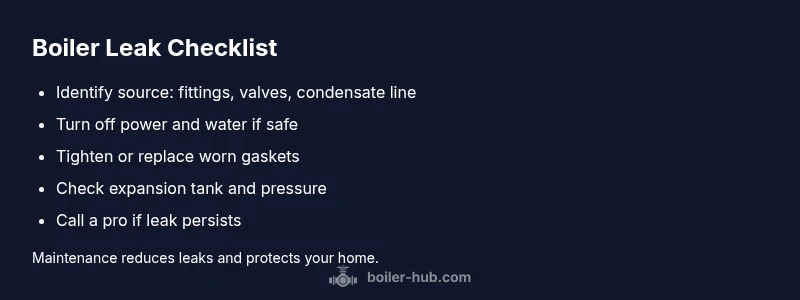
- Power down safely and shut off the water supply to the boiler; disconnect the electrical supply if comfortable and safe. Inspect obvious leaks around fittings and hoses. Tip: Wear protective gloves and use a dry cloth to capture drips before tightening.
- Tighten loose fittings or replace worn gaskets on accessible joints; use appropriate tools and avoid overtightening. Tip: Replace any damaged washers with manufacturer-recommended parts.
- Check condensate line for blockages or disconnections; clear clogs and secure connections. Tip: Do not force lines through a blockage; consider replacing a damaged section.
- Inspect the pressure relief valve and expansion tank for signs of wear or failure; test the valve's discharge with caution and ensure discharge piping directs water away from electricals. Tip: If you hear banging or hissing, stop and call a pro.
- Refill and re-pressurize the system according to the boiler’s spec sheet; monitor gauge stability for a period after re-pressurizing. Tip: Use a proper filling loop and avoid over-pressurizing.
- Turn the boiler back on and observe for renewed leakage; if moisture returns, or if the leak is not from a simple fitting, schedule professional service. Tip: Keep a log of pressure readings and dates of any maintenance.
Estimated total time: 45-90 minutes; if a leak persists or if you encounter a suspected heat exchanger issue, do not continue and call a licensed technician.
Safety, warnings, and when to call a professional
- If you suspect a cracked heat exchanger, do not run the boiler; this is a serious fault requiring professional assessment.
- Gas smells require immediate evacuation and emergency services; do not attempt DIY fixes if gas is detected.
- Electricity and water together equal potential electrocution risk; if you’re unsure, stop and call a pro.
- Regular maintenance reduces future leaks: schedule annual inspections and pressure checks with a certified technician.
- Avoid temporary fixes that seal leaks without addressing root causes; a persistent leak can indicate a failing component that can worsen suddenly.
Always err on the side of caution; safety comes first, and professional service is often the most cost-effective long-term solution.
Prevention tips to reduce future leaks
- Schedule annual boiler servicing to catch wear and corrosion early.
- Monitor pressure gauges and keep system pressure within the manufacturer’s recommended range.
- Insulate exposed pipes to reduce condensation and protect against temperature fluctuations.
- Replace aging fittings and seals at the first signs of wear rather than waiting for leaks to worsen.
- Keep an accessible shut-off valve clearly labeled for quick action in emergencies.
- Check expansion tank functionality and ensure proper venting of the pressure relief valve.
Regular maintenance and early intervention dramatically reduce the likelihood of leaks and costly damage. By staying proactive, homeowners and facility managers can keep boilers running safely and efficiently.
Quick reference: common symptoms and quick actions
- Dripping from joints or base: check fittings, tighten or replace gaskets; if unresolved, seek pro help.
- Damp spots on walls near boiler: inspect for condensation lines or leaks at the tank and valve assemblies.
- Rising pressure gauge: schedule a maintenance check; do not reset or bypass safety valves.
- Gas smell: evacuate and call emergency services immediately.
- Intermittent boiler cycling or unusual noises: arrange a professional assessment to rule out faulty valves or heat exchanger issues.
Steps
Estimated time: 45-90 minutes
- 1
Power down safely
Turn off both the boiler and its electrical supply. If you can safely access the shut-off valve, close it to isolate the boiler from water. This prevents further leakage while you inspect. Always wear protective gear and avoid touching hot surfaces.
Tip: Label the power switch and valve for quick future reference. - 2
Identify the leak source
Trace the moisture to its source without disassembling critical components. Check hose connections, fittings, condensate lines, and the pressure relief valve for dampness or drips.
Tip: Use a dry cloth to spot fresh drips and photograph suspect areas for reference. - 3
Tighten or reseal fittings
Carefully tighten any loose nuts or fittings you can reach. If you notice worn washers, replace them with correct OEM parts. Do not over-tighten, as this can damage threads and worsen leaks.
Tip: Only use compatible parts; mismatched washers can cause failures. - 4
Check the condensate line and valve
Inspect the condensate line for blockages or disconnections. Clear any blockage and re-secure the line. If the condensate valve seems faulty, flag it for replacement by a pro.
Tip: Run a brief test by letting condensate drip into a safe container. - 5
Inspect expansion tank and pressure
Check the expansion tank for signs of moisture or swelling. Validate the system pressure with a gauge and compare against the manufacturer’s spec. Low or high pressure can cause leaks at valves and joints.
Tip: Do not pressurize beyond recommended levels; consult specs. - 6
Test the system and plan next steps
Restore power and water, then observe for renewed leaks and verify pressure stability. If moisture returns or you observe damage to critical components, contact a licensed technician for evaluation and possible replacement.
Tip: Keep a maintenance log with dates and readings for future reference.
Diagnosis: Visible puddle near boiler base or running damp pipes
Possible Causes
- highWorn seals and gaskets
- mediumLoose or damaged fittings
- lowCracked heat exchanger or expansion tank failure
Fixes
- easyTighten accessible fittings and replace worn gaskets; reseal joints as needed
- mediumIsolate boiler, drain a portion of the system, and inspect pipework for corrosion or cracks
- hardCall a licensed technician to assess the heat exchanger or expansion tank and replace as required
Questions & Answers
What are the most common causes of a boiler leak?
Leaks commonly come from worn seals, corroded joints, and pressure valve faults. Inspect visible joints and pressure readings for early signs of trouble.
Leaks usually come from worn seals, corroded joints, or pressure valve faults.
Is a dripping boiler dangerous?
A dripping boiler can present electrical and water damage risks. If you smell gas or feel unsure, evacuate and contact emergency services.
Dripping can be dangerous, especially if gas is involved; evacuate and call for help.
Can I fix a boiler leak myself?
Some minor leaks from fittings can be addressed by tightening or resealing. Do not attempt repairs on a cracked heat exchanger or the main boiler shell.
Some small leaks can be fixed by tightening fittings, but don’t attempt major repairs.
When should I replace a boiler instead of repairing?
If leaks persist after simple fixes or the boiler is old and inefficient, replacement may be more cost-effective in the long run.
If leaks continue or the boiler is old, replacement may be best.
What maintenance helps prevent leaks?
Regular inspections, pressure checks, and expansion tank maintenance reduce leak risk and extend boiler life.
Routine maintenance helps prevent leaks.
Should I shut off the boiler if I smell gas?
Yes. If you smell gas near the boiler, leave the area immediately and call emergency services.
If you smell gas, evacuate and call emergency services.
Watch Video
Key Points
- Identify leaks early to prevent damage and high repair costs
- Start with safe checks and simple fixes before calling a pro
- Don’t ignore gas smells or electrical concerns
- Maintenance reduces future leaks
- Document and monitor to guide professional service