Why Your Boiler Is Leaking Water and How to Fix It Quickly
An urgent, practical guide to diagnosing and fixing a leaking boiler. Learn common causes, safe checks, and when to call a professional to protect your home from damage.


According to Boiler Hub, water leaking from a boiler is not normal and should be addressed promptly. The most common causes are a faulty pressure relief valve, a loose or damaged pipe joint, or a ruptured heat exchanger. Start with simple checks: inspect visible pipes for drips, verify the pressure gauge reading, and power off the boiler if safe. If the leak persists, call a professional.
What causes a boiler to leak water?
Water leaks around a boiler usually come from a few predictable places. The most common are a faulty pressure relief valve that releases water to relieve overpressure, loose or damaged pipe joints, and a worn or cracked heat exchanger. External leaks may originate at the condensate drain, fittings, or the pump seal. Corrosion, aging components, or overheating can also lead to leaks. According to Boiler Hub Team, many leaks are traced to these primary points, so a systematic inspection is the fastest path to a fix.
Quick checks you can safely perform
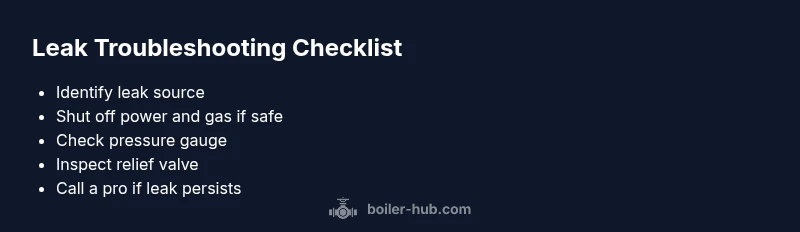
Safety first: ensure the boiler is cool and the electrical supply is off before touching anything. Check for fresh drips from visible pipes and joints, inspect the pressure relief valve and its outlet, and verify the boiler pressure on the gauge. If water pools near the floor, note the location and approximate amount. Do not attempt to disassemble sealed components without proper training. According to Boiler Hub, keeping a simple checklist can prevent a small issue from becoming a costly failure.
How to diagnose the source of the leak
Begin by distinguishing external leaks from internal ones. Look for dampness around pipe joints, the condensate drain, or the relief valve outlet. If the leak appears only when the boiler is running, the heat exchanger or pump seal may be involved. Check the expansion vessel for signs of moisture and test the condensate line for blockages. A systematic approach, as recommended by the Boiler Hub Team, minimizes unneeded disassembly and focuses on likely fault points.
Step-by-step fixes for the most common leak
Most leaks fall into a few safe, first-line fixes. Start with simple joints, then move to safety devices only if you are qualified. If you reach a point where disassembly or replacement requires specialized tools or gas-line work, stop and call a professional. This guidance emphasizes conservative, risk-averse troubleshooting and prioritizes safety above all.
Safety considerations and when to call a pro
Leakage can pose safety risks including burns, slips, and in gas boiler scenarios, carbon monoxide exposure. If you notice a gas smell, hissing, or flame anomalies, evacuate and contact emergency services. Never bypass safety features or attempt high-risk repairs. BoilerHub’s safety guidance is clear: when in doubt, consult a licensed technician to avoid dangerous outcomes.
Prevention: How to reduce future leaks
Regular maintenance reduces the odds of a leak. Schedule annual boiler servicing, bleed radiators to stabilize pressure, and inspect seals and valves during routine checks. Keep an eye on the pressure gauge’s range and address any rapid pressure changes promptly. BoilerHub’s preventive tips emphasize early detection and consistent care to minimize surprise failures.
Steps
Estimated time: 60-120 minutes for initial assessment
- 1
Power down and secure the area
Turn off the boiler and isolate electrical supply. If your unit is gas, do not touch gas lines unless you have training. Ensure the area is dry before proceeding.
Tip: Always verify power is off with a tester before touching wiring. - 2
Identify the leak source safely
Wipe visible areas and watch for fresh drips. Note whether the leak comes from joints, valves, or the relief outlet. Do not disassemble sealed parts.
Tip: Take photos for reference during service call. - 3
Tighten simple, accessible joints
Gently tighten obvious fittings that appear loose using appropriate tools. Stop if you feel resistance or hear a creak, as overtightening can crack threads.
Tip: If you cannot access the joint safely, skip to professional help. - 4
Check the pressure and relief valve
Read the system pressure on the gauge. If it’s outside the recommended range, do not force a refill. Follow the manufacturer’s instructions or call a pro.
Tip: Never bypass the relief valve; it’s a safety device. - 5
Inspect expansion vessel and condensate line
Look for dampness on the expansion vessel and check the condensate line for clogs or freezing. A failed vessel often manifests as pressure fluctuations.
Tip: A professional can test and recharge expansion vessels safely. - 6
Call a professional if leaks persist
If the leak continues after basic checks or involves gas lines, stop DIY and contact a licensed boiler technician immediately.
Tip: Provide photos and summarize symptoms to speed up diagnosis.
Diagnosis: Boiler leaks water from exterior surfaces, around base, or into a condensate drain
Possible Causes
- highFaulty pressure relief valve
- highLoose or damaged pipe joints
- lowDamaged heat exchanger
- mediumExpansion vessel failure
- lowBlocked condensate drain
Fixes
- easyTighten or replace loose pipe joints where safe
- mediumInspect/replace the pressure relief valve by a licensed tech if leaks at valve outlet
- mediumCheck expansion vessel pressure and recharge or replace if needed (professional)
- hardInspect heat exchanger for cracks and arrange replacement if necessary (professional)
Questions & Answers
What are the most common causes of a boiler leaking water?
The most common causes are a faulty pressure relief valve, loose pipe joints, or a corroded heat exchanger. External leaks near valves or drains are often easier to fix than internal leaks.
Common leaks are usually from valve issues, loose joints, or corroded parts. Let a professional inspect persistent leaks.
Is a leaking boiler dangerous?
Yes, leaks can pose scalding or fire hazards, and a gas boiler leak may present carbon monoxide risks. Turn off power and gas if safe and call a professional.
Yes. Leaks can be hazardous, especially with gas boilers. Turn off power if safe and contact a pro right away.
Can I fix a boiler leak myself?
Some cosmetic leaks from fittings can be tightened by a trained homeowner, but most leaks require a licensed technician to ensure safety.
Some leaks from fittings may be tightened, but most leaks need a pro for safety.
How can I tell if the expansion vessel is failing?
If the system pressure fluctuates or you hear frequent cycling of the boiler, the expansion vessel could be failing. A pro can test and recharge or replace it.
If pressure fluctuates often, the expansion vessel may be failing. Have a pro test it.
Should I ignore a small drip?
No. Even a small drip can indicate a problem that will worsen. Monitor the leak and schedule a professional assessment.
No. Don’t ignore a drip; get it checked.
What maintenance helps prevent leaks?
Annual boiler servicing, checking pressure, and bleeding radiators reduces leaks. Keep a log of maintenance for quick reference.
Regular servicing and pressure checks help prevent leaks.
Key Points
- Shut off power and gas if safe and inspect the area
- Identify the leak source before attempting repairs
- Tighten simple joints only if safe and necessary
- Persistent leaks require a licensed boiler technician
- Regular maintenance helps prevent future leaks