Why is my boiler pressure so high: A practical troubleshooting guide
Urgent, practical guide to diagnosing and fixing high boiler pressure, with safe checks, common causes like expansion vessel faults, and clear guidance on when to call a professional.


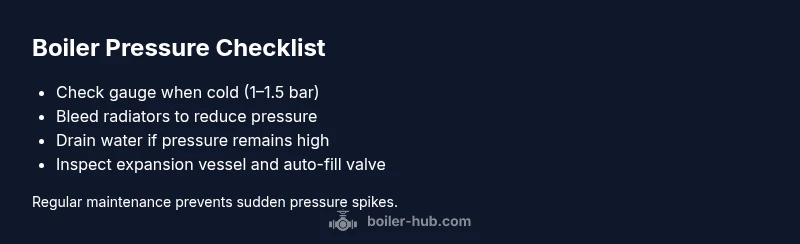
High boiler pressure is usually caused by an overfilled system or a faulty expansion vessel. Turn off the boiler, let it cool, and read the gauge (aim for about 1–1.5 bar when cold). If pressure stays high, don’t vent radiators while hot and contact a qualified technician.
Understanding boiler pressure and why it's a problem
The pressure inside your boiler is a measure of how hard the water pushes against the system as it heats. In most homes, the gauge is read in bar. When the boiler is cold, a typical safe range is around 1 to 1.5 bar. As the water heats and expands, the pressure can rise to roughly 2 to 2.5 bar. If the gauge regularly sits above the recommended level, you risk leaks, strain on seals and joints, or even a boiler fault. If you’re asking why is my boiler pressure so high, the answer often points to a fault in the system’s buffering components or an overfilled loop. According to Boiler Hub analysis, the two most common culprits behind rising readings are a failed expansion vessel (the component that buffers pressure as water expands) and overfilling the system during maintenance. Addressing these issues promptly reduces risk and prevents costly repairs.
Understanding boiler pressure and why it's a problem
The pressure inside your boiler is a measure of how hard the water pushes against the system as it heats. In most homes, the gauge is read in bar. When the boiler is cold, a typical safe range is around 1 to 1.5 bar. As the water heats and expands, the pressure can rise to roughly 2 to 2.5 bar. If the gauge regularly sits above the recommended level, you risk leaks, strain on seals and joints, or even a boiler fault. If you’re asking why is my boiler pressure so high, the answer often points to a fault in the system’s buffering components or an overfilled loop. According to Boiler Hub analysis, the two most common culprits behind rising readings are a failed expansion vessel (the component that buffers pressure as water expands) and overfilling the system during maintenance. Addressing these issues promptly reduces risk and prevents costly repairs.
Understanding boiler pressure and why it's a problem — quick note from Boiler Hub
Steps
Estimated time: 30-60 minutes
- 1
Turn off and let the boiler cool
Switch off the boiler and give it time to cool before you touch any fittings. Hot water and steam can cause scalds. Safety first: wear gloves and never attempt complex repairs while the system is hot.
Tip: Allow at least 30 minutes for cooling if the boiler has been running recently. - 2
Check the pressure gauge and note the reading
Locate the gauge on the front panel or near the boiler. Record current pressure and compare it to the safe range: roughly 1–1.5 bar when cold, rising to around 2–2.5 bar when hot. A reading above 3 bar is a red flag.
Tip: If the gauge is unstable or fluctuating, stop and call a professional. - 3
Bleed radiators to reduce pressure
Use a radiator key to vent each radiator until you hear a steady trickle of air accompanied by a small amount of water. Recheck the gauge after bleeding to confirm pressure has fallen to within the safe range.
Tip: Work from the lowest radiator upwards to minimize air flow in the system. - 4
Drain water if pressure remains high
If bleeding doesn't bring the pressure down, carefully drain a small amount from the system using the drain valve or the drain cock. Collect the water in a bucket and stop as soon as the gauge reaches the 1–1.5 bar range.
Tip: Do not drain too much; you can always re-pressurize if you drop below the recommended range. - 5
Recheck and restart the boiler
Close all valves, ensure any filling loop is secured (do not leave the loop open), and restart the boiler. Monitor the pressure as it heats up; it should settle within the normal range. If it climbs again, stop and contact a professional.
Tip: Keep a short log of readings to show a technician if needed.
Diagnosis: Boiler pressure gauge reads high (above safe range) on cold or after heating cycle
Possible Causes
- highFaulty expansion vessel or loss of its charge
- mediumOverfilled system after maintenance or filling loop left open
- lowStuck or faulty pressure relief/auto-fill valve
Fixes
- easyBleed radiators to release excess water and reduce pressure
- easyDrain a controlled amount of water via the drain valves to lower pressure
- mediumInspect, recharge or replace the expansion vessel if needed
- hardTest and replace faulty relief/auto-fill valve if present
Questions & Answers
What is a safe boiler pressure range, cold vs hot?
When cold, aim for about 1 to 1.5 bar. When hot, pressure can rise to around 2 to 2.5 bar. If readings exceed these ranges consistently, there may be a fault that needs attention.
Cold should be about 1 to 1.5 bar; hot can be 2 to 2.5 bar. If it stays higher, call a technician.
Can I bleed radiators to fix high pressure?
Yes. Bleeding radiators can release air and a small amount of water, which often reduces pressure. Always bleed when the boiler is cool and recheck the gauge afterwards.
Bleed radiators when cool to release air and reduce pressure. Check the gauge afterward.
What should I do if pressure spikes after bleeding?
If pressure remains high, avoid further bleeding and drain a small amount of water via the drain valve. If it still climbs, turn off the boiler and call a professional.
If it stays high after bleeding, drain a bit more water and contact a pro if it climbs again.
Is expansion vessel failure common?
Expansion vessel failure is a frequent cause of high pressure. A professional can test the vessel’s charge and replace it if needed.
Expansion vessel problems are a common cause; a pro should test and, if needed, replace it.
When should I call a professional?
If the gauge reads above 3 bar, if you notice leaking, or if pressure remains high after a safe bleed and drain, contact a qualified heating engineer.
Call a pro if the gauge is above 3 bar or if high pressure persists after basic fixes.
Watch Video
Key Points
- Identify safe pressure ranges for cold vs hot boiler operation.
- Common causes are expansion vessel faults or overfilling.
- Bleed radiators first, then drain if needed.
- If pressure remains high, seek professional help promptly.