High Boiler Pressure: Urgent Troubleshooting Guide
Urgent, practical troubleshooting for if boiler pressure is too high. Learn quick safety steps, diagnose causes, follow a step-by-step fix, and know when to call a pro to prevent dangerous failures.


Boiler pressure that remains high is typically caused by a faulty expansion tank or a stuck/failed pressure relief valve. First, shut off the boiler and allow it to cool, then carefully relieve some pressure or recharge the expansion tank if your system has one. If the gauge stays high after these steps, do not run the boiler and contact a licensed technician.
What if boiler pressure too high means trouble for your boiler
If boiler pressure too high, your heating system may stop operating safely and could suffer from leaks or component damage. According to Boiler Hub, excessive pressure raises the risk of a blown gasket, damaged heat exchanger, and pressure-related shutdowns. This is not something to ignore, especially in homes with older equipment or frequent cycling. High pressure often signals a single weak point—most commonly the expansion tank or the pressure relief valve—but several factors can contribute. In practice, you’ll notice the gauge reading higher than the manufacturer’s recommended range, louder boiler operation, or emergency shutoffs during heating cycles. Understanding what these indicators mean helps you act quickly to protect your home and avoid costly repairs. This guide, from the Boiler Hub Team, walks you through why pressure spikes happen and how to respond safely before things get worse.
Immediate safety steps you should take now
Safety is paramount when dealing with elevated boiler pressure. Turn off the boiler and shut off the gas supply if you can do so safely. Allow the system to cool completely before touching any controls or valves. Do not attempt to drain hot water or open drain valves while the system is hot. Check for obvious signs of leaks around the boiler and especially near the expansion tank and piping. If you hear hissing sounds, see steam, or notice wet patches, step back and call a professional. Once cooled, carefully monitor the pressure; do not re-pressurize or top off the system until you have diagnosed the cause. Always prefer professional guidance if you are unsure about procedures or if your equipment is under warranty.
Common causes of high boiler pressure
Several practical culprits commonly raise boiler pressure. A faulty expansion tank that has lost its air charge or corrosion inside can fail to accommodate water expansion. A stuck or defective pressure relief valve may continuously vent or prevent overpressure relief, keeping pressure high. Overfilling the system during maintenance, a partially closed valve, or trapped air in the loop can also push readings upward. In some cases, a gauge error or an aging, swollen bladder inside the expansion tank may misreport the actual pressure, leading to unnecessary anxiety and incorrect fixes. Each cause has a different fix path, so accurate diagnosis matters.
How to diagnose the pressure issue
Start by verifying the actual pressure against your boiler’s manual. If the gauge reads high, inspect the expansion tank’s air charge and physical condition—look for signs of moisture, rust, or a soggy tank. Check the pressure relief valve for sticking or leakage and test its operation according to the manufacturer’s instructions. If you have radiators, bleed them to remove air that can create pressure imbalances. Also confirm that the system fill valve is fully open and that no shutoffs are partially closed. If the readings remain in the high range after these checks, the issue likely lies with the expansion tank or relief valve. In that case, plan for a professional assessment to avoid risking a boiler failure.
Step-by-step fixes for high boiler pressure
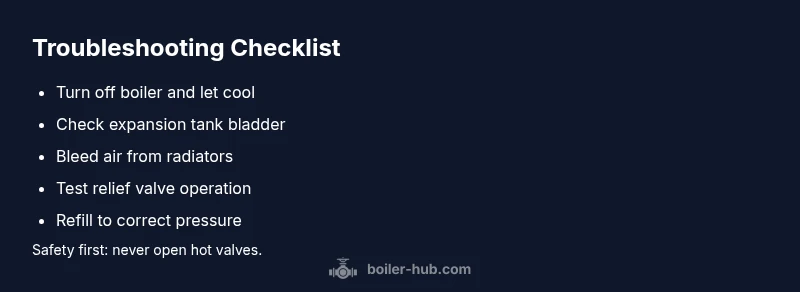
- Power down and allow the boiler to cool completely. Safety first. 2. Check the system fill and confirm the pressure gauge is accurate; if in doubt, use a known-good gauge. 3. Inspect and recharge the expansion tank or replace it if the bladder is compromised. 4. Bleed air from the system and from radiators to relieve trapped pressure. 5. Test the pressure relief valve for proper operation; replace if it leaks or sticks. 6. Refill the system to the manufacturer’s recommended pressure and check for leaks. 7. Power the boiler back on and observe pressure behavior during a heating cycle. 8. If pressure rises again, escalate to a professional service. Pro tip: keep a pressure log after any fix to track trends over time.
Prevention and maintenance to avoid future over-pressurization
Regular maintenance reduces the odds of pressure spikes. Schedule annual checks for the expansion tank and relief valve, especially after seasons of heavy heating use. Keep the expansion tank properly charged; a weak or waterlogged bladder is a frequent fail point. Always use the correct fill procedure and never overfill the system.Educate all building occupants to recognize early warning signs like sudden pressure increases, loud banging, or frequent cycling, and establish a rapid shut-down protocol for emergencies. A well-maintained boiler is safer and more efficient, and it helps prevent costly repairs down the line.
When to call a professional
If you have completed the quick checks but the pressure remains elevated or you notice leaks around the valve, do not DIY further. High pressure can be dangerous and lead to explosions if extreme fault conditions occur. A licensed technician can perform a diagnostic test, verify safe operation, replace faulty components, and recharge the system with the correct parameters. If your boiler is under warranty, consult the manufacturer guidelines before attempting any component replacements to avoid voiding coverage.
Steps
Estimated time: 45-60 minutes
- 1
Power down and cool the boiler
Turn off the boiler and allow it to cool completely before inspecting any components. This reduces burn risk and prevents sudden pressure release.
Tip: Always keep a clear path to the boiler in case you need to shut it down quickly. - 2
Check system fill and gauge accuracy
Ensure the system fill valve is fully open and that the pressure gauge is not showing a false high reading due to a stuck needle or sensor.
Tip: If in doubt, verify with a spare gauge or call a pro to confirm readings. - 3
Inspect expansion tank and air charge
Locate the expansion tank and check for signs of corrosion, leaks, or a loss of air charge. An overfilled or waterlogged tank will fail to absorb thermal expansion.
Tip: A quick test is to gently press the tank’s air valve; if water spurts, the tank bladder is compromised. - 4
Recharge or replace expansion tank
If the air charge is low or the bladder is damaged, recharge or replace the tank according to the manufacturer’s instructions.
Tip: Keep the system depressurized during work and verify the new charge after refilling. - 5
Bleed air from the system
Bleed air from radiators and the boiler loop to eliminate trapped air that can cause pressure imbalances.
Tip: Use a cloth and container to catch any drips; monitor the flow for steady, cool water. - 6
Test the pressure relief valve
Operate the relief valve per manual guidance to confirm it opens and closes freely. Replace if defective or leaking.
Tip: Do not rely on a quick fix; a faulty valve is a critical safety risk. - 7
Refill and balance the system
Refill the boiler to the recommended pressure and check for leaks. Balance all zones if you have a multi-zone system.
Tip: Record the final readings for future reference. - 8
Power up and monitor
Turn the boiler back on and monitor the pressure during a full heating cycle to ensure it stays within normal limits.
Tip: If pressure climbs again, stop and call a professional.
Diagnosis: Boiler pressure gauge shows high reading during operation or on startup
Possible Causes
- highOverfilled system or manual filling beyond recommended levels
- highExpansion tank failure or loss of air charge
- mediumFaulty or stuck pressure relief valve
- lowFaulty pressure gauge or misreading
Fixes
- easyCheck and correct system fill level and verify gauge accuracy
- mediumRecharge or replace expansion tank (bladder or diaphragm)
- mediumTest and replace the pressure relief valve if defective
- hardIf pressure remains high after above steps, contact a licensed technician for full diagnostics
Questions & Answers
What is a safe boiler pressure range?
There isn’t a universal number; always refer to your boiler’s manual for the recommended range. If the gauge reads outside that range, shut down and investigate. A technician can verify whether readings are due to a faulty gauge or a genuine overpressure condition.
Always check your manual for the safe range. If the reading is outside that range, turn off the boiler and seek professional help if you’re unsure.
What causes expansion tank failure?
Expansion tanks can fail due to a loss of air charge, corrosion, or a damaged bladder. When the tank can’t absorb water expansion, pressure rises in the system.
Expansion tanks fail when the bladder or charge isn’t holding, letting pressure build up.
Can I bleed air from the boiler myself?
Bleeding air from radiators and the boiler loop is a common, safe step if done carefully. Always follow the manual and turn off the boiler before starting.
Bleeding is doable, but follow the manual and shut off the boiler first.
Should I replace the pressure relief valve?
If the valve sticks, leaks, or fails to operate, it should be replaced by a qualified technician. Regular testing is recommended as part of maintenance.
Replace a faulty relief valve with a qualified technician’s help.
Is high pressure dangerous?
Yes. High pressure can damage seals, cause leaks, or lead to system failure. Do not operate the boiler until the issue is resolved.
High pressure can be dangerous; stop use and get professional help if unsure.
When should I call a professional?
If pressure remains high after basic checks, leaks appear, or you’re unsure about safe procedures, contact a licensed boiler technician promptly.
If in doubt, call a professional—safety first.
Watch Video
Key Points
- Act quickly to prevent damage and safety risks.
- Expansion tank and relief valve are common culprits.
- Bleed air and recharge the expansion tank as first-line fixes.
- Call a licensed technician if pressure remains high after fixes.
- Regular maintenance helps prevent future over-pressurization.