What If Boiler Pressure Is Too High? Troubleshooting
Learn step-by-step how to diagnose and safely fix high boiler pressure, prevent future issues, and know when to call a professional for your boiler system.


High boiler pressure is usually a sign of a fault in safety devices or a swollen expansion tank. First, shut off the boiler and allow it to cool. If you can do so safely, relieve pressure using the pressure relief valve or drain valve, and recheck the gauge. If pressure remains high, stop and call a qualified technician immediately.
What high boiler pressure means for your system
When the boiler pressure gauge climbs above the normal operating range, it can indicate a problem with safety devices, expansion components, or the water balance inside the system. According to Boiler Hub, persistent high pressure can lead to component strain, noisy operation, and in worst cases, leaks or boiler failure. Homeowners and facility managers should treat elevated pressure as a safety concern and follow a structured troubleshooting process. Understanding the typical pressure range for your model is essential; many residential boilers operate safely around 1–2 bar when cold and up to 2–3 bar when hot. If your readings exceed these ranges consistently, don’t assume it will self-correct—investigate and address the underlying cause.
Boiler Hub’s team emphasizes documenting readings and maintenance history so you can spot trends. This context helps you determine whether the issue is a one-off fluctuation or a sign of a failing component. Keep your manufacturer’s manual handy and note the recommended target pressure as a baseline for future checks.
Immediate safety steps when you notice high pressure
- If you observe a steady rise in pressure, immediately switch off the boiler and allow it to cool before touching any part of the system.
- Do not attempt to relieve pressure if you are unsure of the procedure or if the system is hot. Pressure relief valves can release scalding steam and hot water.
- If you have explicit instructions from the manufacturer and you are trained to perform safe relief, you may use the pressure relief valve or a drain valve to bring the pressure down to the safe range.
- After any relief, re-check the gauge and listen for any hissing or banging sounds that indicate internal issues. If the gauge remains high, seek professional service without delay.
- Always wear proper PPE and ensure children or pets are away from the work area.
The Boiler Hub team notes that quick, safe action reduces the risk of damage and injury. If you’re in doubt, treating high pressure as a warning sign and contacting a licensed technician is the prudent path.
Risks of ignoring high pressure
Ignoring elevated boiler pressure can create several hazards. Excess pressure stresses heat exchangers, fittings, and the pressure relief valve itself. Over time, seals may fail, joints can leak, and components may corrode. In extreme cases, a boiler can suffer catastrophic failure, leading to water damage, gas safety concerns, or fire risk if gas-fired equipment is involved. From a maintenance perspective, neglecting pressure issues often results in costlier repairs later on. The Boilers Hub guidance stresses proactive checks and timely professional evaluation to prevent serious damage.
Short-term noise, frequent cycling, and higher fuel use are common symptoms that accompany pressure problems. Recognizing these early helps prevent escalation and keeps your system reliable.
Common causes of rising boiler pressure
- Faulty or worn expansion tank: A failed expansion tank can’t absorb pressure when the boiler heats, causing the system to push pressure higher.
- Defective or blocked pressure relief valve: If the relief valve sticks or fails, the system cannot vent excess pressure, leading to buildup.
- Overfilled boiler or air in the system: Too much water or trapped air can disrupt the balance and raise readings sporadically.
- Leaks or poor system balance: Small leaks or restrictive flow can alter pressure dynamics, especially on heating cycles.
The above causes often interact; a single fault can cascade into multiple symptoms. A systematic check of each component is usually required to locate the root cause.
How to safely relieve pressure: two practical approaches
- Approach A: Safe relief via the pressure relief valve (only if the boiler is cool and you understand the manual). Place a towel and container to catch any discharge, slowly operate the valve until the pressure gauge returns within the safe range, then close the valve and resume monitoring.
- Approach B: Isolate water supply and bleed air at radiators if your system is compatible with manual bleeding. After venting air, re-fill the system slowly to the recommended pressure and check for stability.
Warnings: Do not force valves beyond their designed range and never bypass safety devices. If you notice steam or scalding water, stop and call a professional immediately. Boiler Hub stresses that relief should be done cautiously and within safety guidelines.
Safety devices to inspect: relief valve, expansion tank, gauge
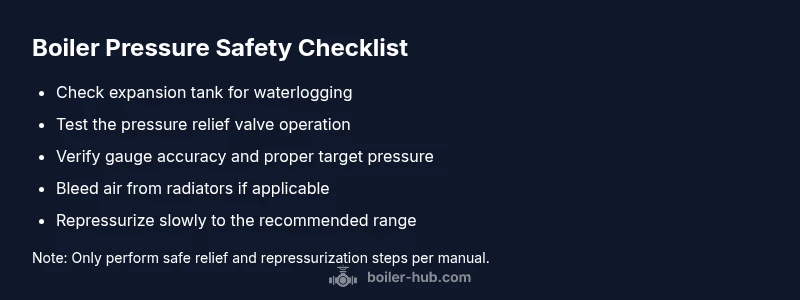
A high-pressure situation often traces back to safety components. Inspect the pressure relief valve for smooth operation and ensure it isn’t stuck open or closed. Check the expansion tank for waterlogged symptoms and proper air charge. Verify the gauge accuracy with a known-good gauge or by comparing with the system’s standard readings. If any parts show wear, corrosion, or intermittent readings, replacements are likely necessary. Regular testing of these components is a key maintenance practice recommended by Boiler Hub.
Document the results and schedule a service if you’re unsure about the readings or the state of the components.
Diagnostic mindset: how to test and document readings
Develop a simple, repeatable test routine. Record the cold and hot pressures, note any fluctuation during heating cycles, and compare with the manufacturer’s target range. Look for patterns: does pressure spike after a specific heat-up period or after a valve cycling? Use a checklist to track the expansion tank’s air charge, the relief valve’s opening behavior, and any nearby leaks. Maintaining a log helps you and a technician pinpoint the fault quickly and prevents repeated misdiagnoses. Boiler Hub advocates a data-driven approach to troubleshooting.
Maintenance routines to prevent pressure spikes
- Schedule annual inspections of expansion tanks, relief valves, and gauges.
- Bleed air from the system where applicable and ensure proper filling to the recommended pressure.
- Check for leaks and fix them promptly to maintain system balance.
- Replace worn components before they fail, particularly safety devices.
- Use a water treatment strategy if your system requires it to prevent mineral buildup that can affect pressure and flow.
A proactive maintenance plan reduces the likelihood of sudden pressure spikes and extends boiler life. Boiler Hub recommends documenting maintenance intervals and keeping a spare parts list for quick replacements when needed.
When to contact a professional and what to expect
If you have followed basic checks and the pressure remains high, it’s time to bring in a licensed heating technician. A pro will perform a pressure test, inspect the expansion tank, relief valve, and circulatory components, and verify that your boiler is correctly configured for your home’s plumbing and heating demands. Expect them to pressurize the system to the manufacturer’s target range, check safety devices, and test for leaks. Regular professional service is key to avoiding costly breakdowns.
Steps
Estimated time: 45-60 minutes
- 1
Power down and cool the boiler
Switch off the boiler and shut off power to the unit. Allow time for the system to cool before touching any components. This reduces burn risk and prevents sudden pressure release.
Tip: Always wear gloves and eye protection when inspecting valves. - 2
Check the pressure gauge
Read the gauge when cold and then again when warm. Compare with the manufacturer’s target range. Record differences for future reference.
Tip: If numbers don’t align with specs, note the discrepancy for the technician. - 3
Relieve pressure if safe
If the manual instructs and you are trained, gently operate the pressure relief valve until the gauge falls within the safe range. Catch any discharge safely with a container.
Tip: Do not force the valve; stop if you feel resistance. - 4
Inspect expansion tank and relief valve
Look for waterlogged expansion tank, corrosion, or valve sticking. Replace or service as required.
Tip: A waterlogged tank won’t absorb pressure shifts and is a common failure point. - 5
Repressurize to the target range
Refill the system slowly to the manufacturer’s recommended pressure, then recheck after a warm-up cycle.
Tip: Do not overshoot the target range; small adjustments are safer. - 6
Run a test cycle
Let the boiler run through a heating cycle and monitor pressure changes. Note any abnormal readings or noises.
Tip: If pressure rises again quickly, stop and call a pro.
Diagnosis: Boiler pressure gauge stays high, even after cycling or heating
Possible Causes
- highFaulty expansion tank or air in system
- highDefective pressure relief valve
- mediumOverfilled boiler or trapped air
- lowLeaks or flow restriction causing pressure rise
Fixes
- easyInspect and recharge/replace expansion tank; bleed air if needed
- mediumTest and replace defective relief valve
- easyRelieve pressure safely and repressurize to target range
- mediumRepair leaks and restore proper flow; verify with a full system test
Questions & Answers
What is considered too high boiler pressure?
Most residential boilers aim for about 1-2 bar when cold and up to 2-3 bar when hot. If readings persistently exceed these ranges, it's a sign to inspect safety devices and components. Consult your manual or a technician if unsure.
Boiler pressure above the normal hot range is a warning sign. Check the safety devices or call a pro if unsure.
Can expansion tank problems cause high pressure?
Yes. A failing expansion tank cannot absorb pressure as the water heats, causing the system pressure to rise. Inspect and replace if needed.
Expansion tank failure can push pressure up; inspect and replace if needed.
Should I bleed or drain to reduce pressure?
Bleeding or draining should be done only if your boiler manual allows it and you are comfortable with the procedure. Incorrect bleeding can worsen pressure or air locks.
Bleeding should follow the manual; missteps can worsen pressure.
Is it safe to relieve pressure manually?
Manual relief should only be attempted by trained individuals following the manufacturer’s instructions. Improper relief can cause scalding or equipment damage.
Only attempt relief if you’re trained and follow the manual.
When should I call a professional?
If pressure remains high after basic checks, or you notice leaks, strange noises, or frequent cycling, contact a licensed boiler technician to diagnose and repair.
Call a licensed boiler technician if pressure stays high or you hear leaks or banging.
Watch Video
Key Points
- Identify and fix the root cause, not just the symptom
- Prioritize safety and professional help when unsure
- Regular maintenance prevents pressure spikes
- Keep records for trend analysis and future servicing