Pressure Too High on Boiler: Troubleshooting & Fixes
Urgent guide to diagnosing and fixing pressure too high on boiler, with practical steps, common causes, and safety tips from Boiler Hub to prevent damage and keep your system running smoothly.


High boiler pressure is usually caused by a faulty expansion vessel or a closed-loop issue. For safety, power down the boiler, isolate power, then begin the basic checks. If the pressure remains high, do not force the system—follow the step-by-step troubleshooting and contact a pro if needed.
What the phrase means and why it matters
Pressure too high on boiler is a warning sign that the heating system is out of balance. In many homes, this happens when the expansion vessel loses its air charge or the closed-loop circuit is not venting air properly. According to Boiler Hub, sustained high pressure can damage seals, cause leaks, and trigger system shutdowns to protect safety. Understanding the basics helps you act quickly and safely, protecting both your home and your boiler investment.
In addition to the immediate safety risk, prolonged overpressure can accelerate wear on valves and gaskets. Homeowners should treat a high reading as a priority concern and move through a systematic troubleshoot path rather than improvising fixes. This guide walks you through practical steps you can take now, with safety as the top priority.
Safety first: immediate actions to take
When you notice the pressure gauge climbing, the first priority is safety. Turn off the boiler and switch off power to avoid any electrical hazards. Do not attempt to manually vent pressure from a hot system. If you smell gas or hear hissing, evacuate occupants and call emergency services. Allow the system to cool before you perform any further checks. Keep kids and pets away from the boiler area. These initial steps reduce the risk of scalding and equipment damage while you assess the situation.
Next, inspect the visible components for obvious signs of damage or leaks. Look for damp patches around the expansion vessel, pressure relief valve, and pipework. If you see active leaks or water pooling, contact a professional immediately. While you wait for service, avoid turning the system back on or adjusting the pressure relief valve, as this can be dangerous when the unit is hot.
Common causes you should consider
High pressure readings are most often caused by expansion vessel issues, a faulty pressure relief valve, or a closed radiator circuit. A failed expansion vessel may lose its air charge, letting pressure rise quickly as the system heats. A stuck or leaking relief valve can fail to release excess pressure, while a closed loop can trap air and water, driving pressure upward. Less common but possible causes include overfilling after maintenance, air trapped in pipes, or recent radiator bleeding without re-pressurizing the system. Understanding these causes helps you target the right area during diagnostics.
How to approach diagnosis (practical steps you can take)
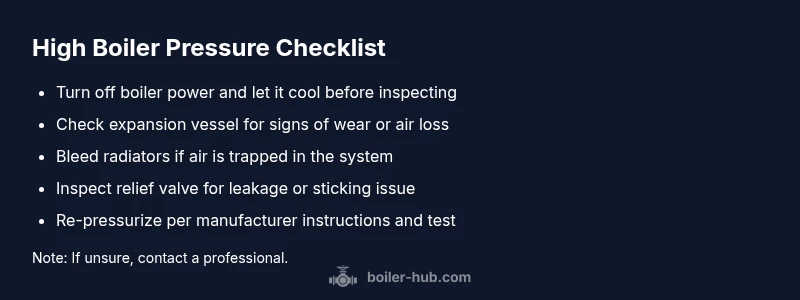
Start with the simplest checks first: ensure the boiler is off and cooled, inspect the gauge, and look for obvious leaks. Check the expansion vessel for signs of corrosion or dampness; if you suspect it’s lost its charge, a quick test or replacement by a qualified technician is often required. Bleed air from radiators if you notice cold spots or air in the loop, but do so slowly and with the system cool. If the gauge remains high after bleeding, the issue is more likely in the relief valve or the vessel itself. Remember: if you’re unsure, it’s safer to call a professional.
Prevention: how to reduce future risk
Regular maintenance is key to preventing pressure problems. Schedule annual boiler service and have the expansion vessel inspected and recharged when needed. Keep an eye on the pressure gauge after any service and before winter heating starts. Ensure the system has the correct fill pressure as per the manufacturer’s instructions, and avoid rapid changes in boiler load. Regularly check for leaks and have valves replaced by a qualified engineer when signs of wear appear. Proactive care helps keep pressure within a safe range and extends boiler life.
Summary of safety-focused actions
- Do not override safety devices or open relief valves on a hot boiler.
- If you’re unsure or uncomfortable performing checks, contact a licensed heating engineer.
- Keep a log of pressure readings and maintenance visits for future reference.
- Follow the manufacturer’s guidelines for your boiler model to minimize overpressure events.
Steps
Estimated time: 45-60 minutes
- 1
Power off and secure the boiler
Turn off the boiler and switch off the power supply. Allow the system to cool completely before handling any components. This reduces burn risk and prevents accidental pressure release.
Tip: Label any switches you turned off to remember later. - 2
Inspect the expansion vessel
Check for obvious signs of damage or a damp patch around the expansion vessel. If you can safely access it, test for air loss with a simple recharge tool or consult a manual for your model.
Tip: Do not attempt to recharge if you’re unsure how to do it safely. - 3
Bleed radiators to release trapped air
With the system cooled, open the bleed valves on radiators to release air until water runs steadily. Close valves once the air is purged and recheck system pressure.
Tip: Open vent slowly to avoid splashing hot water. - 4
Check the pressure gauge and re pressurize
Compare the current pressure to the manufacturer’s recommended range. If the gauge is high, re-pressurize according to the manual using the filling loop with steady, controlled adjustments.
Tip: Do not exceed the recommended pressure—small increments are safer. - 5
Inspect or replace the relief valve if necessary
If the relief valve drips or sticks, it may be failing. Replacement should be performed by a qualified professional to avoid scalding or injury.
Tip: Relief valve work is hazardous; call a pro if you’re unsure. - 6
Test the system and re-start gradually
After stabilization, slowly restart the boiler and monitor the pressure for a full cycle. If pressure rises again, stop and call a technician.
Tip: Keep a log of readings for future reference.
Diagnosis: Boiler pressure remains high on the gauge after startup
Possible Causes
- highExpansion vessel failure or loss of air charge
- highClosed radiator circuit or air trapped in the system
- mediumFaulty or stuck pressure relief valve
- lowRecent radiator bleeding without re-pressurizing the system
Fixes
- easyCheck the expansion vessel air charge and recharge or replace if needed
- easyBleed air from the system and re-pressurize per manufacturer instructions
- mediumInspect and potentially replace the pressure relief valve
- hardIf the issue persists, contact a licensed heating engineer for a pressure-safe diagnostic
Questions & Answers
What pressure is considered too high on a boiler?
Pressure readings that stay elevated after a cold restart are a concern. Normal operating pressure varies by model, so always refer to the boiler’s manual or label. If in doubt, treat it as high and proceed with caution or call a pro.
High readings after cooling indicate a potential problem. Check the manual and consider professional help if it doesn’t settle.
Is high boiler pressure dangerous?
Yes. Sustained high pressure can damage seals and valves, trigger leaks, or cause the boiler to shut down to protect the system. Do not ignore these warnings.
Sustained high pressure can damage components and cause safety shutoffs; seek help if it doesn’t stabilize.
Can I bleed radiators when pressure is high?
Bleeding may help if air is trapped, but do so only after turning off the boiler and allowing it to cool. If pressure remains high after bleeding, stop and consult a pro.
Bleed only after cooling, and if pressure stays high, get professional help.
When should I replace the expansion vessel?
Replacement is typically due to loss of air charge or wear inside the vessel. If diagnostics show no fix after adjustments, a professional evaluation is advised.
Expansion vessel wear is common; a pro can verify and replace if needed.
What if I can’t fix it myself?
If you’re unsure about safe operation or it requires valve work, call a licensed heating engineer. Professional service protects you and the boiler.
DIY fixes can be risky; a pro will ensure safe, proper repair.
Is high pressure related to boiler leaks?
Overpressure can accelerate wear that leads to leaks. Look for damp spots around fittings and valves and address leaks promptly with a professional.
Overpressure can lead to leaks; inspect fittings and call a pro if needed.
Watch Video
Key Points
- Act safely and power down before troubleshooting.
- Common causes are expansion vessel and relief valve issues.
- Follow a step-by-step plan—don’t improvise fixes.
- Engage a pro when pressure remains high after basics.