Why is My Boiler Overheating: A Practical Troubleshooting Guide
A rapid, safety-focused troubleshooting guide from Boiler Hub to diagnose why your boiler is overheating, with step-by-step checks, when to call a professional, and prevention tips.


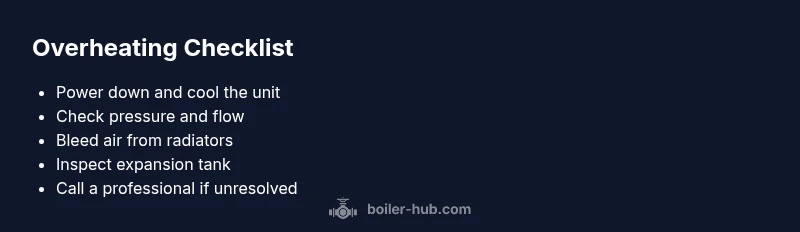
If your boiler is overheating, the most likely causes are a faulty thermostat, restricted water flow, or a pressure-related issue. Quick fixes: 1) power down the boiler and allow it to cool, 2) check the pressure gauge and ensure it sits in the middle range when cold, 3) bleed radiators to remove air pockets, 4) if the problem persists, shut off power and call a pro.
Why the question 'why is my boiler overheating' matters and how this guide helps
When a boiler overheats, it can signal a safety risk and costly damage. If you're wondering why is my boiler overheating, you’re not alone: mineral buildup, faulty controls, or flow issues often trigger excessive heat. This Boiler Hub guide walks homeowners and facility managers through urgent steps, diagnostics, and prevention strategies to protect your system and your home. We cover safety priorities, common causes, and what to do now to minimize risk. By following these sections, you'll understand how to spot trouble early and prevent expensive repairs.
According to Boiler Hub, overheating episodes are a common concern in both residential and commercial settings, especially during cold weather when demand is higher. Early detection and methodical troubleshooting save time and money, and reduce safety risks for occupants.
Immediate safety steps you should take now
Safety first. If you notice scalding heat, strange smells, or steam, shut down the boiler and isolate power. Do not open the boiler casing while it’s hot. Then:
- Switch off the boiler at the wall or switch, and if your system is connected to a power supply, turn off the breaker.
- Allow the boiler to cool before inspecting. Do not attempt to disassemble internal components while hot.
- Check for visible leaks around joints and valves; if you see water pooling, contact a professional immediately.
- If you can safely access the pressure gauge, note the reading but do not attempt to reset manual pressure devices while the system is hot.
These steps reduce immediate danger and set the stage for effective diagnostics. Invoking a professional early is often the safest option when you’re unsure about pressure or leakage.
Common causes behind overheating
There are several frequent culprits when a boiler overheats. Common causes include faulty temperature controls or a stuck/failed thermostat that fails to regulate heat, restricted water flow (blocked vents, closed or blocked valves), mineral buildup inside the heat exchanger, air pockets in the system, a failing pump, or expansion tank issues leading to pressure or flow problems. In some cases, recent repairs or incorrect boiler settings can also trigger overheating. By identifying which category your symptoms fit, you can target the right fixes without unnecessary disassembly.
Understanding these causes helps homeowners and facility managers avoid unnecessary parts replacement and focus on the most probable faults first. Boiler Hub emphasizes starting with simple checks and moving toward mechanical or control-system tests as needed.
How to verify boiler pressure and water flow
Pressure and flow are central to boiler temperature regulation. A misread gauge or obstructed flow can cause overheating. Verify:
- Read the pressure gauge when the boiler is cold and compare to your boiler's manual guidance. Do not adjust pressure while the unit is hot.
- Inspect all supply and return valves to ensure they are fully open and not partially blocked.
- Check for air locks in radiators or zones by bleeding air from radiators and rechecking flow.
- If you have an automatic fill valve, ensure it’s not stuck open, which can over-pressurize the system.
If the readings are outside the manufacturer’s recommended range or if bleeding does not improve temperature, this indicates a more complex issue that requires professional assessment.
Diagnostic flow: symptom → diagnosis → solutions
Symptom: Boiler overheats during operation. Causes:
- thermostat or sensor fault — high likelihood: high
- restricted flow or blocked heat exchanger — high likelihood: medium
- air lock or poor circulation — medium likelihood: medium
- expansion-tank/pressure issues — low likelihood: low
Fixes:
- test and replace thermostat or recalibrate control — difficulty: easy
- clear blockages, flush or replace heat exchanger if needed — difficulty: hard
- re-bleed zones, verify pump operation, and improve circulation — difficulty: medium
- inspect/replace expansion tank or address pressure issues — difficulty: medium
This flow helps you trace symptoms to feasible causes and prioritize fixes, reducing the risk of unnecessary parts replacement.
Step-by-step fixes for the most common cause
The most common overheating trigger is a faulty thermostat or poor water flow. Follow these steps in order:
- Power down and cool the boiler, then remove access panels only if you’re trained to do so. 2) Locate and test the thermostat/sensor readings against the manufacturer’s specification. If it’s out of range or unresponsive, replace or recalibrate. 3) Inspect the pump and impeller for signs of wear or blockage; ensure it’s circulating water. 4) Check for air pockets and bleed radiators; confirm flow improves after bleeding. 5) Inspect the heat exchanger for mineral buildup and flush if necessary. 6) If pressure remains high after fixes, inspect the expansion tank or heat-source valve. 7) Reassemble, restart, and monitor temperature and pressure readings.
Tips & warnings: safety notes and common mistakes
- Do not bypass safety devices or bypass pressure relief valves; overheating can lead to dangerous pressure buildup. - Avoid opening vent caps or exposing live electrical parts without proper training. - Use the boiler’s service manual as your primary guide for temperature and pressure ranges. - If you’re unsure about readings or parts, call a qualified boiler technician rather than guessing. - Regular maintenance, including annual checks, helps prevent overheating before it starts.
Prevention: maintenance and best practices to avoid overheating
Regular maintenance is the best defense against overheating. Schedule annual professional servicing, replace worn parts promptly, and keep an eye on signs like banging or kettling noises, frequent pressure rise, or rust in the system. Implement a simple monthly check: read the pressure when cold, ensure valves are fully open, and verify that the expansion tank is not corroded or leaking. Keep the boiler area clear of clutter, and ensure vents are unobstructed. By combining routine checks with timely repairs, you reduce the risk of overheating significantly and extend the life of your boiler.
Quick-reference: what to do if overheating persists
If the above steps do not resolve the issue, stop using the boiler and contact Boiler Hub’s recommended professionals. Persistent overheating can indicate hidden problems such as a faulty circulation pump, a failing valve, or serious mineral buildup. A professional inspection includes pressure testing, safety valve checks, thermistor testing, and a full heat-exchanger assessment to determine root cause and safe resolution.
What to expect during a professional boiler assessment
A technician will verify safety controls, inspect the venting system, check water flow, test for gas or fuel issues if applicable, and assess electrical components. They will also inspect the expansion tank, pressure gauge behavior, and the condition of gaskets and seals. After identifying the fault, they’ll provide a clear repair plan with a cost estimate and a timeline for parts replacement or system upgrade if needed.
Closing: keeping your boiler healthy year-round
Prevention is cheaper than emergency repairs. Establish a maintenance schedule, monitor heating cycles, and address leaks promptly. Keep a log of pressure readings, maintenance dates, and any odd noises or smells. With careful monitoring and timely interventions, you can reduce the chances of overheating and improve the reliability of your boiler system for years to come.
Steps
Estimated time: 30-45 minutes
- 1
Power down and cool the boiler
Turn off the boiler at the wall or switch and disconnect power if accessible. Allow the unit to cool completely before touching any internal components.
Tip: Never open the housing while it’s hot; allow a full cool-down period. - 2
Check thermostat and pressure readings
Access the thermostat or sensor and verify it matches the manufacturer’s specifications. If readings are off or the sensor is unresponsive, replace or recalibrate.
Tip: Document readings for future reference and comparison after repairs. - 3
Inspect and test the circulation pump
Ensure the pump is operating smoothly and circulating water. Listen for grinding or vibration, which can indicate wear or blockage.
Tip: If the pump is noisy or sluggish, consider replacement or professional service. - 4
Bleed radiators and verify flow
Bleed any trapped air from radiators and recheck system flow. Poor circulation can cause overheating in zones far from the boiler.
Tip: Use a cloth to catch any drips; have a container ready for vented air. - 5
Assess expansion tank and pressure controls
Inspect the expansion tank for signs of rust or leakage and ensure pressure controls have not failed. Refill if necessary according to your manual.
Tip: Do not overfill; follow manual guidance precisely. - 6
Test startup and monitor
Restart the boiler and observe for abnormal cycling, excessive temperature rise, or continued overheating. If issues recur, escalate to a professional.
Tip: Keep a log of any alarms or unusual readings after restart.
Diagnosis: Boiler overheats during operation
Possible Causes
- highFaulty thermostat or temperature sensor causing poor heat regulation
- mediumRestricted water flow or blocked heat exchanger
- mediumAir locks or poor circulation due to air in the system
- lowExpansion tank or pressure-related issues causing high system pressure
Fixes
- easyTest and replace the thermostat or recalibrate the control settings
- hardClear blockages and flush or replace heat exchanger if buildup is severe
- mediumBleed radiators and verify pump operation to restore flow
- mediumInspect and address expansion tank and pressure-relief issues
Questions & Answers
What should I do immediately if my boiler overheats?
Shut off the boiler and power, then allow it to cool. Do not open the boiler housing while hot. If you notice leaks or you smell burning, contact a professional right away.
Shut it off, let it cool, and call a pro if you sense danger or leaks.
Can overheating cause carbon monoxide risks?
Yes. In fuel-fired boilers, overheating can aggravate combustion issues that may lead to dangerous gas buildup if improper ventilation or venting occurs. Ensure detectors are working and have a pro inspect the system if you suspect a problem.
Overheating can indicate combustion issues; if you smell gas or exhaust, leave the area and call emergency services.
Is it safe to bleed radiators when the boiler is hot?
Bleeding should be done only when the system is cool to avoid scalding. Use a radiator key and a cloth to manage any hot water release.
Bleed only after the system has cooled to avoid burns.
Why is my boiler’s pressure gauge high when overheating?
High pressure readings during overheating usually point to a faulty expansion tank or faulty pressure regulator. Do not attempt risky pressure adjustments; call a pro.
High pressure often means expansion or regulator problems; contact a technician.
How often should I service my boiler to prevent overheating?
Annual professional servicing is generally recommended, with additional checks if you notice recurring overheating or performance changes.
Most boilers benefit from yearly professional checks to prevent overheating.
Watch Video
Key Points
- Shut down and cool the boiler before inspecting.
- Check and normalize pressure; bleed air from radiators.
- Identify and fix the root cause—thermostat, flow, or pressure issues.
- Schedule annual maintenance to prevent overheating.