How to Troubleshoot a Boiler Issue: A Practical Guide
Learn fast, safe troubleshooting for boiler issue symptoms, common causes, and steps to restore heat. Boiler Hub guides homeowners with practical, safety-first guidance.


Boiler issue often starts with a simple power, thermostat, or pressure problem. Begin by checking power, resetting breakers, and confirming the thermostat and boiler controls are correctly set. If heat still won’t come, follow the diagnostic flow and call a professional for gas-safety concerns. Quick fixes can restore function and prevent escalation.
What a boiler issue means for you
A boiler issue disrupts comfort, efficiency, and safety in homes and facilities. When your boiler stops firing, you lose heat, hot water, and the ability to maintain a comfortable environment. The Boiler Hub team emphasizes that most boiler issues are manageable if addressed promptly with a clear plan. Throughout 2026, homeowners report that timely diagnosis reduces downtime and service costs. In this guide you’ll find a practical, safety-first approach to diagnosing and handling common boiler issues, with steps you can perform safely while you decide whether you can fix it yourself or need professional service. We’ll cover symptoms, immediate safety actions, diagnostic pathways, and how to document findings for your technician. Expect practical tips, warnings, and templates you can reuse across different boiler brands and models. Whether you’re a homeowner or a facility manager, understanding the typical failure modes of a boiler issue helps you protect occupants, preserve equipment, and minimize disruption to daily operations.
Common signs your boiler is struggling
- No heat or hot water, especially during cold weather
- Frequent cycling on and off or short cycles that waste energy
- Unusual noises like banging, kettling, or gurgling
- Smells of gas or burning odor near the boiler
- Error codes on the display or flashing indicators
- Water leaks around the boiler or radiators
If any of these signs appear, treat them as potential red flags and start a structured troubleshooting flow. Document when the issue started, symptoms, and any changes in fuel bills or comfort levels. This information helps technicians diagnose faster and more accurately. Remember: many boiler issues share common roots, so a systematic approach saves time and reduces risk for occupants.
Safety-first precautions during a boiler issue
Safety is paramount when a boiler issue arises. Always ensure you have: a working carbon monoxide detector on every level, proper ventilation in the boiler room, and a clear escape route. If you smell gas, do not operate electrical switches or attempt to light a match; leave the area immediately and call the gas emergency line from a safe location. Do not ignore warning signs like persistent hissing scents or scorch marks around fittings. When in doubt, shut off the boiler at the main switch or breaker and isolate the fuel supply only if you know how to do so safely. These precautions reduce the risk of carbon monoxide exposure, fire, or explosion while you troubleshoot or await professional help.
Diagnostic mindset: electrical, gas, and flow issues
Diagnosing a boiler issue requires separating electrical, gas, and hydraulic concerns. Start with power supply and control circuits, then assess the thermostat or programmer settings. If the boiler fires intermittently, investigate ignition reliability and gas supply integrity. Inspect pressure gauges for abnormal readings and listen for air in the system. If you notice water leaks, corrosion, or crusty deposits, that often signals a broader maintenance need. This mindset helps you categorize symptoms quickly and determine whether a simple reset, a pressure adjustment, or a professional service is appropriate.
Diagnostic flow: symptom → diagnosis → fix
Symptoms guide the diagnosis: heat failure, no ignition, cycling, or leaks. For heat issues, check power, fuses, and switches; then verify pressure and water level. For ignition problems, confirm gas supply and ignition components, and assess safety interlocks. If the diagnosis points to pressure or air in the system, bleeding radiators and repressurizing usually resolves the issue. If gas-related or structural components are implicated, contact a licensed professional immediately. Always document your steps and observable signs to support the service visit.
Quick checks you can perform now
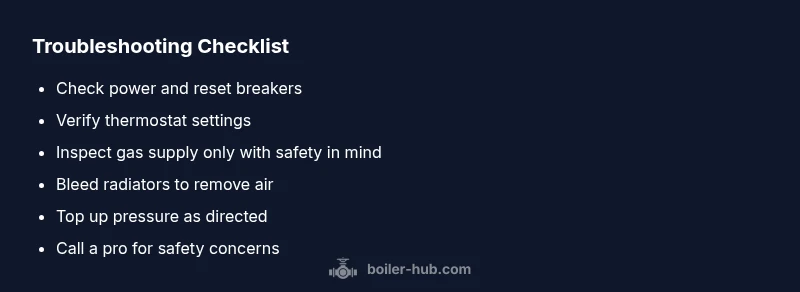
- Ensure the boiler is powered on and the circuit breaker is not tripped.
- Check the room thermostat and any timers; verify correct scheduling.
- Look at the pressure gauge; if pressure is clearly low, proceed with safe topping-up steps per your model’s manual.
- Verify the gas supply is on and not interrupted; do not attempt to troubleshoot gas leaks yourself.
- Bleed radiators if you hear air hissing and feel cold spots in the system.
- Note any error codes or flashing lights to reference during service calls.
If you encounter persistent problems, stop and contact a professional. Do not force parts or bypass safety interlocks. This approach minimizes risk while you gather essential information for a service visit.
Documentation and when to call a professional
Prepare a concise incident log: when the issue began, exact symptoms, observed error codes, any noises, smells, or leaks, and steps you already attempted. Photos of the boiler and the surrounding area can speed up diagnosis. If any safety concerns arise—gas odors, carbon monoxide alarms, or volatile noises—call a professional immediately. Regular maintenance by a qualified technician is the best defense against recurring boiler issues and can prevent costly downtime.
Prevention: keeping your boiler in good shape
Prevention is better than repair when it comes to boilers. Schedule annual professional servicing and inspection, bleed radiators to remove air, and check for consistent hot water supply. Keep the boiler room tidy and free of combustibles, ensure CO detectors are functioning, and monitor pressure levels between service visits. Small, routine checks—and early reporting of odd behavior—save time, money, and stress when a boiler issue arises.
Steps
Estimated time: 30-45 minutes
- 1
Check power supply
Visually inspect the boiler’s power switch and the circuit breaker. If the breaker has tripped, reset it and attempt to restart the boiler. Confirm the outlet is delivering power by testing a nearby device.
Tip: Before touching electrical components, ensure your hands are dry and you’re standing on a dry surface. - 2
Reset and test the boiler controls
Turn the boiler off, wait a few minutes, then turn it back on. Check for any error codes or blinking lights, and refer to the user manual for code meanings.
Tip: Note the error code if any; it helps the technician diagnose faster. - 3
Verify thermostat settings and timers
Make sure the thermostat is set higher than the current room temperature and that any comfort timers aren’t preventing heat. If using a separate programmer, confirm it’s sending heat on schedule.
Tip: If the thermostat is wireless, check the batteries and connection to the receiver. - 4
Check pressure and water levels
Look at the boiler pressure gauge. If pressure looks low, follow the manual’s safe steps to repressurize using the filling loop. If you see a high pressure or leaks, stop and call a pro.
Tip: Never force the filling loop or pressurize beyond the recommended range. - 5
Inspect gas supply and ignition (if safe)
If you have a gas boiler and can smell gas or suspect ignition issues, do not attempt repairs. Ensure the gas supply is open and the ignition system is clear of debris before calling for service.
Tip: Gas issues are hazardous; prioritize safety and professional evaluation. - 6
Bleed radiators and remove air
Bleed any cold spots in radiators to remove air that can impede heat flow. Collect any dripping water in a container and reseat the bleed valve securely.
Tip: Bleeding one radiator at a time helps isolate if only some zones are affected. - 7
Check for leaks and visible damage
Look for dripping water, rust on joints, or damp patches around valves and pipes. Address minor leaks promptly and plan a service appointment if you notice persistent dampness.
Tip: Clean areas around joints before inspecting to spot fresh leaks easily. - 8
Call a professional when needed
If the boiler still won’t operate after these steps, or if you encounter gas concerns or error codes you don’t understand, schedule a service visit with a qualified technician. Do not bypass safety features.
Tip: When in doubt, prioritize safety and book a pro rather than risking injury.
Diagnosis: Boiler won't ignite or stay on, with no heat or hot water
Possible Causes
- highPower issue (outlet, switch, breaker)
- mediumThermostat or control setting fault
- mediumIgnition failure or gas supply issue
- lowLow water pressure or air in system
- lowLeaks or damaged components
Fixes
- easyReset breakers and verify outlet power to the boiler; test a simple switch-off and on sequence
- easyCheck and correct thermostat settings; ensure timers/programmers are not overriding heat
- hardInspect gas supply and ignition components; if gas issues are suspected, contact a licensed professional
- easyCheck and top up system pressure or bleed air as instructed by the boiler manual
- mediumInspect for leaks and call a professional to inspect/rate the system integrity
Questions & Answers
What should I do first when my boiler won't ignite?
Start by checking the power supply and resettable breakers, then verify the thermostat and timer settings. If ignition fails or you smell gas, do not continue; contact a professional immediately. Document any error codes to reference during service.
Start with power and thermostat checks. If ignition fails or you detect gas, contact a professional immediately.
Is it safe to try fixing a gas boiler myself?
No. Gas boilers involve fuel, combustion, and pressurized systems. Do not attempt gas repairs at home. If you suspect a gas problem, evacuate the area and call the gas emergency line. Save any safety concerns for the licensed technician.
Gas boilers should never be DIY repaired. If you suspect gas, leave the area and call a licensed technician.
How can I safely increase boiler pressure?
Only adjust pressure according to your boiler’s manual. Use the filling loop cautiously and never exceed the recommended range. If you’re unsure, postpone the adjustment and contact a pro.
Follow the manual for pressure adjustments and don’t exceed recommended levels; contact a pro if unsure.
When should I call a professional for a boiler issue?
Call a professional if you notice gas smells, persistent ignition problems, frequent leaks, or error codes you cannot interpret. For any safety concerns, do not delay. A professional assessment protects occupants and preserves equipment.
Call a professional for gas smells, persistent ignition issues, leaks, or unhelpful codes. Safety first.
What maintenance helps prevent boiler issues?
Annual professional servicing, regular radiator bleeding, and keeping CO detectors functional reduce risk. Monitor for unusual noises, heat inconsistencies, and pressure changes, and address them early.
Regular professional service and routine checks reduce boiler issues.
Why does my boiler make banging noises?
Banging can indicate air in the system, kettling from scale buildup, or flow problems. Bleed radiators and consult a pro if noises persist after basic checks.
Banging often means air or mineral buildup; bleed radiators and seek professional help if it continues.
What information should I provide to a technician?
Describe when the issue occurs, any error codes, recent changes, and steps you’ve tried. Include photos of the boiler area and a timeline of symptoms to help diagnose faster.
Tell the technician when it happens, any codes, and what you’ve tried; bring photos if possible.
Watch Video
Key Points
- Identify power, thermostat, or pressure issues first
- Safety comes before DIY fixes—gas concerns require pros
- Document symptoms for quicker professional diagnosis
- Regular maintenance prevents recurring boiler issues