Troubleshooting a Problem with Furnace Boiler Heating
A comprehensive, urgent troubleshooting guide for a problem with furnace boiler heating. Learn quick checks, diagnostic flow, and step-by-step fixes from Boiler Hub to restore warmth safely.


According to Boiler Hub, most problems with furnace boiler heating start from simple, fixable causes. Begin by confirming power at the unit, ensuring the thermostat is set correctly, and replacing a dirty air filter. If it still won’t heat, follow the diagnostic flow and step-by-step fixes below, then call a professional if required.
Common root causes of a problem with furnace boiler heating
When a home loses heat, the reasons are rarely dramatic at first. The most frequent culprits are power issues (a tripped breaker or blown fuse), thermostat misreads, and a clogged air filter that throttles airflow. Gas furnaces can stall if the gas valve is off or the ignition system fails. Electric boilers may trip safety switches when a component overheats. Ductwork and vents stuffed with debris or restricted by closed dampers can also prevent warm air from circulating. In many cases, a quick inspection reveals the problem, saving time and money. According to Boiler Hub Team insights, starting with the simplest checks dramatically improves your odds of restoring warmth quickly. Remember that even small problems can cascade into bigger failures if left unchecked, so address them promptly.
Safety essentials before you begin
Safety matters more than speed when troubleshooting a potentially dangerous heating system. Before you touch anything, switch off power to the furnace at the circuit breaker and, for gas systems, turn off the gas supply if you smell gas or hear unusual hissing. Use proper protective gear: gloves, eye protection, and non-slip footwear. Do not bypass safety devices or jump to high-risk fixes. If you uncover a cracked heat exchanger, gas smell, or water near electrical components, leave the area immediately and call a licensed technician. Boiler Hub emphasizes safe, methodical steps and documenting what you check for future reference.
Quick checks you can perform safely
Start with the basics that require no special tools. Verify the thermostat is in heating mode and set to a temperature higher than room temperature. Check the power switch on the furnace and ensure the circuit breaker hasn’t tripped. Inspect the air filter for excessive dirt and replace if clogged. Listen for the furnace blower when heat is called; a silent unit often points to a control or ignition issue. If your home uses a gas furnace, confirm there is gas supply and that the pilot or electronic ignition is functioning. Keep a log of readings and any error codes to aid a professional if needed.
Diagnostic flow: symptom-to-diagnosis map
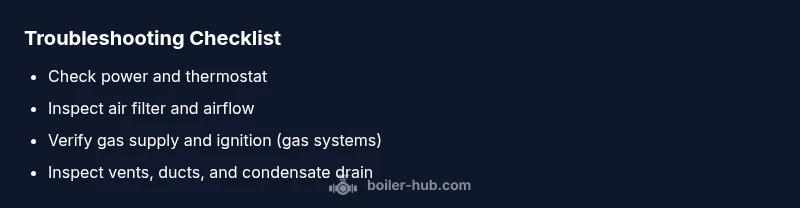
This flow helps you map symptoms to probable causes and actions. If there is no heat, start by confirming power and thermostat; if these are normal, check the air filter and airflow, then inspect the gas supply and ignition if applicable. If the unit runs but cycles on and off, suspect thermostat calibration or short-cycling due to overheating. If heat is intermittent, inspect ductwork for leaks or closed dampers. For each symptom, Boier Hub suggests a progressive approach: confirm, test, replace or reset, and re-test. Document any error codes from the control board to speed up professional diagnosis.
Step-by-step fixes for the most likely causes
Address the most common issues first: power and thermostat, then air filtration, then ignition or gas-supply concerns. A successful fix often involves a simple reset or part replacement that can be completed with basic hand tools. If your system is older, consider parts wear that may require professional inspection. The following sections outline targeted fixes with safety reminders and clear results to expect. Remember, if anything feels beyond your skill level, pause and contact a licensed technician.
Prevention tips and maintenance to avoid future problems
Regular maintenance reduces the chances of a sudden heating failure. Schedule annual professional service for inspections, cleanings, and sensor testing. Change filters every 1–3 months during active heating seasons, depending on usage and air quality. Keep outdoor intake clear of debris and ensure vents and dampers are fully open. A simple DIY routine, like listening for abnormal noises and noting any unusual smells, helps catch issues before they escalate. Boiler Hub recommends maintaining a log of service visits, part replacements, and any notable performance changes.
When to call a professional and what to expect
Not every problem is safe or cost-effective to tackle yourself. If the unit smells like gas, if there is standing water near electrical components, or if there is a persistent lack of heat after basic checks, call a licensed HVAC technician immediately. A pro will perform combustion analysis, pressure checks, and safety tests, and will verify venting integrity and thermostat calibration. Expect a thorough diagnostic, a clear written quote, and a resolution plan with warranty considerations.
Steps
Estimated time: 45-60 minutes
- 1
Check power and breakers
Locate the furnace/equipment panel and verify the disconnect switch is ON. Check the corresponding circuit breaker in the panel; if it tripped, reset it and observe if the furnace starts normally. If the breaker trips again, there may be an electrical fault requiring professional inspection.
Tip: Never bypass a breaker; repeated trips indicate an underlying electrical issue. - 2
Inspect thermostat settings and wiring
Set the thermostat to heat and a temperature above room temp. If the thermostat is battery-powered, replace batteries or upgrade to a newer model. Check the wire connections at both the thermostat and furnace control board for loose or corroded contacts.
Tip: Use a known-good thermometer to verify room temperature against thermostat reading. - 3
Replace or clean the air filter
Remove the filter and inspect for visible dirt. Replace if dirty or browned. A dirty filter can reduce airflow and cause the system to overheat and shut off. Reinstall with the airflow arrows pointing toward the blower.
Tip: Schedule a monthly check during high-use months. - 4
Check gas supply and ignition (gas systems)
Ensure the gas valve is open and listen for a steady flame ignition. If the ignition fails, do not attempt to light the burner manually; this requires a professional inspection. If you hear gas odor, evacuate and contact emergency services.
Tip: Never attempt to diagnose gas leaks with a flame. - 5
Inspect vents, ductwork, and condensate drain
Look for blocked vents, closed dampers, or disconnected ducts. Clear obstructions and ensure air can travel freely. For boiler systems, check the condensate drain for clogs that could cause the boiler to shut down.
Tip: Keep outdoor intake areas free of snow, leaves, and debris. - 6
Test safety and limit switches
If the system runs hot and then shuts off, the high-limit switch may have tripped. Allow the unit to cool, then test the switch as per the manufacturer’s manual. Faulty switches should be replaced by a qualified technician.
Tip: Do not bypass safety switches to restart a hot boiler. - 7
Reset controls and run heat call again
After addressing the above items, reset the furnace controls if a reset button is provided or use a service reset in the control panel. Set the thermostat to heat and monitor if the burner ignites and runs normally.
Tip: Note any error codes on the control board for reference. - 8
Document findings and plan next steps
Record what you checked, any parts replaced, and the results. If heat remains unavailable, prepare to contact a professional with your notes and the error codes you observed.
Tip: Having a detailed log speeds up diagnosis and reduces downtime.
Diagnosis: No heat or inconsistent heating from the furnace boiler
Possible Causes
- highPower issue (tripped breaker or blown fuse)
- highThermostat miscalibration or wiring fault
- mediumClogged air filter restricting airflow
- mediumGas supply off or ignition failure (gas systems)
- lowVenting blockage or condensate drainage problems
- lowBlown safety switch or overheated limit switch
Fixes
- easyReset breakers, restore power to the furnace
- easyVerify thermostat settings, recalibrate or replace thermostat wiring
- easyReplace dirty air filter and verify airflow through ducts
- mediumCheck gas supply valve and ignition system; test the ignition if safe to do so
- mediumInspect and clear vents/indoor returns; check condensate drain and vent pipes for obstructions
- mediumTest and replace faulty limit switch or safety controls as needed
Questions & Answers
What is the first thing I should check if my furnace isn’t heating?
Begin with the power to the unit, the thermostat settings, and the air filter. These simple checks resolve many heating issues. If heat is still absent, move through the diagnostic flow to identify deeper causes.
Start by checking power, thermostat, and the air filter. If there’s still no heat, follow the diagnostic steps to identify the likely issue.
Can a dirty air filter really stop heating?
Yes. A clogged filter reduces airflow, causes overheating, and triggers safety shutoffs. Replacing the filter immediately often restores heat and improves efficiency.
A dirty filter can block airflow and cause the system to shut down. Replacing it usually fixes the issue.
When should I call a professional for a furnace problem?
Call a professional if you smell gas, hear hissing sounds, see water around electrical parts, or if the unit still won’t heat after basic checks. A pro can safely diagnose gas, electrical, or combustion problems.
If you smell gas or the unit still won’t heat after checks, contact a licensed technician.
What maintenance helps prevent furnace heating problems?
Regular filter changes, annual professional inspections, and keeping ducts clear are the best preventions. A consistent maintenance schedule reduces unexpected failures and keeps efficiency high.
Schedule yearly professional service and change filters regularly to prevent future issues.
What is the difference between a heat pump and a boiler furnace?
A heat pump uses ambient air to heat or cool, while a boiler uses combustion or electricity to generate heat. They have different maintenance needs and safety considerations, so know your system type when troubleshooting.
Heat pumps pull heat from the air, while boilers generate heat by combustion or electricity.
I hear banging or clanking noises. Should I worry?
Unusual noises can indicate duct issues, loose components, or ignition problems. If noises persist, stop and have a professional inspect to prevent further damage.
Strange noises can signal a mechanical issue; don’t ignore them.
Watch Video
Key Points
- Identify the simplest causes first (power, thermostat, filter).
- Follow a safe, stepwise diagnostic flow before expensive fixes.
- Document symptoms and codes to speed professional support.
- Schedule regular maintenance to prevent future problems.