What's Wrong with My Boiler? A Troubleshooting Guide
Facing boiler issues? This urgent troubleshooting guide helps homeowners diagnose what's wrong with their boiler and fix common faults safely, with professional help tips. Learn a clear diagnostic flow and step-by-step fixes for reliable warmth.


A boiler problem often starts with a simple, fixable issue like a pilot light out, a low boiler pressure, or a tripped electrical supply. Start with the safe, basic checks: verify power, ensure gas is flowing, and confirm thermostat settings. If these quick fixes don’t restore heat, call a professional for a thorough inspection.
Understanding what's wrong with your boiler
When your boiler stops delivering heat, the situation can feel urgent. The question what's wrong with my boiler often points to a fault that is common, preventable, and fixable with the right steps. According to Boiler Hub, the majority of boiler-related calls come down to a few repeatable patterns: loss of heat, no hot water, weird noises, or visible leaks. This article follows a logical, safety-first approach to diagnose the issue quickly and avoid unnecessary boiler service visits. By starting with the basics and using a structured flow, you can restore warmth faster and protect your home from potential damage. We'll cover the most common culprits, explain how to test them safely, and spell out when professional help is essential.
Common symptoms and what they indicate
Boilers don’t advertise their problems with a single warning sign. Common symptoms include: cold radiators or no hot water, gurgling noises, frequent cycling on and off, error codes on modern digital displays, and water leaks around the unit. Each symptom maps to a short list of possible causes. For example, no heat often points to low pressure, a faulty thermostat, or an ignition issue. No hot water may indicate problems with the heating cycle, circulating pump, or diverter valve. By recognizing the pattern, you can triage more effectively and decide whether you can safely perform checks or should contact a technician.
The safe, quick checks you can perform now
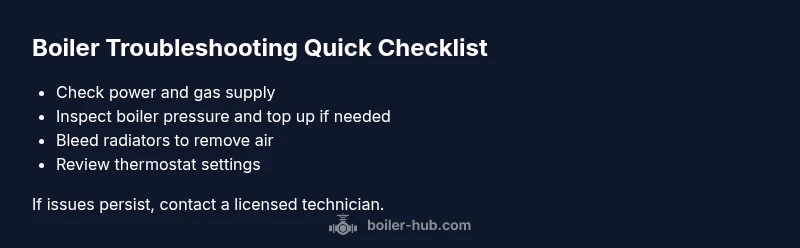
Before you go deeper, run through these checks in order of ease and safety. First, ensure your power switch is on and the circuit breaker hasn’t tripped. Next, verify the gas supply and any shut-off valves are fully open. Check the boiler’s pressure gauge; if pressure is too low, you’ll need to top it up according to the manual. Inspect the thermostat settings and confirm the clock is accurate. If you smell gas, hear hissing, or notice soot, turn off the boiler and leave the area—call emergency services and a professional.
Diagnostic flow: symptom to diagnosis
A practical, step-by-step diagnostic flow helps you avoid guesswork. Start with the symptom: no heat, no hot water, leaks, or strange noises. Then consider the most likely causes and move through simple fixes before complex ones. The flow emphasizes safe testing, documenting error codes, and knowing when to stop and call a pro. This approach reduces wasted time and improves safety, especially when handling gas or electrical components.
Step-by-step fixes for the most common causes
- Power check and reset. Turn off the boiler, wait 60 seconds, then switch it back on. If your model has a reset button, use it according to the manual. Tip: Resetting often clears temporary faults without tools.
- Gas supply and valve check. Make sure the gas valve is fully open and there’s no shut-off engaged. If you smell gas or hear escaping gas, leave the area and call the gas emergency line immediately. Tip: Do not attempt to fix gas leaks yourself.
- Pressure verification and topping up. Read the boiler pressure on the gauge and bring it to the manufacturer’s recommended range. Use the filling loop slowly and avoid overfilling. Tip: Do this with the system cold when possible.
- Radiator bleeding. Start with the highest radiator and work downward, releasing air until water appears. Close the bleed valve once water leaks steadily. Tip: Keep a cloth handy to catch drips.
- Thermostat and control checks. Verify the thermostat is set correctly and that the boiler isn’t stuck in a timer or eco mode. If readings look wrong, recalibrate or replace the thermostat. Tip: If you have a wireless thermostat, replace the batteries.
- When to escalate. If heat remains off after these steps, or you notice leaks, corrosion, or error codes like F1, contact a licensed technician. Tip: Document symptoms and times to assist the technician.
Estimated total time: 45-60 minutes.
Safety reminders and when to call a professional
Safety first: boilers involve gas, electricity, and hot surfaces. Do not perform work if you’re unsure about any step. Always shut off power before opening panels. If you notice gas leaks, smoke, or a burning smell, evacuate and call emergency services. Many boiler faults look small but can escalate into carbon monoxide risk if left unchecked. The smart move is to err on the side of caution and contact a qualified boiler technician if you cannot confidently complete the checks or if the unit continues to misbehave.
Prevention and maintenance to avoid future boiler problems
Regular maintenance reduces the odds of sudden boiler failure. Schedule annual service, keep the area clear, and monitor for warning signs. Maintain clean condensate drains, inspect expansion tanks, and check pressure periodically. Keep an up-to-date record of service visits and any repairs. This proactive approach lowers energy costs and extends boiler life.
Steps
Estimated time: 45-60 minutes
- 1
Power check and reset
Turn off the boiler, wait 60 seconds, then switch it back on. If your model has a reset button, use it according to the manual. This simple cycle can clear temporary faults and re-enable safe operation.
Tip: Resetting often clears small faults without tools. - 2
Inspect gas supply and valve
Ensure the gas valve is fully open and there is no shut-off engaged. If you smell gas or hear escaping gas, leave the area immediately and call the gas emergency line. Do not attempt to fix gas leaks yourself.
Tip: Only work with gas if you are trained and confident; otherwise, call a pro. - 3
Check boiler pressure
Read the pressure gauge and bring it to the manufacturer’s recommended range. Use the filling loop slowly and avoid overfilling. Perform this step with the system cooled whenever possible.
Tip: Close the filling loop once you reach the target pressure. - 4
Bleed radiators
Start with the highest radiator and work downward, releasing air until water appears. Close the bleed valve once water leaks steadily. Keep a cloth handy for drips.
Tip: Do this when the system is cool to minimize burns. - 5
Test thermostat and controls
Verify the thermostat is set correctly and that there’s no misconfiguration preventing heat. If readings seem off, recalibrate or replace the thermostat. Wireless models may require fresh batteries.
Tip: Document current settings for easy reference. - 6
Escalate if needed
If heat remains off after these steps, or you see persistent fault codes, schedule a licensed boiler technician visit. This ensures safe testing of heat exchanger or pump issues.
Tip: Have your model, serial number, and recent service handy for the technician.
Diagnosis: Boiler won't heat or provide hot water
Possible Causes
- highPilot light or ignition failure
- highLow boiler pressure
- mediumElectrical power issue (tripped breaker or fuse)
- mediumGas supply interruption or closed valve
- lowFaulty thermostat or controls
Fixes
- easyCheck power, reset boiler, and ensure breakers/fuses are intact
- easyTop up boiler pressure to the recommended range following the manual
- mediumVerify gas supply and open shut-off valve; if gas smells, evacuate and call emergency services
- easyBleed radiators to remove air and improve heating circulation
- mediumTest and recalibrate thermostat; replace if faulty
- hardIf heat still fails, arrange professional inspection for heat exchanger or pump issues
Questions & Answers
My boiler won’t turn on at all. What should I check first?
Check the power supply, ensure the boiler switch is on, and inspect the circuit breaker and fuses. If it still won’t start, there may be a safety lock or gas issue; do not force start and call a pro.
Check power and safety switches, then call a pro if it still won’t start.
Why does my boiler have no heat or hot water even when it’s on?
Common causes include low pressure, air in the system, or a faulty thermostat. Start with checking the pressure gauge and bleeding radiators.
Low pressure or air in the system are common. Bleed radiators and check pressure.
Can low boiler pressure be fixed by topping up the pressure myself?
Yes, topping up pressure to the manufacturer’s recommended range can restore heat. Follow the boiler manual and avoid over-pressurizing.
You can top up pressure to the recommended level; don’t overfill.
Is it safe to relight a pilot light if it goes out?
Relighting a pilot light is possible for many boilers, but only if you follow the manufacturer’s instructions and there are no gas smell warnings. If unsure, call a pro.
Only relight if you have the manual and there’s no gas smell.
When should I call a professional for boiler issues?
If basic checks don’t restore heat, if you smell gas, or if you see water leaks or unusual noises, contact a licensed boiler technician.
Call a professional when basic fixes fail or there are gas leaks.
What maintenance helps prevent future boiler problems?
Regular servicing, prompt leaks repair, and yearly pressure checks reduce failure risk and extend boiler life.
Regular servicing and timely repairs reduce future problems.
Watch Video
Key Points
- Act safely and start with basic checks.
- Low pressure and ignition issues are the most common faults.
- Follow a diagnostic flow to locate the fault quickly.
- Persisting faults require a licensed boiler technician.