Why Is My Boiler Overflow Dripping? A Troubleshooting Guide
Urgent boiler troubleshooting from Boiler Hub: diagnose why your boiler is overflow dripping, identify common causes, follow a safe diagnostic flow, and prevent water damage with practical fixes and maintenance tips.


Why is my boiler overflow dripping? The most likely culprits are a faulty pressure relief valve or excessive system pressure. In this quick answer, Boiler Hub outlines a safe 3-step check to stop dripping and protect your home. If the symptom persists, shut off power and contact a licensed boiler technician immediately.
Understanding the symptom and its urgency
If you're asking why is my boiler overflow dripping, you’re dealing with a serious safety signal. Overflow from a boiler usually indicates that pressure inside the system is too high or a protective valve is failing. Left unchecked, this can cause water damage, corrode boiler components, or trigger more dangerous faults. According to Boiler Hub, addressing the symptom promptly reduces risk and protects your home. In almost all cases, the dripping comes from the pressure relief valve (PRV) or from an expansion tank that’s no longer able to absorb the extra pressure. This block explains what overflow dripping means, why it matters, and how to approach a fix without panicking. Gather a flashlight, readable label, and a clean bucket; you may need to log readings for a professional later.
Immediate safety steps you should take
Before poking around a hot boiler, ensure safety. Turn off the boiler at the breaker or switch if possible, and switch off the gas supply only if you know how. Do not try to seal leaks or remove the PRV while the system is hot. If you see dripping, keep children and pets away. Place a shallow container or towels to catch water and prevent slip hazards. Now, check the external pipes for obvious cracks. If you detect a strong smell of gas, evacuate and call emergency services. These actions are about risk reduction, not DIY cosmetic fixes.
Common causes of boiler overflow dripping
Dripping can stem from several sources, and understanding them helps you pick a safe next step:
- Faulty or stuck pressure relief valve (PRV) due to age or debris.
- Excess boiler pressure from overfilling, faulty fill valve, or improper boiler cycling.
- Defective or waterlogged expansion vessel (expansion tank).
- Leaking condensate line or discharge pipe connected to the PRV.
- Rarely, a cracked heat exchanger or corrosion around joints that allows water to escape under pressure. Identifying which cause is most likely hinges on readings from the pressure gauge, the location of the drip, and the boiler’s behavior when cooling down.
How to check boiler pressure and expansion tank
Start by inspecting the pressure gauge when the system is cold. Most residential boilers operate safely around 12-15 psi when cold; rising to 20-25 psi when hot is common, but sustained higher readings indicate a problem. If the gauge shows consistently high pressure, do not attempt aggressive fixes. Check the feed/return lines for leaks and verify the automatic fill valve isn’t stuck open. Inspect the expansion tank for waterlogged symptoms—tap the tank; if you hear a dull, hollow echo and water lines from the tank, it’s likely failed. A proper recharge or replacement of the expansion tank often requires a pro. Safety remains paramount; never vent or drain a hot system.
Diagnosing the pressure relief valve and related components
The PRV is a common culprit. If it drips when the system is under pressure, the valve may be worn, dirty, or incorrectly set. Use the test lever only if you are certain the boiler is cold and you can do so safely; a quick lever test may reveal a stuck valve. If leaks persist after testing, the valve should be replaced by a qualified technician. Also inspect the discharge pipe for signs of scaling, corrosion, or a pinhole leak, which can indicate that the system has been under pressure for an extended period. Do not bypass or disable the PRV—its purpose is vital for safety.
What to do if you can't fix the issue yourself
If the drip continues after basic checks, or if you notice gas odors, scorch marks, or unusually high pressure, stop and call a professional. Do not attempt to weld, seal, or force components to operate beyond their design. A licensed boiler technician will perform a pressure test, verify the PRV settings, inspect the expansion tank, and check for hidden leaks. In many cases, a professional service will include a system-wide safety assessment to prevent future overflow issues and to ensure efficiency remains optimal.
Prevention and maintenance to avoid future overflows
Ongoing maintenance reduces the likelihood of overflow dripping. Schedule annual boiler servicing, replace aging PRVs and expansion tanks, and keep the area around the boiler clean to resist corrosion. Regularly check the pressure gauge, ensure the fill valve operates smoothly, and keep condensate traps clear. If you notice changes in pressure behavior or recurring drips, address them promptly rather than waiting for a complete lockout. Boiler Hub recommends keeping a log of readings and service dates to monitor trends over time.
Quick-reference troubleshooting flow
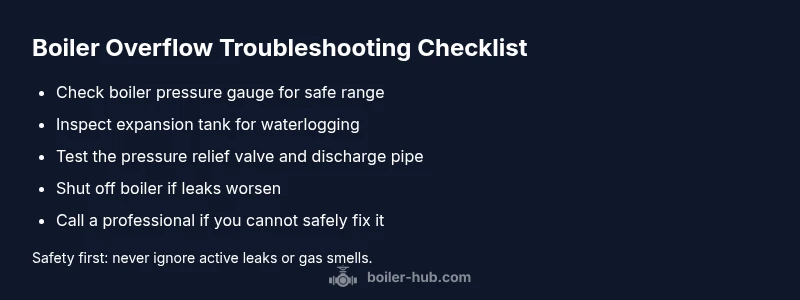
This section provides a practical, at-a-glance guide for quick decisions. If dripping occurs with a hot boiler, prioritize safety, isolate power, and assess the PRV visually. If pressure readings exceed the safe range consistently, stop and call a technician. If the expansion tank shows signs of waterlogging, replacement is often needed. Always verify gas safety before any action in gas boilers.
Steps
Estimated time: 60-90 minutes
- 1
Power down and ensure safety
Switch off the boiler and, if safe, shut off the electrical supply. Avoid touching hot surfaces or moving parts. Clear the area and prepare a container to catch drips. This first step reduces risk while you inspect valves and pipes.
Tip: If you smell gas, evacuate immediately and call emergency services. - 2
Check the pressure gauge
Look at the boiler pressure gauge when the system is cold. Note the psi. If it’s above the typical 12-15 psi range, do not force a fix. A high reading suggests the PRV or expansion tank is involved.
Tip: Use a warm room thermometer to estimate ambient temperature if you can’t read the gauge quickly. - 3
Inspect the expansion tank
Locate the expansion tank and check for waterlogging or rust. A damp, heavy tank or a hissing sound around the valve points to a failing expansion vessel.
Tip: Tap-test the tank; a hollow sound usually means air and the tank needs attention. - 4
Examine the pressure relief valve
Look for visible leaks around the PRV and ensure the discharge pipe is clear. A dribble or steady drip when the system is pressurized often means the valve needs replacement.
Tip: Do not attempt to remove the valve while the system is hot. - 5
Test the valve carefully
If you can safely operate the test lever on a cold boiler, perform a gentle lever test to gauge valve function. If it leaks afterward, plan for replacement by a pro.
Tip: A misbehaving lever can indicate debris; avoid applying force. - 6
Address other leak points
Inspect joints, fittings, and refrigerant lines for cracks or corrosion. Tighten if appropriate and safe; never overtighten threaded connections.
Tip: Leakage around joints may be a sign of corrosion—replace components rather than patching. - 7
Consider professional service
If the drip persists or you’re unsure about any step, contact a licensed technician. A pro will perform tests, reseal joints, and ensure the system is safe.
Tip: Keep service records to track maintenance history. - 8
Resume operation and monitor
Once fixed, gradually restore power and monitor the system. Check for any new drips and verify the pressure remains stable over 24 hours.
Tip: Log readings and date of repair for future reference.
Diagnosis: Boiler overflow/dripping from discharge pipe or PRV
Possible Causes
- highFaulty or worn pressure relief valve (PRV)
- highExcess boiler pressure due to overfill or faulty fill valve
- mediumWaterlogged expansion vessel (expansion tank)
- lowLeaks in condensate line or discharge pipe
Fixes
- easyReplace or reseat the pressure relief valve and test the vent pipe for proper drainage
- mediumCorrect boiler pressure by adjusting fill valve or reducing system pressure (requires caution and proper gauges)
- mediumReplace a waterlogged expansion tank and recharge the system
Questions & Answers
What does it mean if the boiler pressure relief valve is dripping?
A dripping PRV usually indicates the valve is worn, dirty, or set too high. It may fail to vent excess pressure safely. If drips persist, replace the valve and recheck system pressure with a professional.
A dripping PRV often means the valve is worn or set too high; replacement and pressure checks are advised.
Is it safe to use the boiler when overflow dripping occurs?
No. Overflow dripping is a warning sign that the system may be under excess pressure or a component is failing. Continue to power down and call a professional if it persists.
No, treat it as a warning and contact a pro if the drip continues.
Can expansion tank failure cause overflow?
Yes. A waterlogged expansion tank cannot absorb expansion, causing pressure to rise and drip from the PRV. Replacement by a pro is typically required.
Yes, a failed expansion tank can cause overflow and needs professional replacement.
When should I call a professional?
If the drip lasts after basic checks, if pressure remains high, or if you notice gas smells, call a licensed boiler technician promptly.
Call a pro if the drip continues after your checks or you smell gas.
How can I prevent future overflow issues?
Schedule annual service, replace aging valves and tanks, and monitor pressure changes. Regular maintenance helps catch problems before they overflow.
Regular service and maintenance help prevent future overflow issues.
What is considered normal boiler pressure?
Typical cold boiler pressure is around 12-15 psi. If pressure rises significantly when hot, there may be a fault needing inspection.
Normal cold pressure is about 12-15 psi; abnormal high pressure needs checking.
Watch Video
Key Points
- Inspect the pressure relief valve and expansion tank first
- Do not operate a hot boiler or force valves
- Maintain a safety-first approach and call a pro when unsure
- Keep a maintenance log to catch trends early
- Secure a professional assessment if dripping persists after basic checks